

08.07.2026 | Roman Oester | SLF News
In the Vallée de la Sionne (Arbaz, canton of Valais), the WSL Institute for Snow and Avalanche Research SLF has upgraded its unique avalanche test site with a new data acquisition system. This equipment provides accurate avalanche measurement data even under extreme conditions.
- Technology update: In 2025, the SLF replaced the 20-year-old data acquisition system at the Vallée de la Sionne outdoor avalanche laboratory.
- First endurance test passed: The new, robust system withstood the elements and recorded data from over 60 avalanches during its first winter.
- Efficient data hub: The system starts up fully automatically within two seconds and delivers approximately 2 terabytes of research data per avalanche.
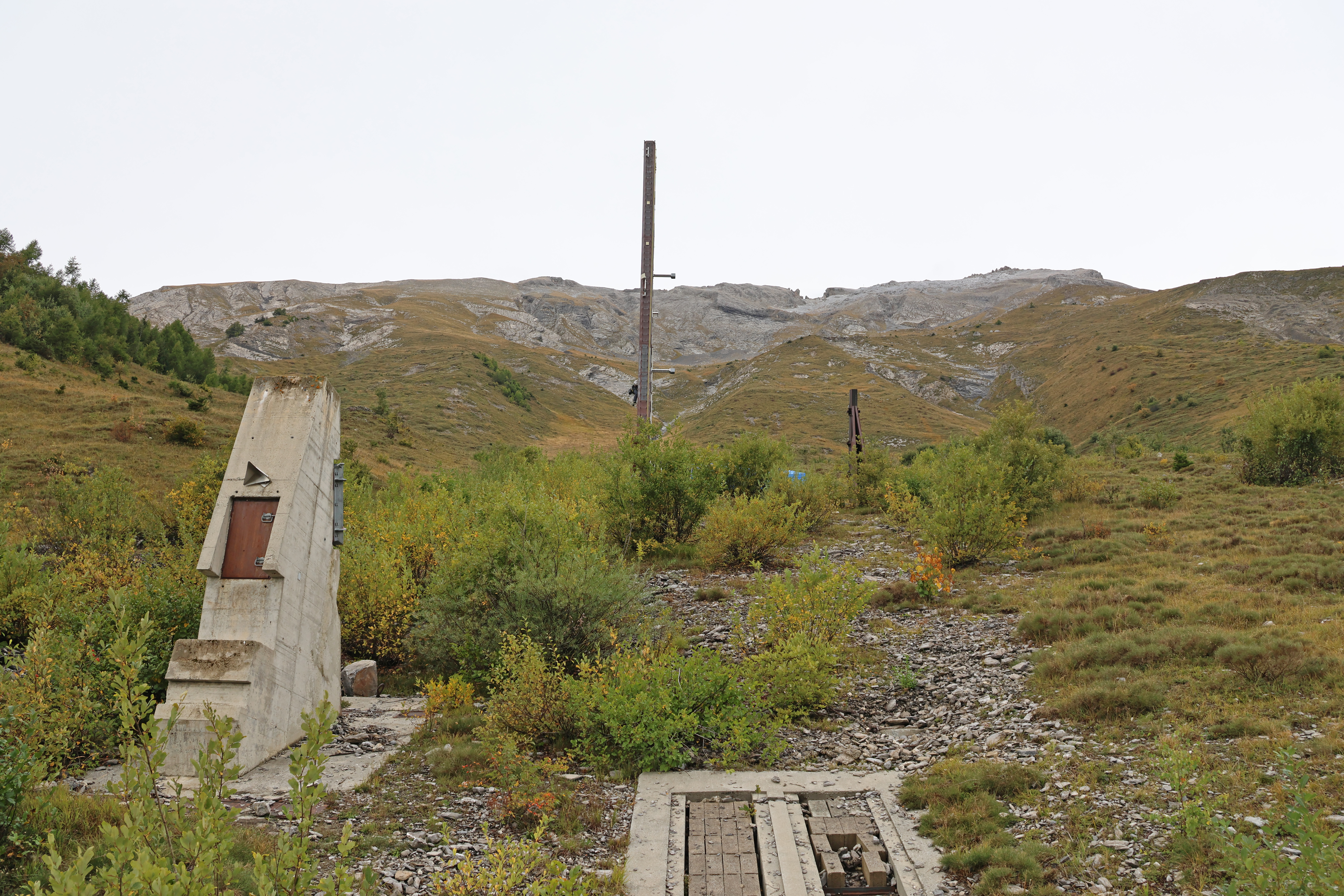
Vallée de la Sionne, commune of Arbaz (canton of Valais), autumn 2025. SLF technical staff member Jens Kaufmann crouches in a small underground chamber (cavern), surrounded by a number of electronic devices and cables. The equipment is connected to 185 sensors spread across a 20-metre-high pylon, a wedge and a concrete wall. "The sensors on these obstacles measure various parameters of any avalanches that come through here. All the data is collated and stored down there in the bunker," explains Kaufmann, pointing to a grey concrete building at the bottom of the valley. Since 1998, researchers have been studying the behaviour of avalanches in this open-air laboratory – the only one of its kind in the world – to gain a better understanding of their dynamics and to develop models.
Fit for the future 
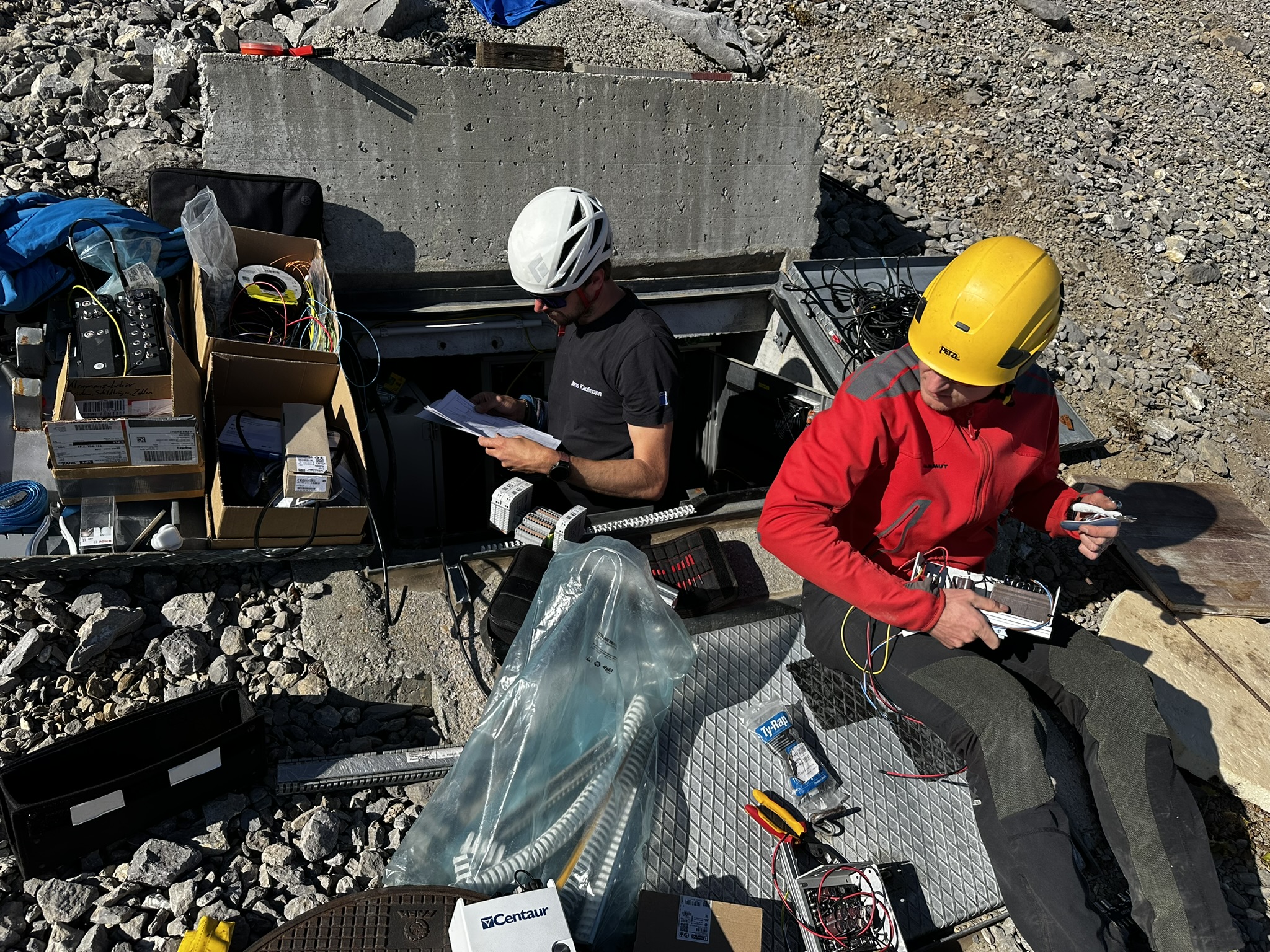
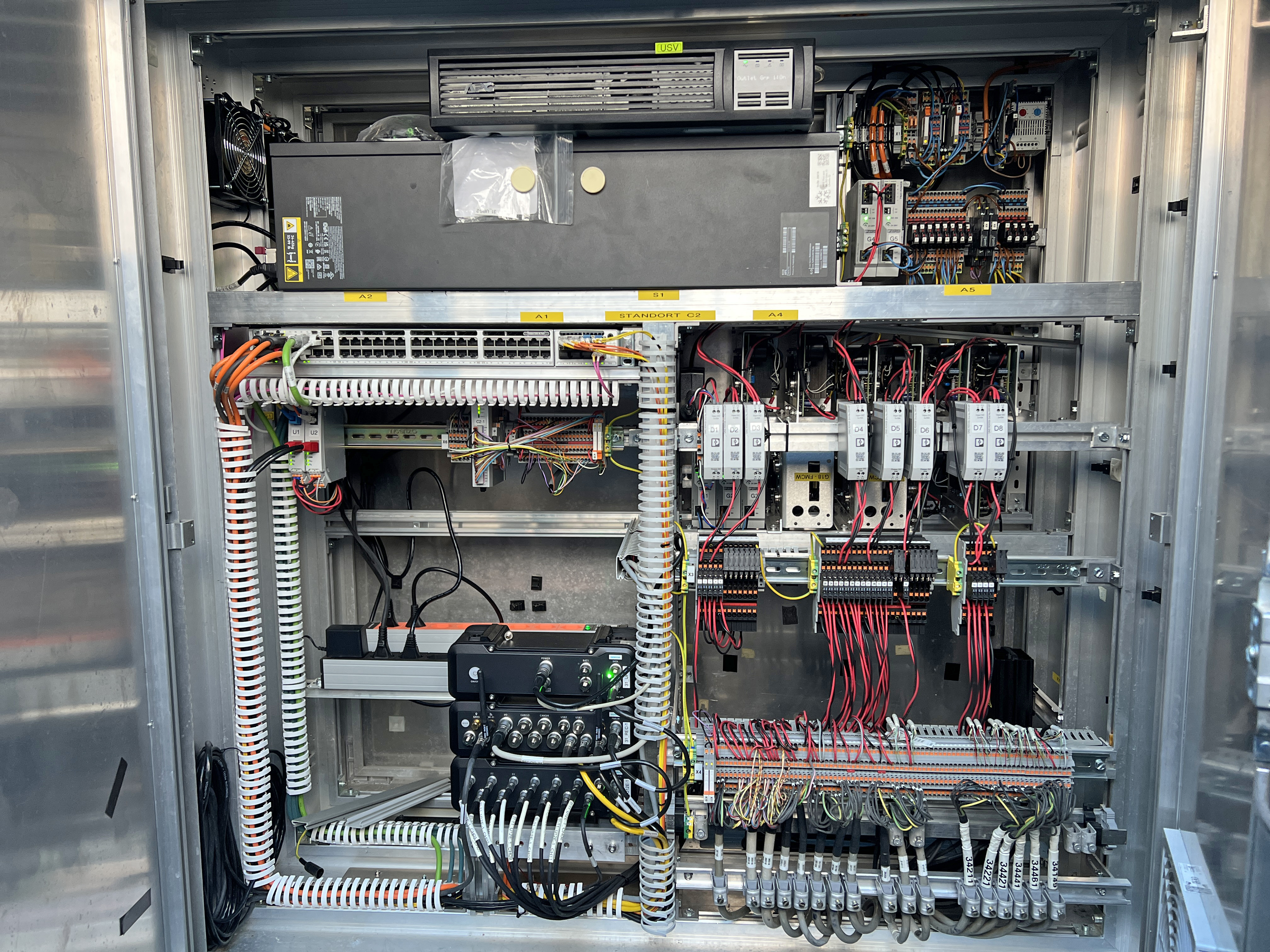
However, the technology used to collect the data had become outdated. "After 20 years, the risk of failures – and so of data loss – increases," says Kaufmann. In autumn 2025, he and his team from the Experimental Facilities group set about replacing the site's data acquisition system. The requirements are exacting: the infrastructure must be able to withstand extreme weather conditions, including snow, cold and storms, while also being compatible with a range of sensor technologies: from measurements of seismic waves, flow depths and snow pressures through to velocities, accelerations and camera footage.
Passing the first winter test 
The team spent two years planning, testing and preparing for the upgrade, including a total of eight weeks on site, sometimes in challenging weather conditions. "Towards the end of the work in October 2025, we almost got snowed in," recalls Kaufmann. "But we managed to get everything ready in time to collect the first data using the new system in the winter." The on-site work required efficiency as well as flexibility. Not everything went according to plan, and some on-the-spot adjustments had to be made. But the effort paid off, and the new system proved its worth in its first winter, recording data on over 60 avalanches, including several very large powder avalanches. "One sensor isn't working," says Kaufmann, "but given the complexity of the system, that's negligible; we'll replace it in the summer."
How does the data acquisition system in the Vallée de la Sionne work?
Sensors positioned at the very top of the slope detect the slightest movements caused by seismic waves and, once a predefined threshold is reached, activate the measurement system. Within two seconds, the numerous sensors, spotlights and cameras are operational. Radars then record the flow depths and velocities, while force sensors measure the pressures at the three obstacles (pylon, wedge and concrete wall). Air pressure, temperature and snow density are also recorded. The data is stored on servers in the bunker and sent directly to the SLF. Each event generates around two terabytes of data, which is immediately available to the researchers for analysis.
Scenes from the avalanche test site 

Image 1 of 11
The avalanche test site in the Vallée de la Sionne on 13 February 2026 (avalanches clearly visible; the pylon is in the centre of the picture)… (Photo: automatic camera/SLF)

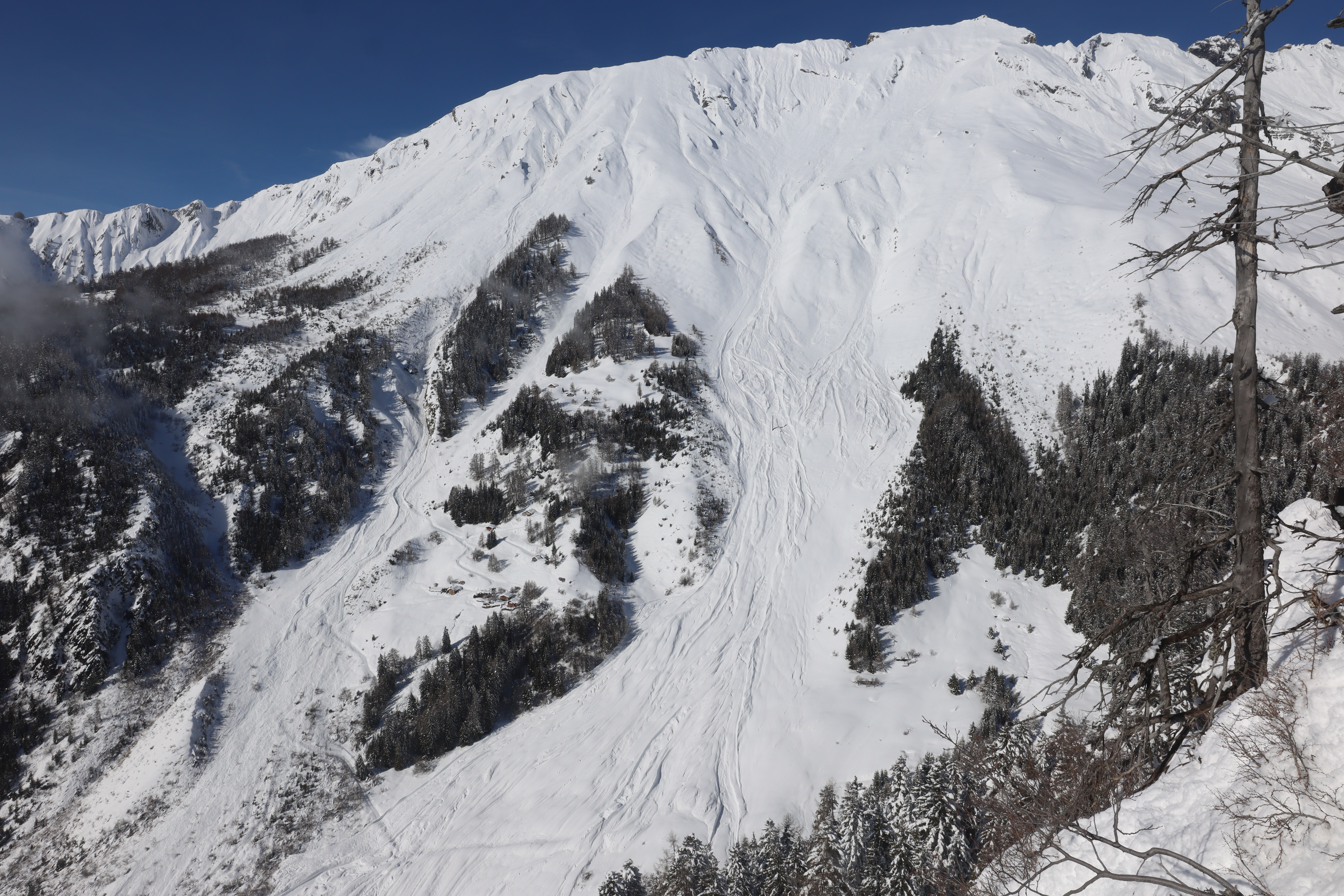
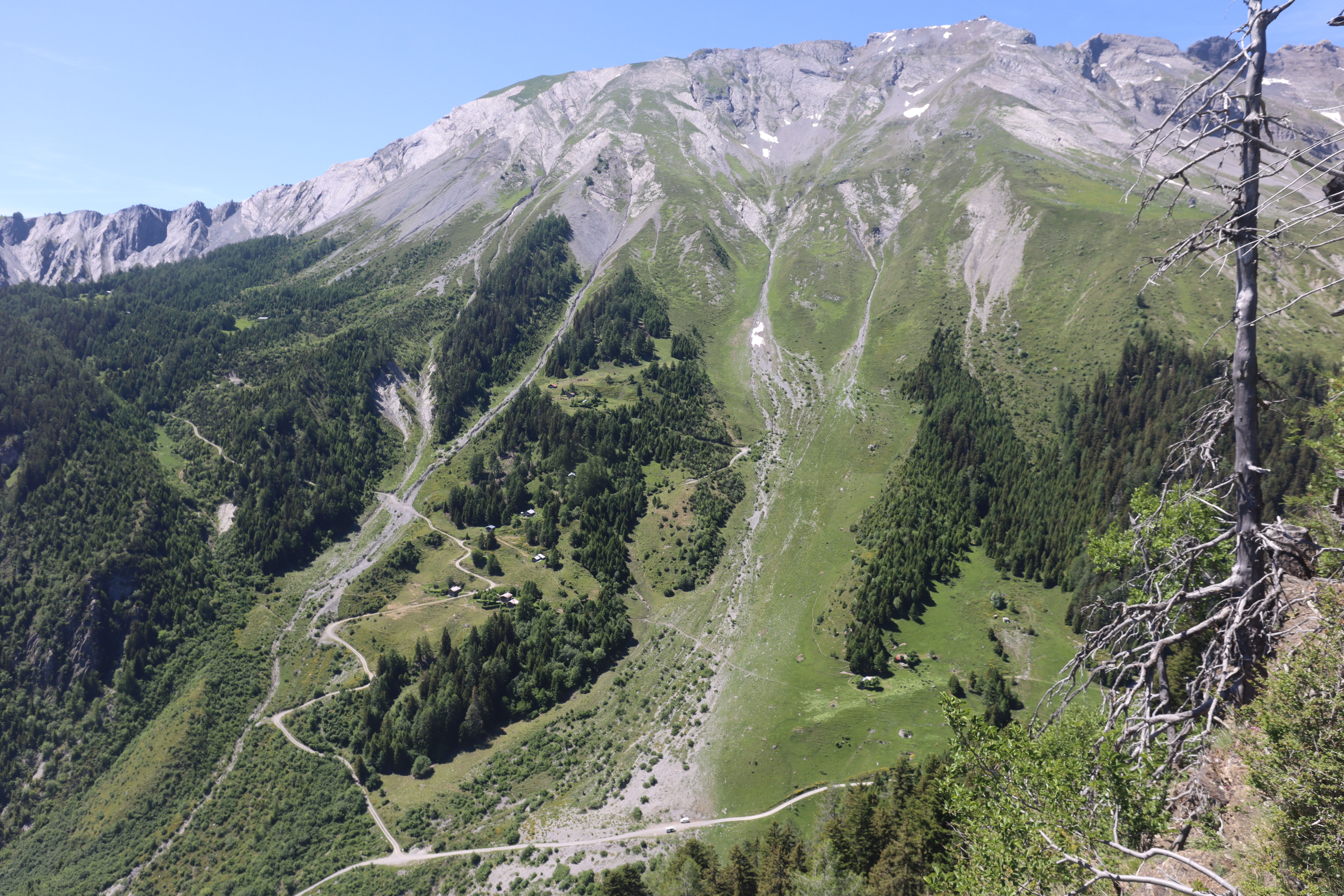

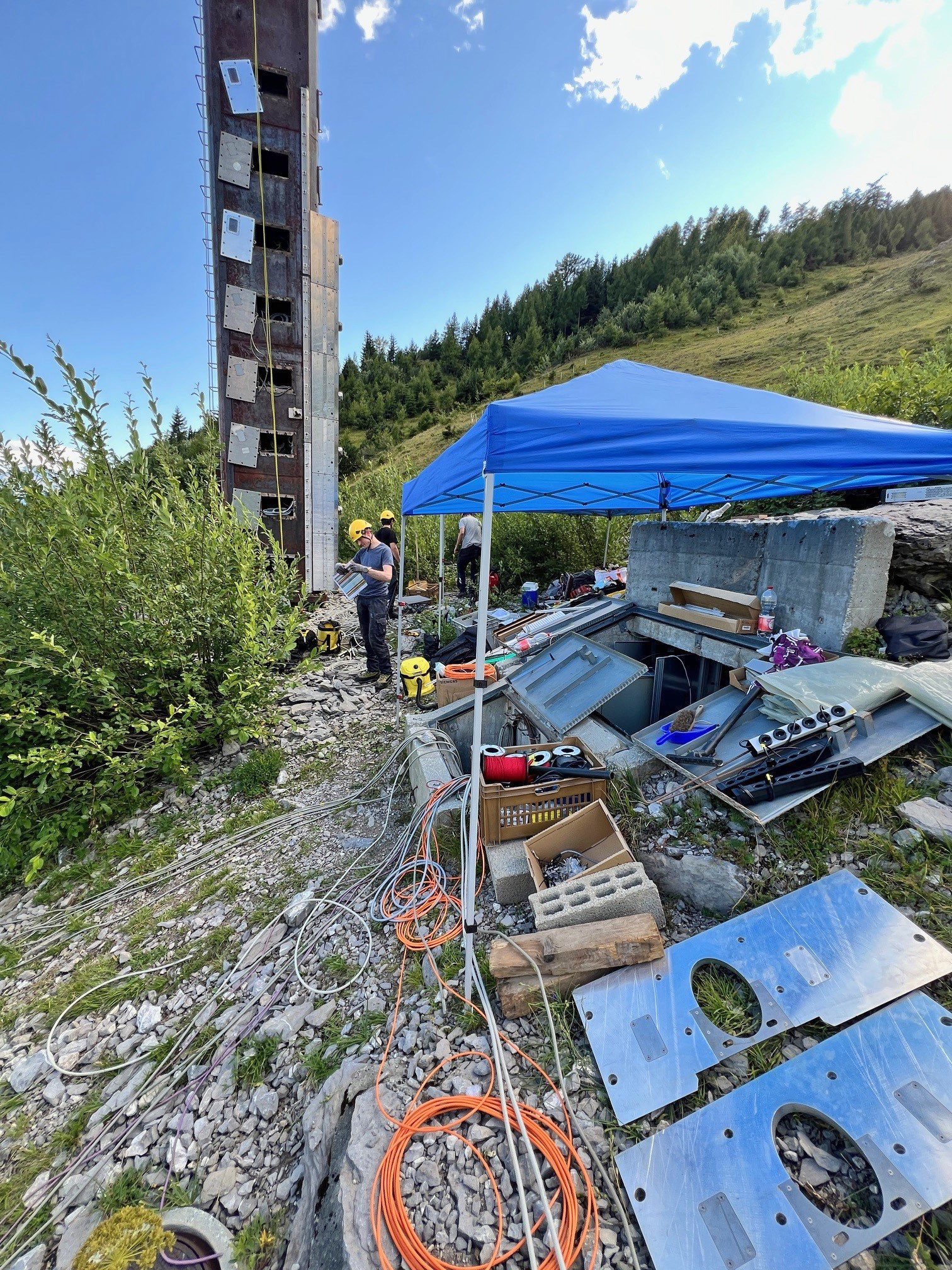
Image 3 of 11
Upgrade work on the main cavern and the 20-metre-high pylon. (Photo: Jens Kaufmann/SLF)

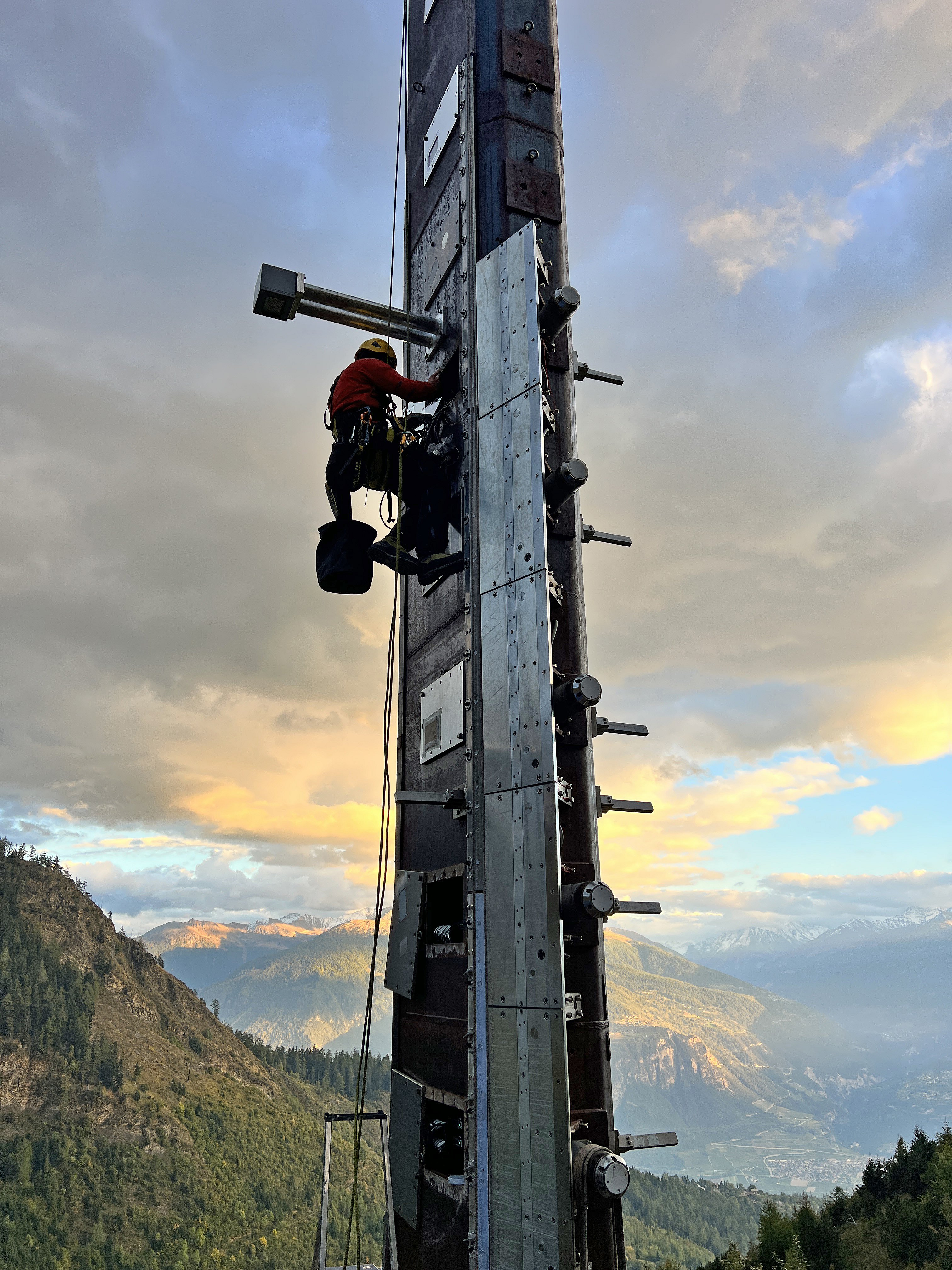
Image 4 of 11
Experimental Facilities group leader Michael Hohl uses rope access to install measuring instruments. (Photo: Jens Kaufmann/SLF)

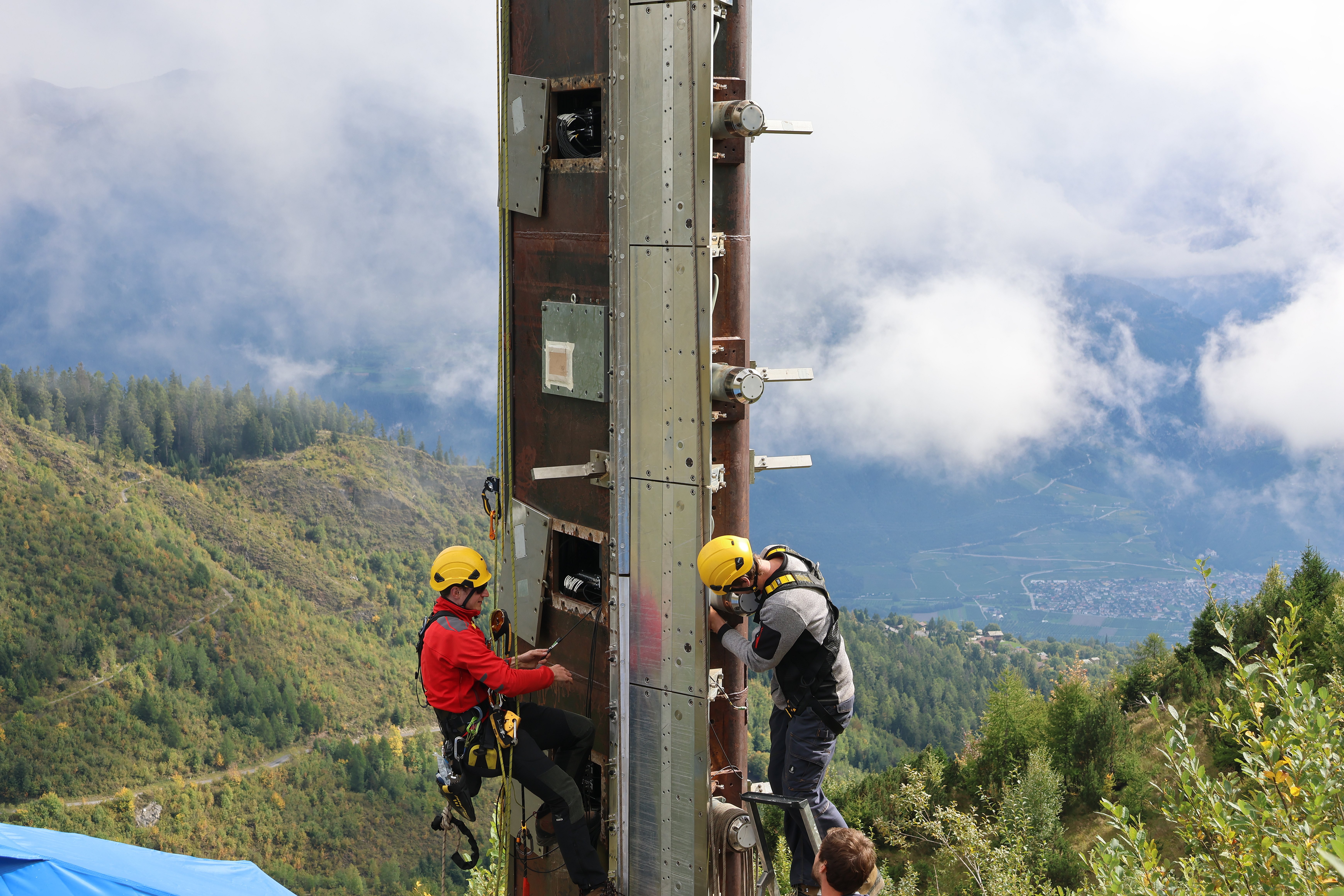
Image 5 of 11
Michael Hohl and Urs Flütsch from the Experimental Facilities group carrying out work on the 20-metre-high pylon. (Photo: Roman Oester / SLF)

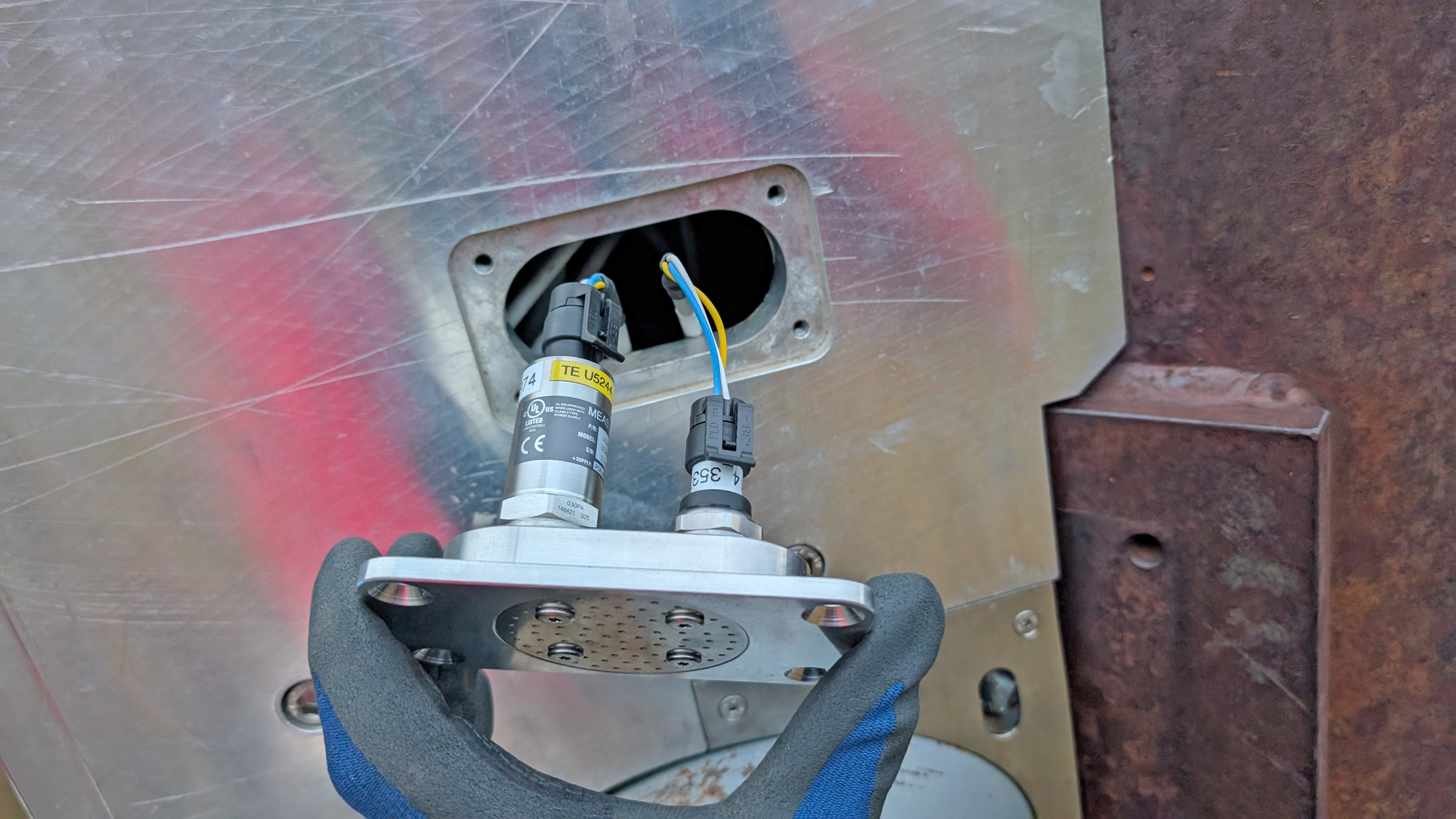
Image 6 of 11
Fitting an air pressure sensor in the 20-metre-high pylon. (Photo: Michael Hohl/SLF)

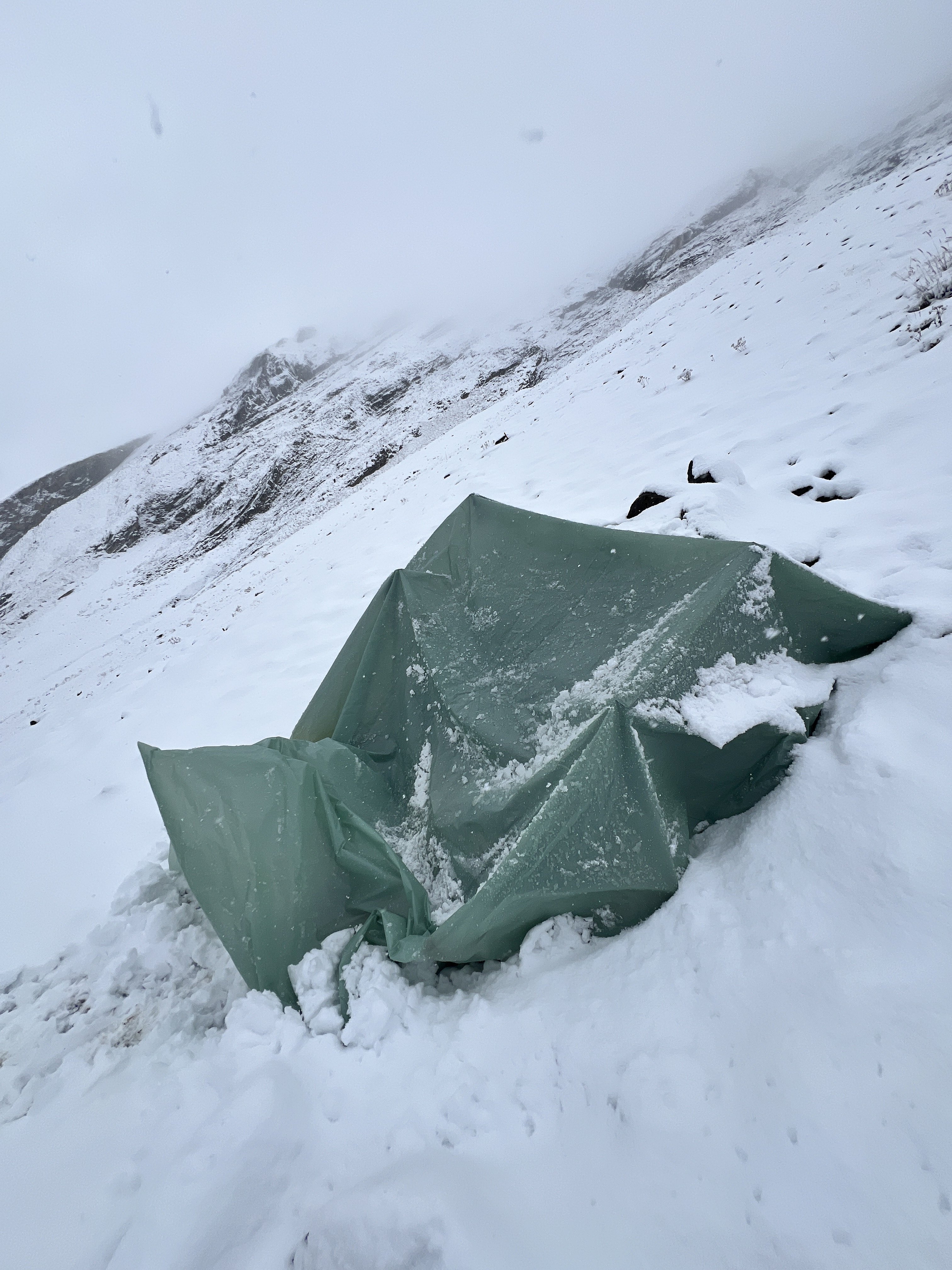
Image 7 of 11
The Experimental Facilities group had to carry out the final work on cavern A in snowy conditions. (Photo: Jens Kaufmann/SLF)

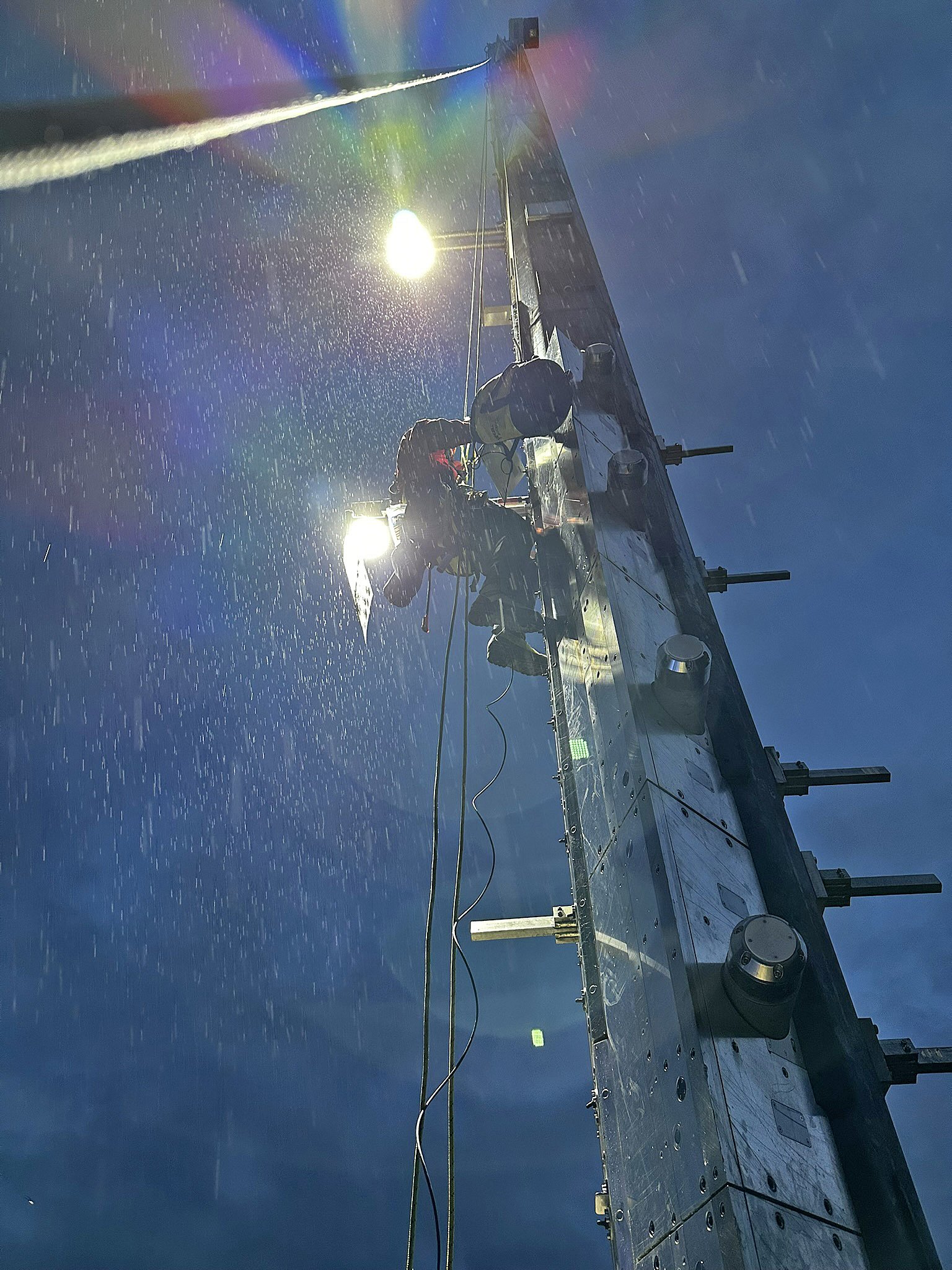
Image 8 of 11
Michael Hohl performs manual tests to check whether the new data acquisition systems are registering the signals from the sensors. (Photo: Cristina Pérez Guillén/SLF)
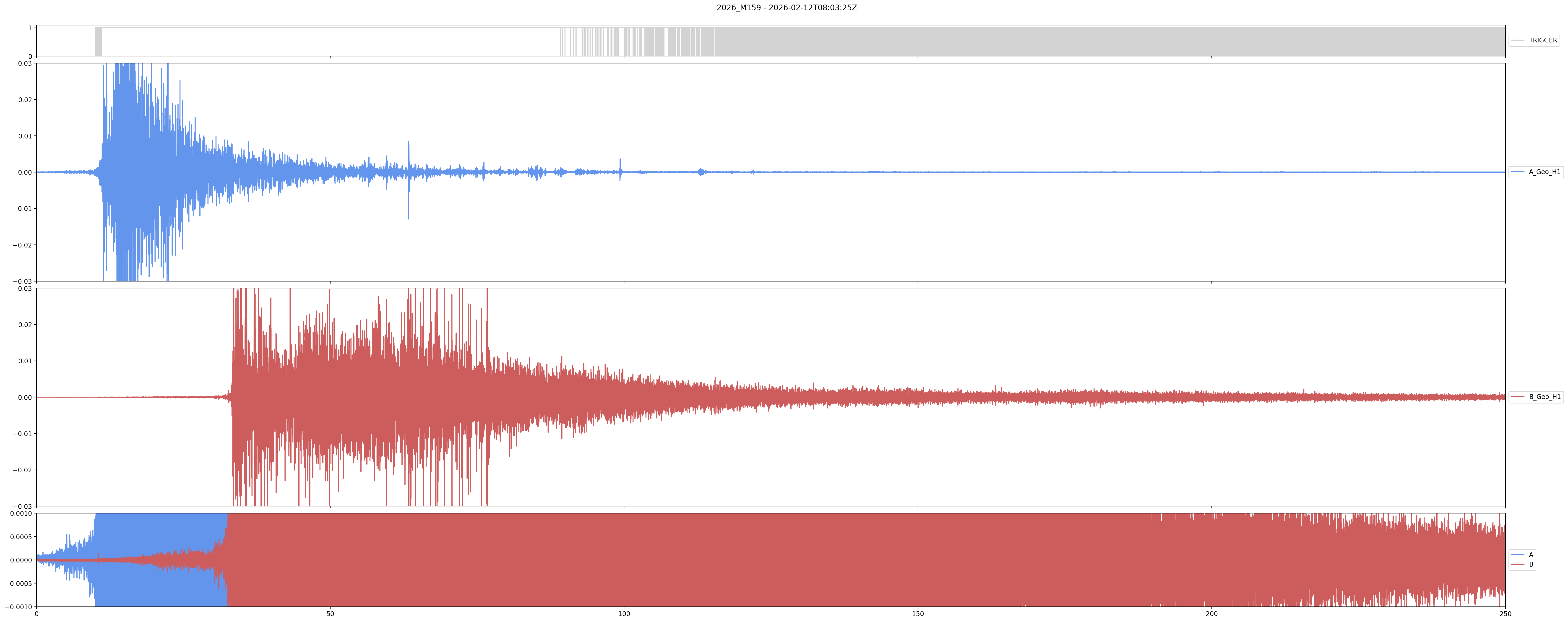
Image 9 of 11
Seismic signals from a powder avalanche. Blue: recording at cavern A; red: recording at cavern B. (Graphic: SLF)

Image 10 of 11
Inside the avalanche: high-speed footage of an avalanche hitting the 20-metre-high pylon, slowed down by a factor of around seven. (Video: Ivan Calic / SLF)
Image 11 of 11
Thanks to high-speed footage, researchers can use a computer model to track individual particles and analyse the directions in which they are moving. (Animation: Ivan Calic / SLF)
Links 
Contact 
Copyright 
WSL and SLF provide image and sound material free of charge for use in the context of press contributions in connection with this media release. The transfer of this material to image, sound and/or video databases and the sale of the material by third parties are not permitted.