
Contact 
Anja Mödl is a PhD student in the Snow Processes group at the SLF. She is spending one and a half months at the Italian Mario Zucchelli station in the Antarctic. Together with her Finnish colleague Roberta Pirazzini, she wants to determine the properties of the surface scattering layer. In the logbook blog, she reports on her work and her stay in Antarctica. Part 2.
I've now been in Antarctica for three weeks - half time. On the one hand, my start in Davos feels far away. On the other hand, the time has passed so quickly. But a lot has already happened. We celebrated Christmas, New Year's Eve and New Year here. But more importantly, we've also been able to take some good measurements.
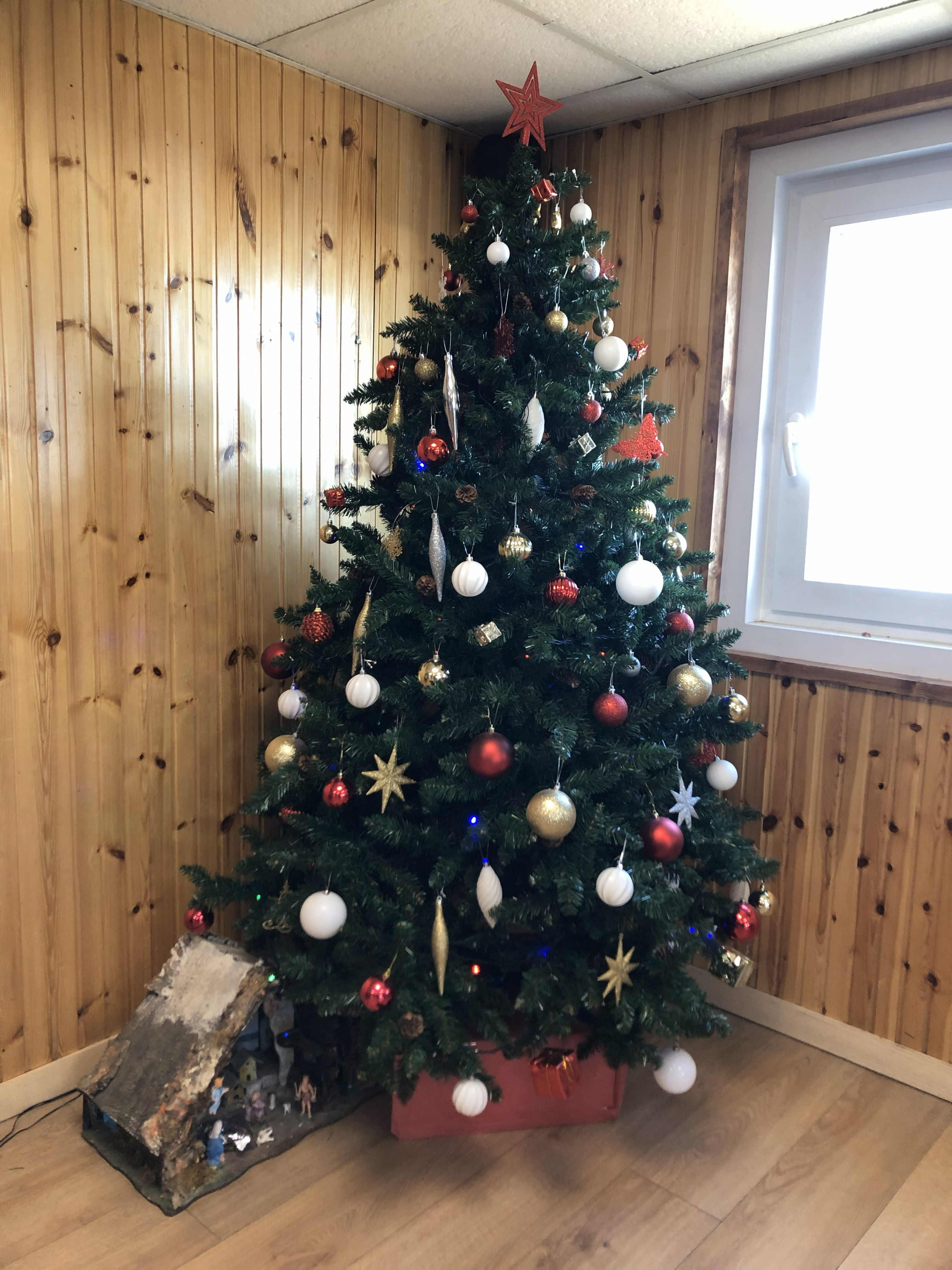
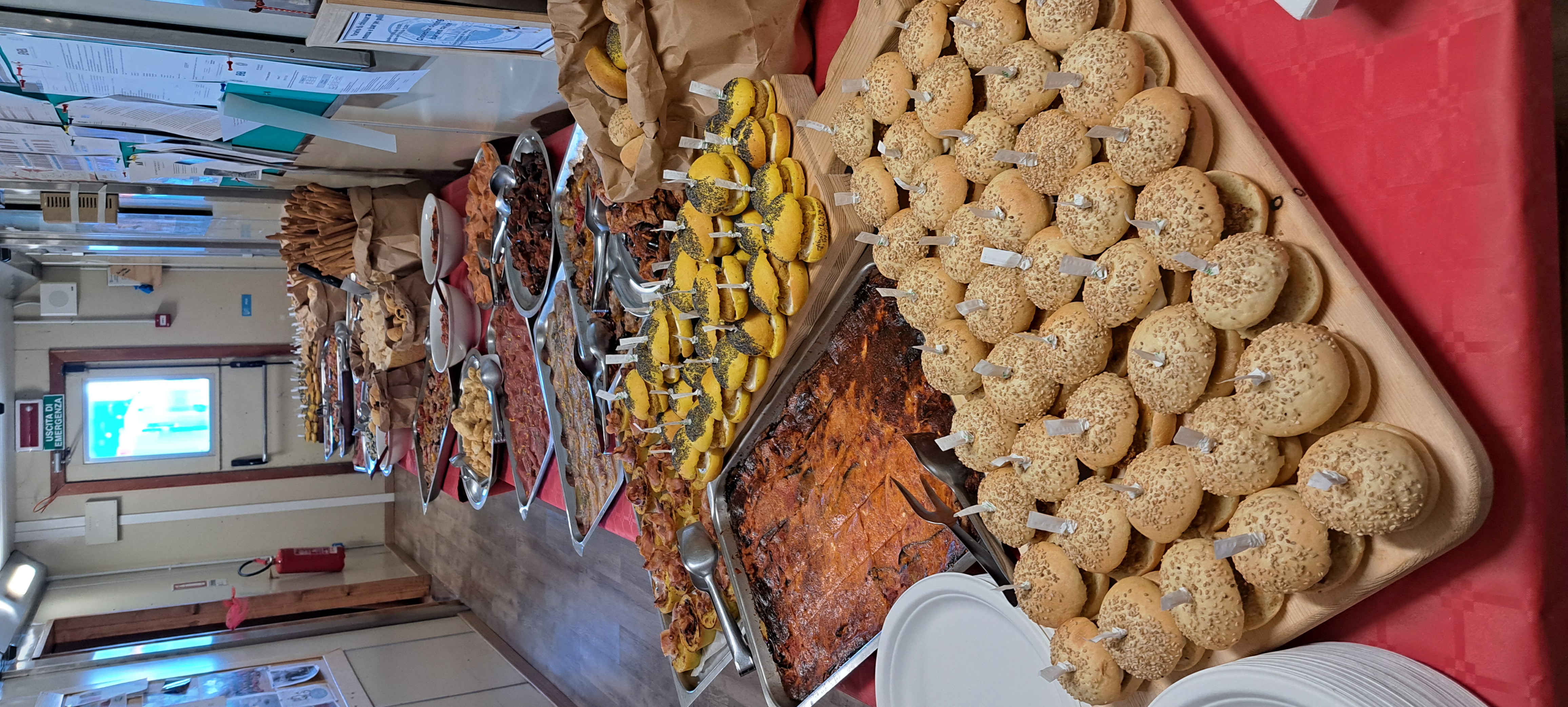
I hope you all had a good start to the new year. For me, 2025 ended 12 hours earlier in bright sunshine. That was definitely a unique experience I will never forget. But let's start with Christmas. On December 23, it suddenly became very stormy - the wind speed reached up to 95 knots. These katabatic winds actually come every year in early summer and cause the sea ice to be blown into the open ocean. But despite the stormy weather outside, the station became more and more christmassy, the cafeteria and common rooms were decorated, and even a Christmas tree with a nativity scene was put up. On December 24th, Christmas carols could be heard everywhere during work. At 7 p.m., we all met in the bar in our most festive attire. Afterwards, we had fish and seafood, which, I was told, is a typical Italian Christmas dinner, and Italian Christmas sweets such as panettone, torrone and baci di dama for dessert. After dinner, we ended the evening with a convivial get-together. On December 25, we all had the day off, except for the chefs. They conjured up a gigantic three-course menu for lunch that day with a buffet of antipasti starters, three different main courses and Christmas cookies for dessert. It was my classiest Christmas dinner yet - and in Antarctica! A bingo raffle was held in the afternoon. The prizes were donations that had been collected beforehand. One could win anything from a motorcycle helmet to military badges, selfmade wooden penguins, sweets and a pack of wet razors. We definitely had a lot of fun.
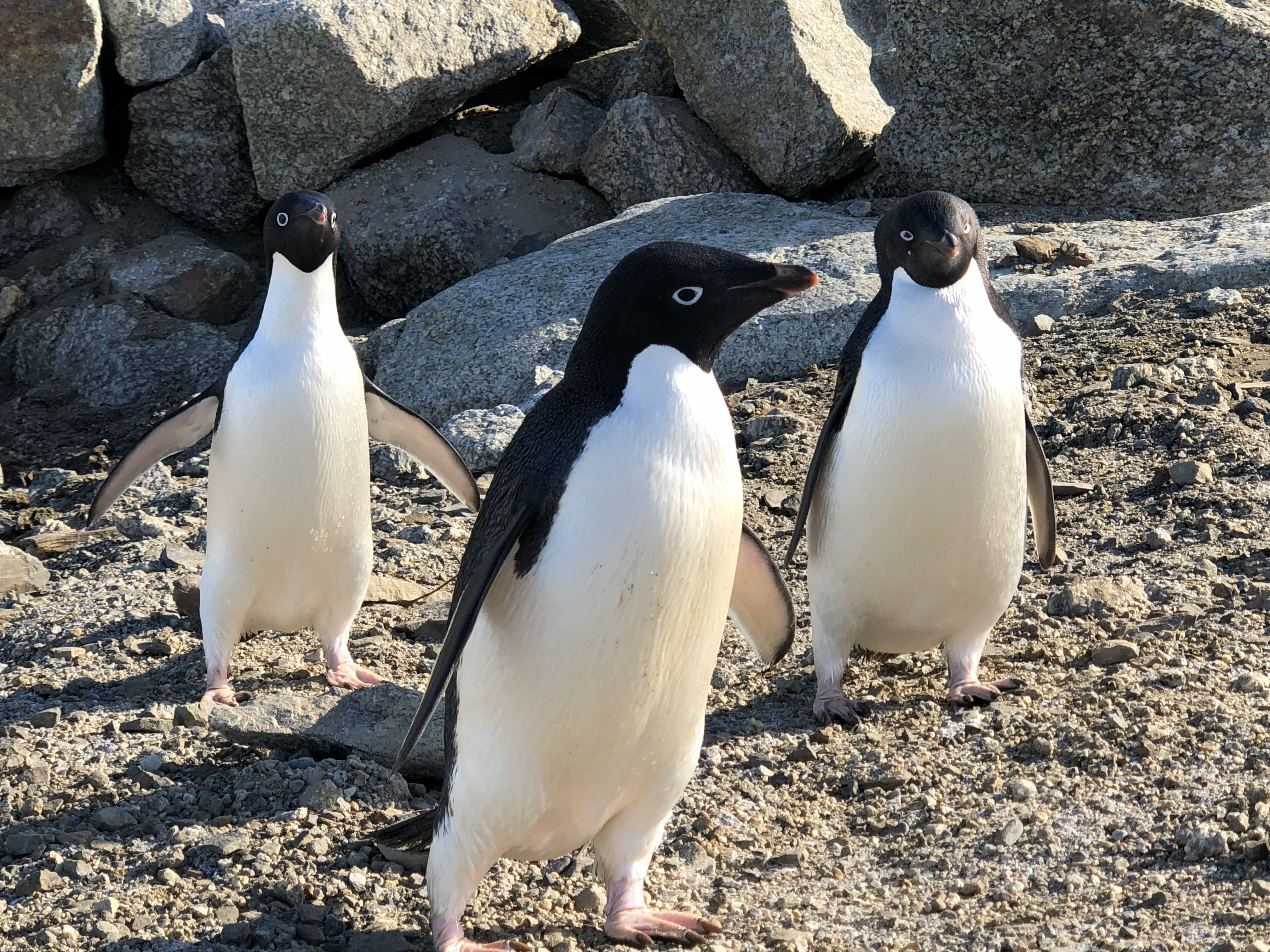
On New Year's Eve, there was also an aperitif and a three-course meal, followed by the obligatory New Year's Eve party with dancing and partying into the new year. At midnight, I climbed a small hill outside with a few others and we welcomed in the New Year with a magnificent view. As it was another day off for us on New Year's Day, we were fortunately able to sleep in. But everyone was fit again by lunchtime at the latest, because no one wanted to miss out on the outdoor barbecue in what felt like 5 degrees and sunshine. I had hoped that we would celebrate Christmas and New Year here in Antarctica, but the fact that there was so much on offer far exceeded my expectations.
Of course, even with all the celebrating, we didn't forget to work. Between Christmas and New Year, the wind died down and we were able to fly to our measuring field twice.

Our first priority there was to realign and stabilize the two weather stations. However, this was not easy, because when we arrived at the Nansen Ice Shelf on December 28, we were in for an unexpected surprise. Firstly, the entire surface had been transformed into a surface scattering layer. Where a week earlier there had been a clear difference between areas of ice, snow and surface grit, now everything was uniformly white. The really unpleasant surprise, however, was the resulting surface instability. Every step had to be taken with caution, as there was a risk of breaking through the top layer of ice knee- to waist-deep and thus standing in the water below. This actually happened to me and my entire foot was wet. Fortunately, I had spare clothes with me and it wasn't very cold, but I had to keep wearing the wet shoes all day. Under these circumstances, it was difficult to find a stable place to reattach our stations. I am still fascinated by the fact that the helicopter was able to land there safely. In addition to the instability of the surface, the melting also created a large lake very close to our measuring field. The meltwater can only run off the ice shelf to a limited extent and therefore accumulates underground or above ground. A glacier melt on this scale has never before been observed on the Nansen Ice Shelf, but it is part of a time series in which extreme conditions are exceeded year after year. This is truly frightening and clearly shows us the consequences of global warming, which are demonstrably felt most strongly at the poles. It is therefore all the more important that we documented this event with our measurements and thus have a unique data set for researching the effects.


After this wet experience, we organized rubber boots and fishing pants for the next field day, which took place three days later. In hindsight, however, this would not have been necessary, as it got a little colder and the surface layer became more stable. Again, proof of how quickly the conditions here can change radically. This is particularly interesting for us, as we want to better understand precisely these processes in the formation and development of the surface scattering layer. To this end, we also carried out manual measurements of the surface properties on both days. At selected locations, we measured the temperature, density and SSA as well as the structural composition and reflectivity of the surface scattering layer. On the second day, we also used a drone to take area-wide true color and surface temperature images. The former were used to determine the surface type and roughness. We already have promising data and if we can continue working in this way, we would be very satisfied. However, it will soon become clear that these will be our last measurements on site for the time being. But more on that in the next blog.
Links 
Copyright 
WSL and SLF provide image and sound material free of charge for use in press releases in connection with this media release. The use of this material in image, sound and/or video databases and the sale of the material by third parties is not permitted.