

10.06.2026 | Delia Landolt | SLF News
Plenty of water, fine-rich sediments and a steep slope – that's all it takes to create a hazardous debris flow. A team from the SLF studied ten different debris-flow channels in Switzerland to gain a fuller understanding of flows. The findings pave the way for the next generation of debris flow models.
- Debris flows causing extensive damage: the annual cost in Switzerland tops CHF 100 million.
- New findings on erosion: particularly large channels with fine-grained sediments have a high potential for erosion.
- Next-generation models: SLF researchers combined soil measurements and drone data as input for next-generation debris flow models.
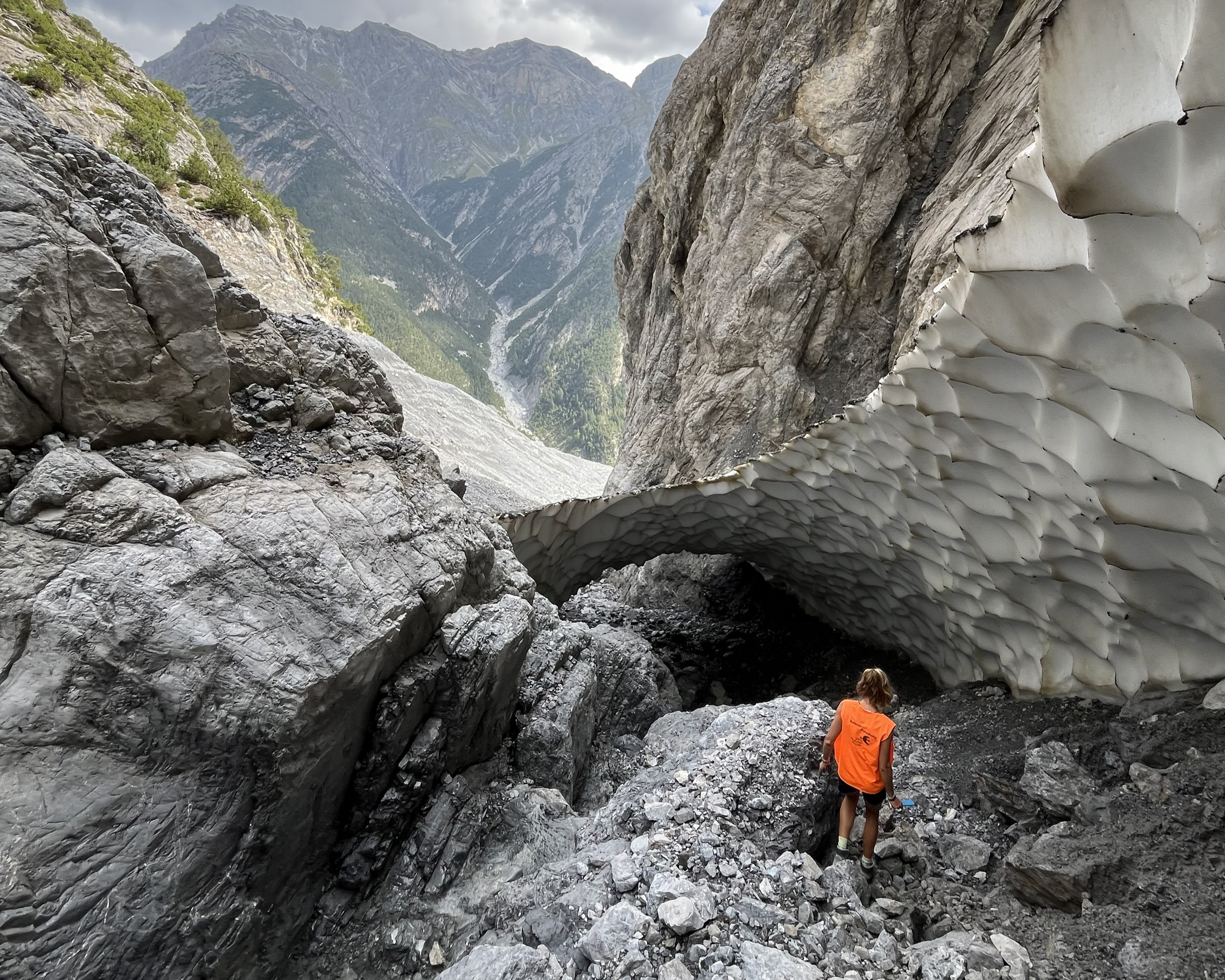
A brown mass – a mixture of water, boulders and fine matter – ploughs through the landscape. The mountains wash more than a thousand lorry-loads of material into the valley on a fairly regular basis, causing damage in excess of CHF 100 million per year in Switzerland alone. A better understanding of this natural hazard requires data from the debris flow channels, of which there are very little due to the complex surveying process. The Alpine Mass Movements and Alpine Remote Sensing teams at the WSL Institute for Snow and Avalanche Research SLF have changed this. In summer 2024, they investigated ten different debris flow channels. Researcher Hervé Vicari is now explains his findings.
Rule of thumb for erosion caused by debris flows 
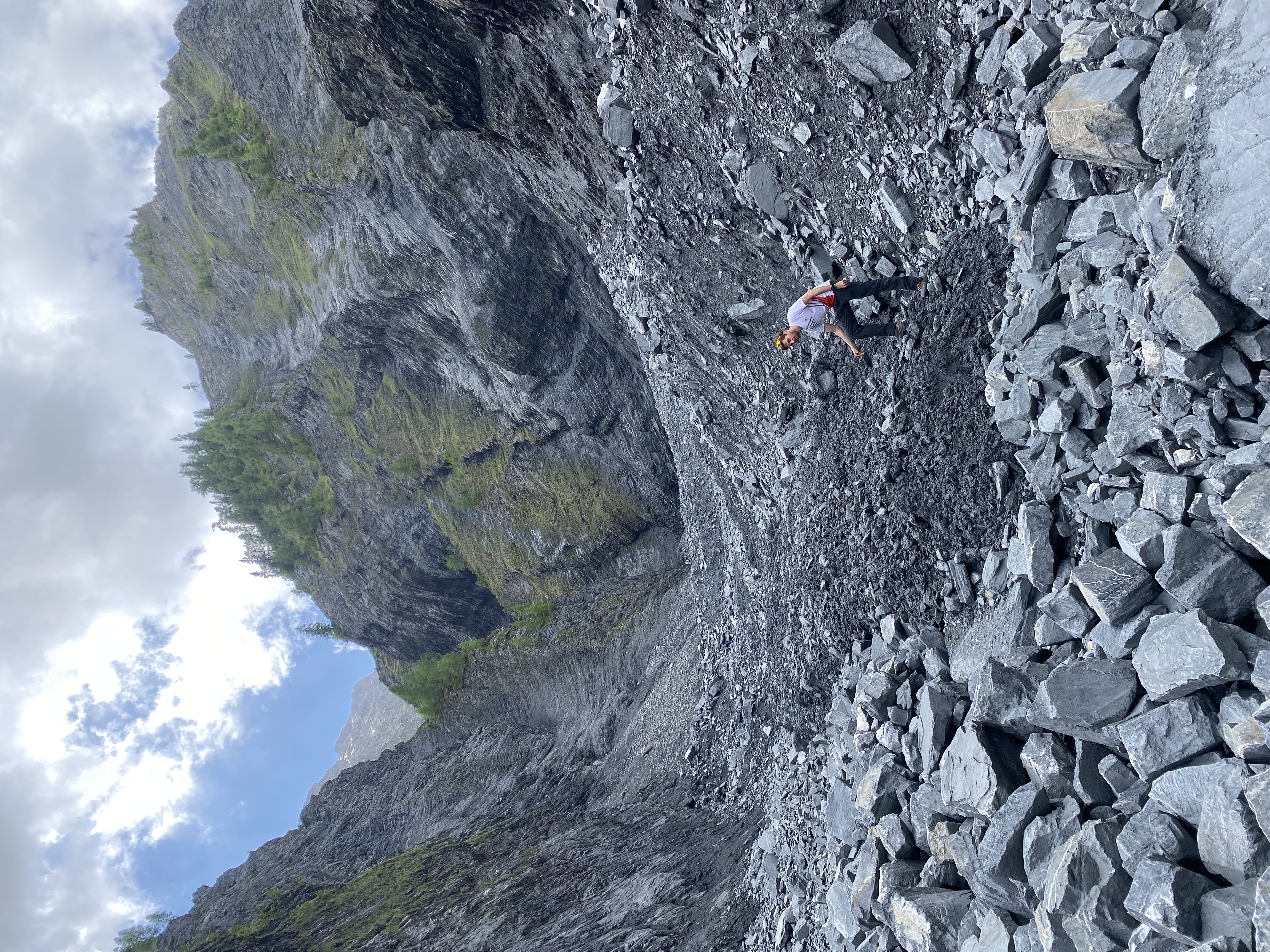
As regards the factors that lead to hazardous debris flows, Vicari offers the following rule of thumb: "Large steep channels with fine-rich sediments have the greatest erosion potential. Fine-rich sediments erode faster because they're less permeable to water, and so the water pressure can't be dissipated." The research group has also developed a new model which considers the solid and liquid components of a potential mudflow separately. Previous models had treated debris flows as an equivalent fluid, thus neglecting decisive mechanical parameters. The next-generation debris flow models therefore take into account how water and sediments from the channel bed interact. This enables a more realistic and natural simulation of the debris flow dynamics. "The more water there is in the debris flow's mud–gravel mixture, the lower the friction between the particles and the more material erodes out of the channel," explains Vicari.
Fieldwork in the channel bed 
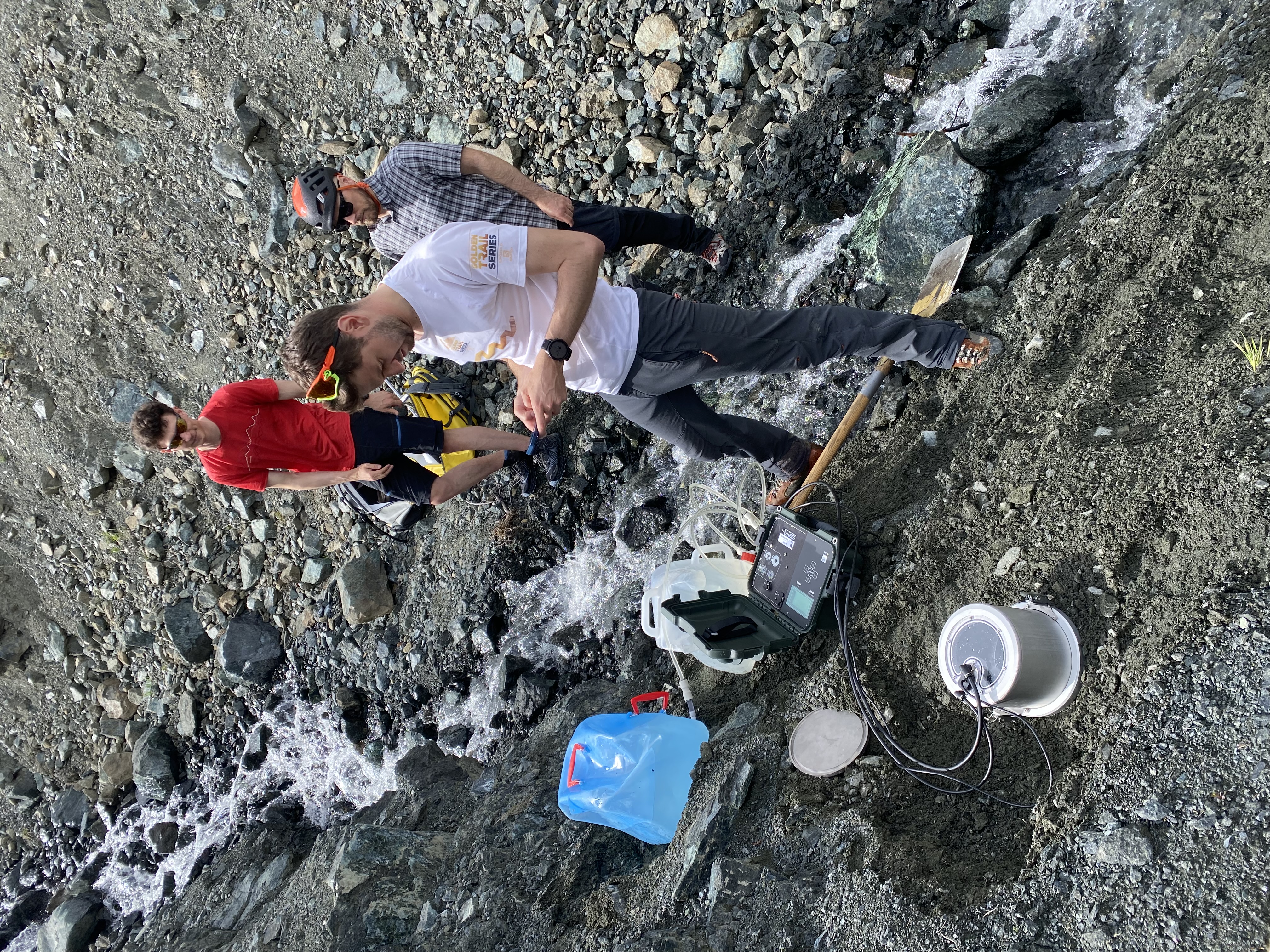
To extract data from the debris flow channels, specialists in alpine remote sensing were called in. Using repeated drone flights, they recorded changes in the channel bed's elevation due to erosion and deposition. Debris flows carry away a lot of material, especially in steep channel sections. However, a debris flow is not caused by topography alone, which is why Vicari and his team also investigated soil stability and grain size of the sediments.
Links 
Kontakt 
Copyright 
WSL and SLF provide image and sound material free of charge for use in the context of press contributions in connection with this media release. The transfer of this material to image, sound and/or video databases and the sale of the material by third parties are not permitted.