

15.07.2026 | Delia Landolt | SLF News
Heavy precipitation becomes more intense with every degree the Earth warms. This has an impact on flooding. Using hourly data from 384 rivers in the Alps, staff from the WSL Institute for Snow and Avalanche Research SLF have modelled how flooding will change by the end of the century. Their projections are significantly bleaker than earlier ones.
- New flood projections: Climate models based on hourly rather than daily data show significantly more intense and frequent flooding in the Alps.
- Dangerous heavy rainfall: More intense precipitation, even lasting for short periods, is the main cause of more frequent flooding.
- Extreme events on the rise: A present-day 100-year flood event could be five to fifteen percent more intense in the future and occur every 45 to 80 years.
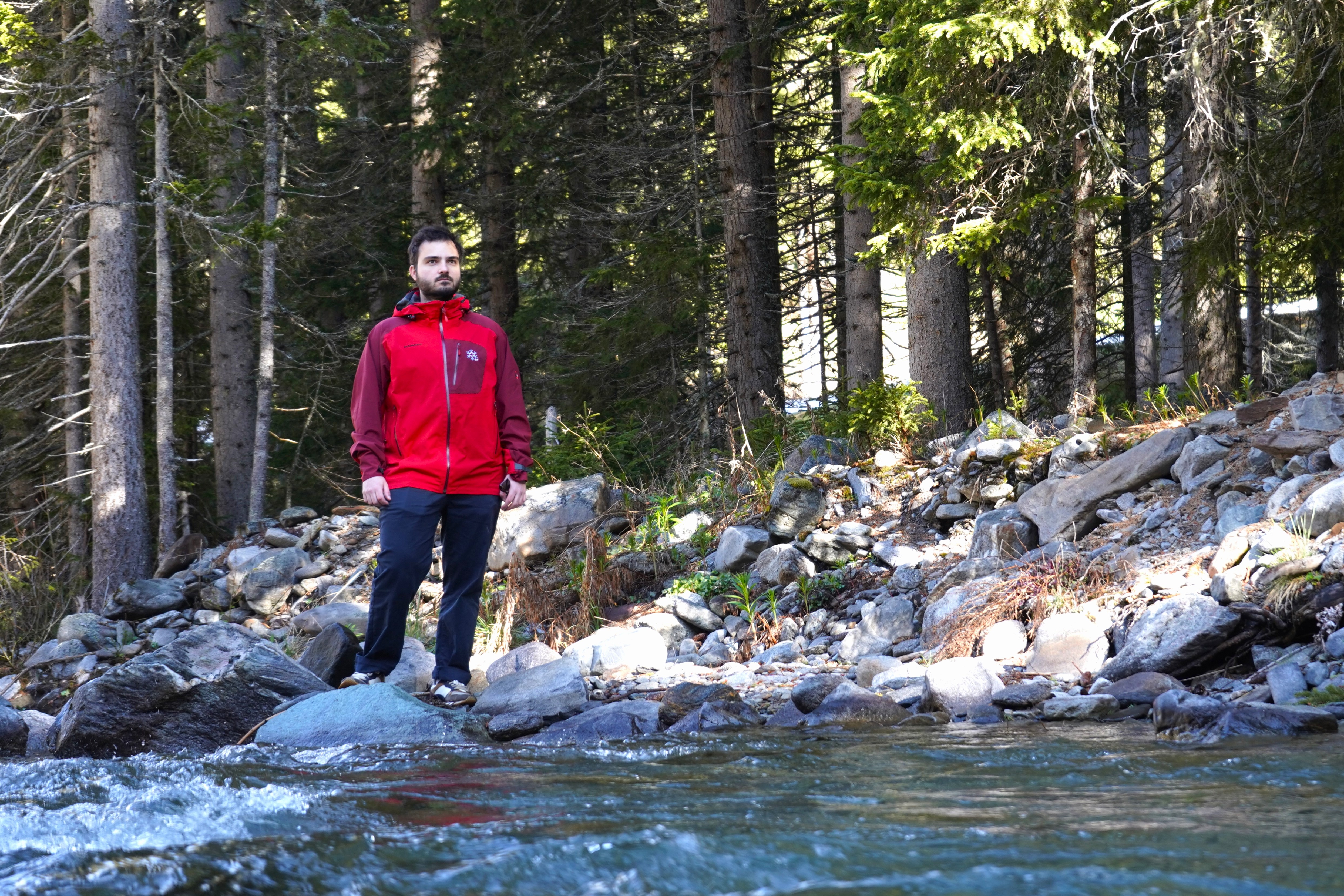
Spring and summer bring the snowmelt season, causing mountain streams and rivers to swell, in some cases to the point of bursting their banks. The Hydrology and Climate Impacts in Mountain Regions research group at the WSL Institute for Snow and Avalanche Research SLF is investigating this issue. Previous studies have found that flooding in the Alpine region could decline or remain stable by the end of the century due to less snow melting in spring. These projections are based on daily model input data (see box), but such data does not adequately account for short bursts of heavy precipitation. For this reason, the Federal Office for the Environment (FOEN) commissioned SLF hydrologist Paul Astagneau to develop updated projections. The researcher had access to data from 384 rivers in Switzerland and Austria, for which hourly discharge measurements had been recorded. Using a hydrological model, Astagneau simulated flood events from the present day until the end of the century – and was astonished by the results: “We hadn’t expected such significant differences compared with the daily data.”
Daily vs hourly data
Previous studies on flooding and climate change simulated the volume of water passing through a specific point in a stream over an entire day. Such data does not adequately capture short, intense precipitation events, as these are averaged out over the course of the day and are therefore no longer distinguishable. Consequently, SLF hydrologist Paul Astagneau based his calculations on the volume of water passing through a specific point each hour. In other words, he used 24 data points per day instead of one.
Extreme events to change more substantially 
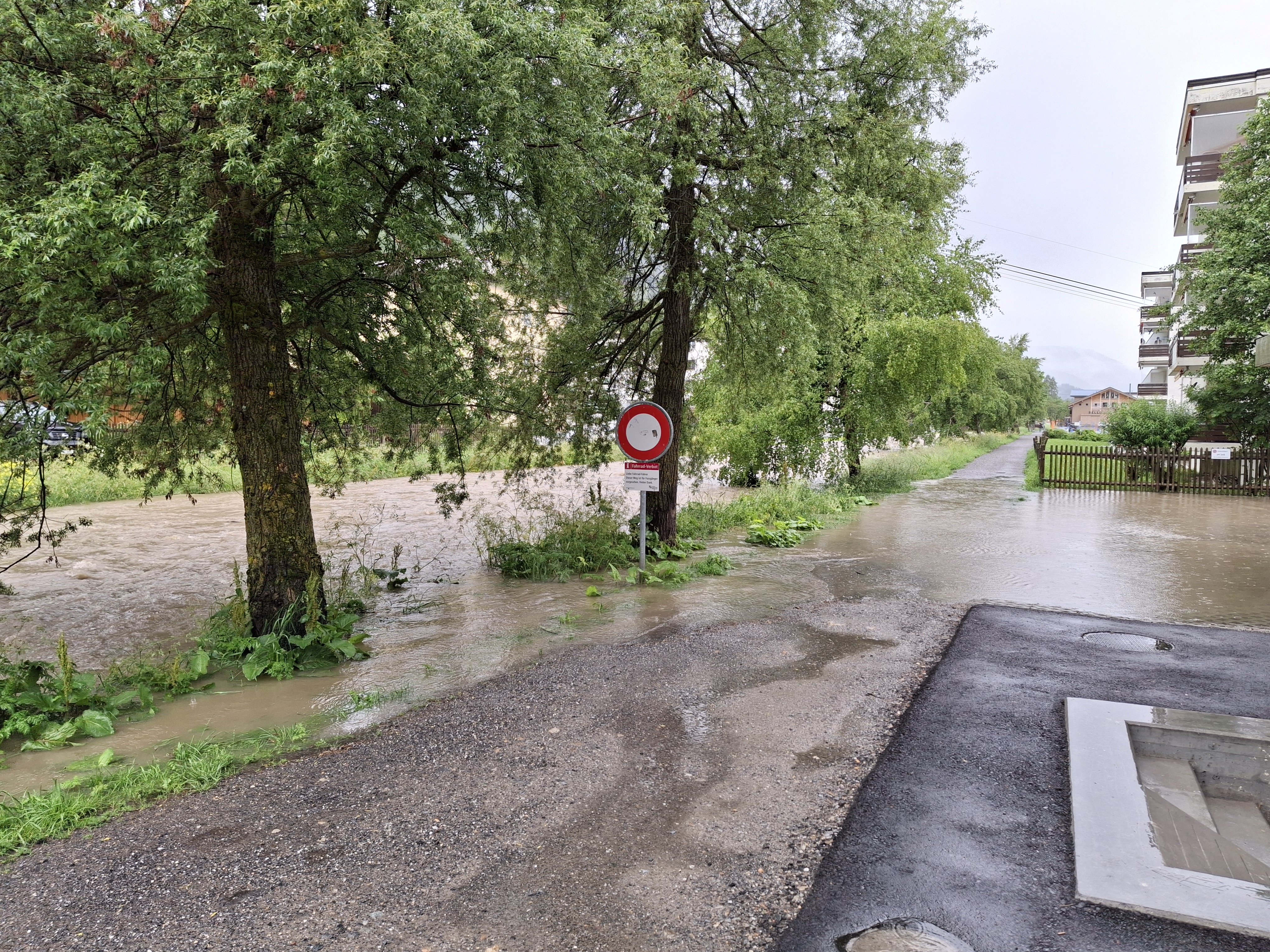
Flooding in the Alps is caused by summer thunderstorms, prolonged precipitation on saturated ground, or a combination of rain and snowmelt. The intensity of precipitation is increasing as a result of climate change, particularly on timescales of less than a day. More specifically, for every additional degree Celsius, hourly heavy precipitation becomes around seven percent more intense. As a result, the rain more than offsets the decline in snowmelt, as the analysis of the hourly simulations shows: due to climate change, floods are more likely to increase rather than decrease, even in snow-fed Alpine streams, and are set to occur more frequently, even by the middle of the century. A 100-year flood, i.e. one that occurs once a century on average, is projected to become five to fifteen percent more intense in the Alps. This refers to the peak discharge, in other words the highest water level expected during this flood event. At the same time, 100-year floods could occur more often in the future – every 45 to 80 years. For moderate floods, such as those with a two-year return period, flood magnitudes in mountainous regions are still projected to decline, although less than previously estimated. Astagneau sums it up: “Extreme events will change more substantially than moderate floods.”
Link 
- To the study “Rethinking future flood hazard: Hourly data challenges daily flood projections in Alpine catchments”
Contact 
Copyright 
WSL and SLF provide image and sound material free of charge for use in the context of press contributions in connection with this media release. The transfer of this material to image, sound and/or video databases and the sale of the material by third parties are not permitted.