

09.02.2026 | Delia landolt | SLF News
In terms of area, forest is the most important means of avalanche protection. It is also the most cost-effective and is naturally renewable. This insight hit home after the winter of 1951, when over 1,000 avalanches caused immense damage. The SLF began researching how protection forests could be sustainably developed.
- Natural avalanche protection: For a long time, forests were overexploited. As a result, they became sparser and were pushed down to lower elevations, impairing their protective function.
- Many avalanches released around the treeline: Damaging avalanches in the winter of 1950/51 swept away 2,100 hectares of forest.
- Lessons for today: Thanks to successful reforestation and sustainable management, half of Switzerland's forests now protect against one or more natural hazards.
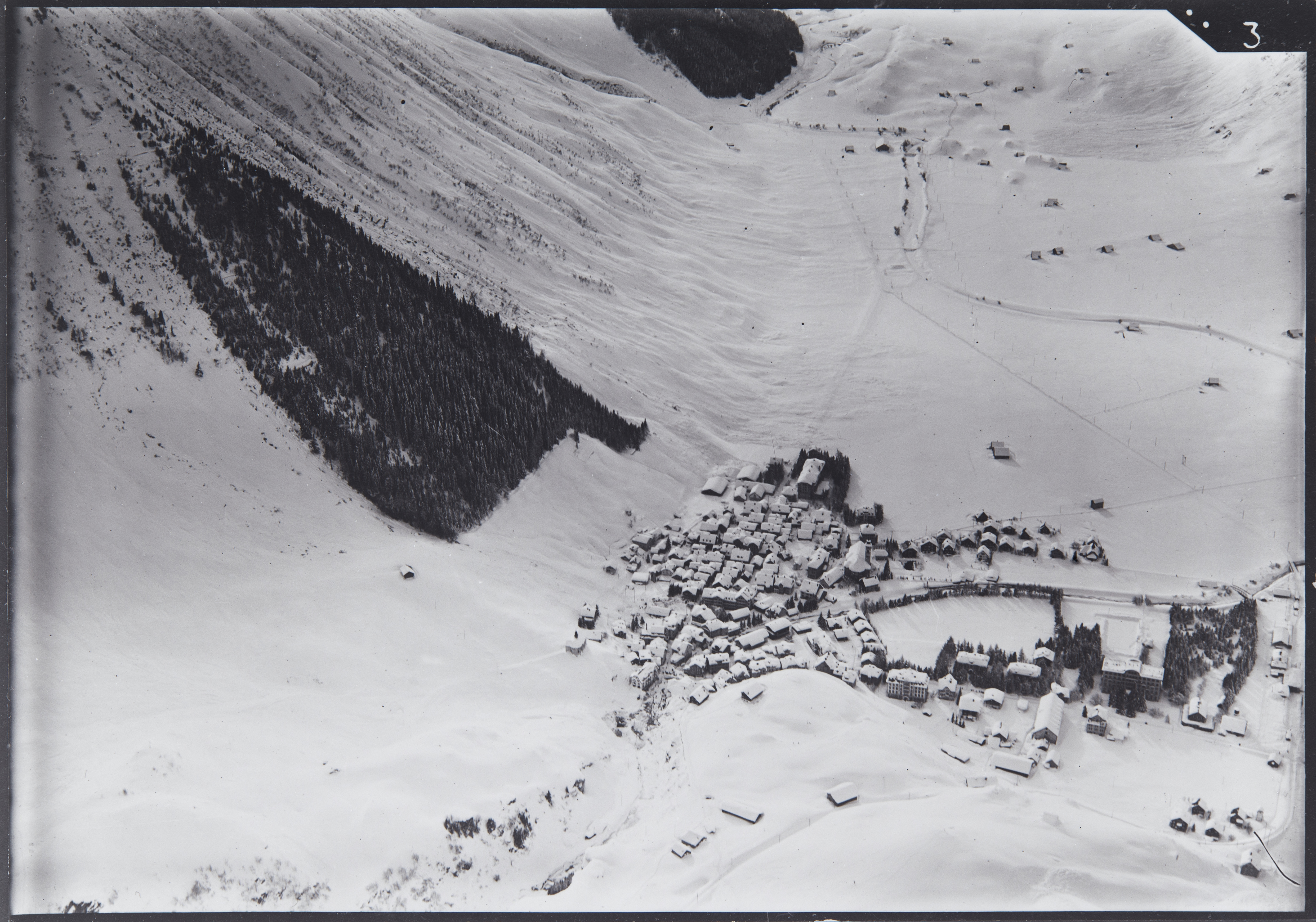
Many people living below forests felt safe during the winter of 1950/51, when two prolonged periods of precipitation each brought over two metres of snow. The north side of the Alps was hit in January, and the south side, especially Ticino, in February. The snow often broke loose at or below the treeline, between 1,800 and 2,300 metres above sea level. "The breaks also occurred in places where no avalanches had been observed since time immemorial," noted the documentation for the four-day academic conference organised by the Institute for Snow and Avalanche Research (SLF) in Davos in October 1952. The theme of the conference was 'The avalanche winter of 1950/51 and its implications for avalanche defence'. The 'Winter of Terror', as it became known, claimed 98 lives. According to SLF protection forest expert Peter Bebi, "some of those deaths could have been prevented if protection forests had been in place where they could naturally grow".
Legislation for protection forest 
Until the second half of the 19th century, wood was in high demand as a building material and energy source in mountain regions. Forests were heavily overexploited or even completely cleared, and overgrazing prevented regeneration. This resulted in avalanches, landslides and floods. Effective safeguarding of protection forest and its promotion through reforestation did not come until the Forest Act of 1876. Instrumental in this was the then chief federal forestry inspector, Johan Coaz.
The treeline – past and present
In the Alps there is a lot of variation in the natural treeline, which is situated along an elevational gradient ranging from approximately 1,800 metres in the Alpine foothills to around 2,300 metres in the Central Alps (the average elevation being around 2,050 metres above sea level). In recent decades, and increasingly since the warming that began in the 1980s, the treeline has been rising by an average of around one metre per year. However, there are big regional differences: while many treelines controlled by grazing have not moved since 1951, some regions have seen significantly greater rises, particularly where active reforestation measures have been implemented or grazing has been abandoned.
Most important protection in terms of area 
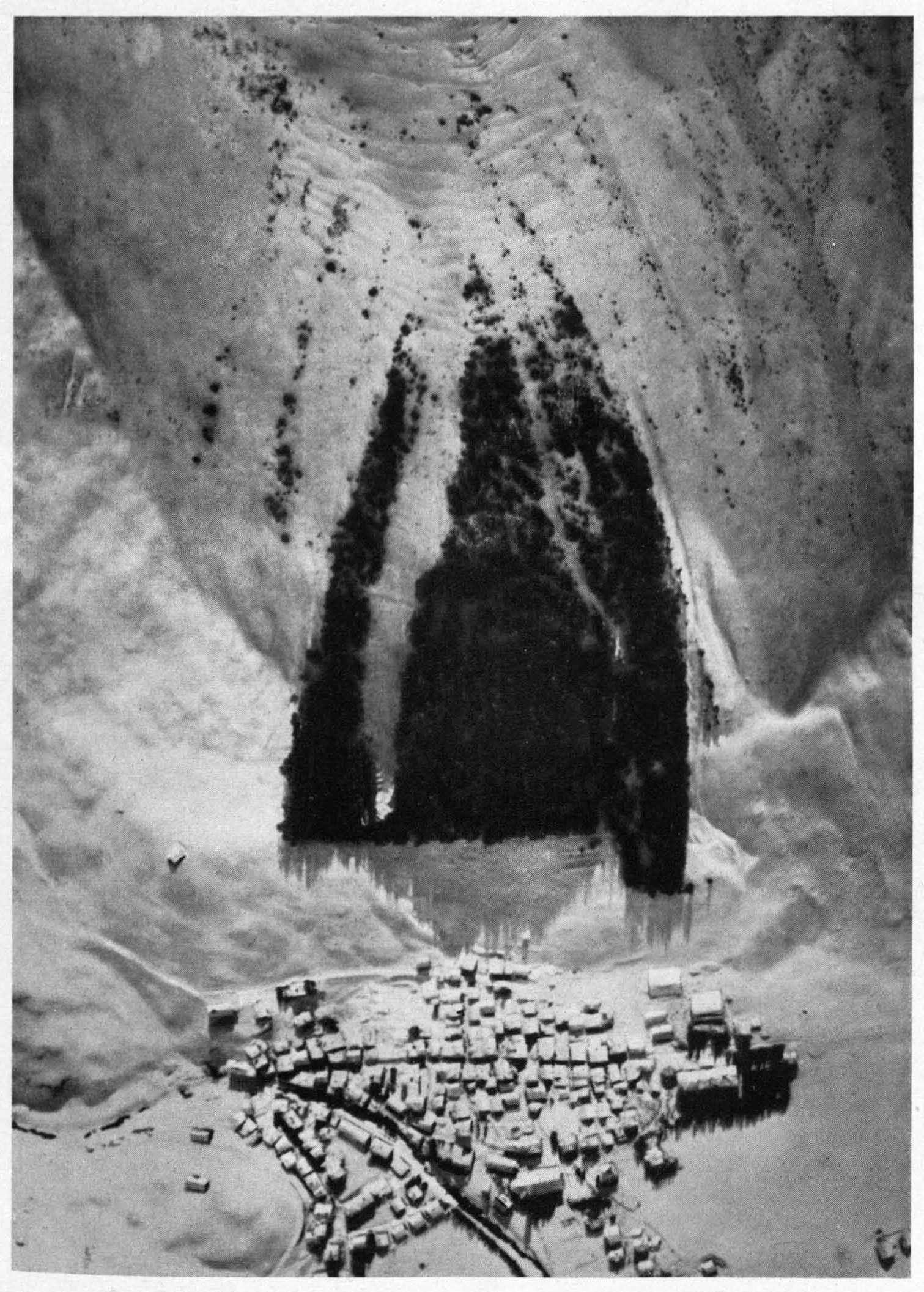
When the heavy snowfall began in 1951, Switzerland's sparse and overexploited forests had not yet fully recovered. "Combined with the large amounts of sometimes loose snow, this led to situations, particularly in January 1951, which mercilessly exposed the weaknesses of protection forest," explains Bebi. The majority of the over 1,000 damaging avalanches affected forest areas, covering a total of 2,100 hectares. The SLF protection forest expert adds: "The research conducted in the wake of the avalanche winter of 1951 showed that forests are the most cost-effective and, in terms of area, the most important means of avalanche protection, and what's more they grow back naturally." The experts at the 1952 conference reached a similar conclusion, calling for "no avalanche defence without reforestation". "That, of course, only makes sense at elevations suitable for forest," cautions Bebi.
Findings from Stillberg 

The avalanche winter of 1951 led to close cooperation between the SLF and the Federal Institute for Forest Research, now the Swiss Federal Institute for Forest, Snow and Landscape Research (WSL). Together, they developed suitable techniques for establishing well-structured protection forests at higher elevations. Key findings have come from the Stillberg research site, located at the treeline in the Dischma Valley near Davos. Whereas saplings used to be planted in geometric rows, nowadays there is more of a tendency to place them in groups with spaces in between. The aim is to ensure diversity in terms of forest structure, species and age. Today, around half of Switzerland's forests protect settlements, roads and railway lines from natural hazards such as avalanches and landslides.
The avalanche winter of 1950/51 – a state of emergency in Switzerland
Well-above-average precipitation in November, January and February led to disaster. In mid-January alone, it snowed non-stop for 88 hours. New fallen snow accumulated to depths only seen around every 50 to 100 years (up to 250 cm). The facts:
- Two tragic climaxes in January and February
- Well over 1,000 damaging avalanches reported
- 98 fatalities
- 234 people buried
- 235 head of livestock killed
- Around 1,500 buildings destroyed
- Worst-hit areas: Airolo (canton of Ticino), Andermatt (canton of Uri) and Vals (canton of Grisons)
- Financial losses running into hundreds of millions of Swiss francs (adjusted for inflation)
- 30,000 kg of supplies airdropped to cut-off communities (total flight time: 167 hours)
More details can be found in the first instalment of this four-part SLF series on the avalanche winter of 1950/51.
SLF series: Avalanche winter of 1951 
- Part 1: How the disaster came about and what consequences it had
- Part 2: How SLF research helped to improve protective structures after the avalanche winter
- Part 3: How SLF researchers began to develop hazard maps and what these maps tell us
- Part 4: What insights the SLF gained on the subject of protective forests in the decades after 1951
Links 
Contact 
Copyright 
WSL and SLF provide image and sound material free of charge for use in the context of press contributions in connection with this media release. The transfer of this material to image, sound and/or video databases and the sale of the material by third parties are not permitted.