

06.11.2026 | Jochen Bettzieche | SLF News
Will the snow come too late – or too early? Following a record-breaking summer, there is a risk of gliding avalanches, warmer permafrost and problems with snowmaking. SLF researchers answer some key questions and explain why the timing of the first snowfall is crucial.
- Winter 2026/27: following the hot summer, the snow might arrive later – but not necessarily in smaller quantities.
- Downhill and cross-country skiing: high temperatures and a shortage of water pose challenges for artificial snowmaking.
- Avalanche danger and permafrost: early snow on warm ground means increased risks in the mountains.
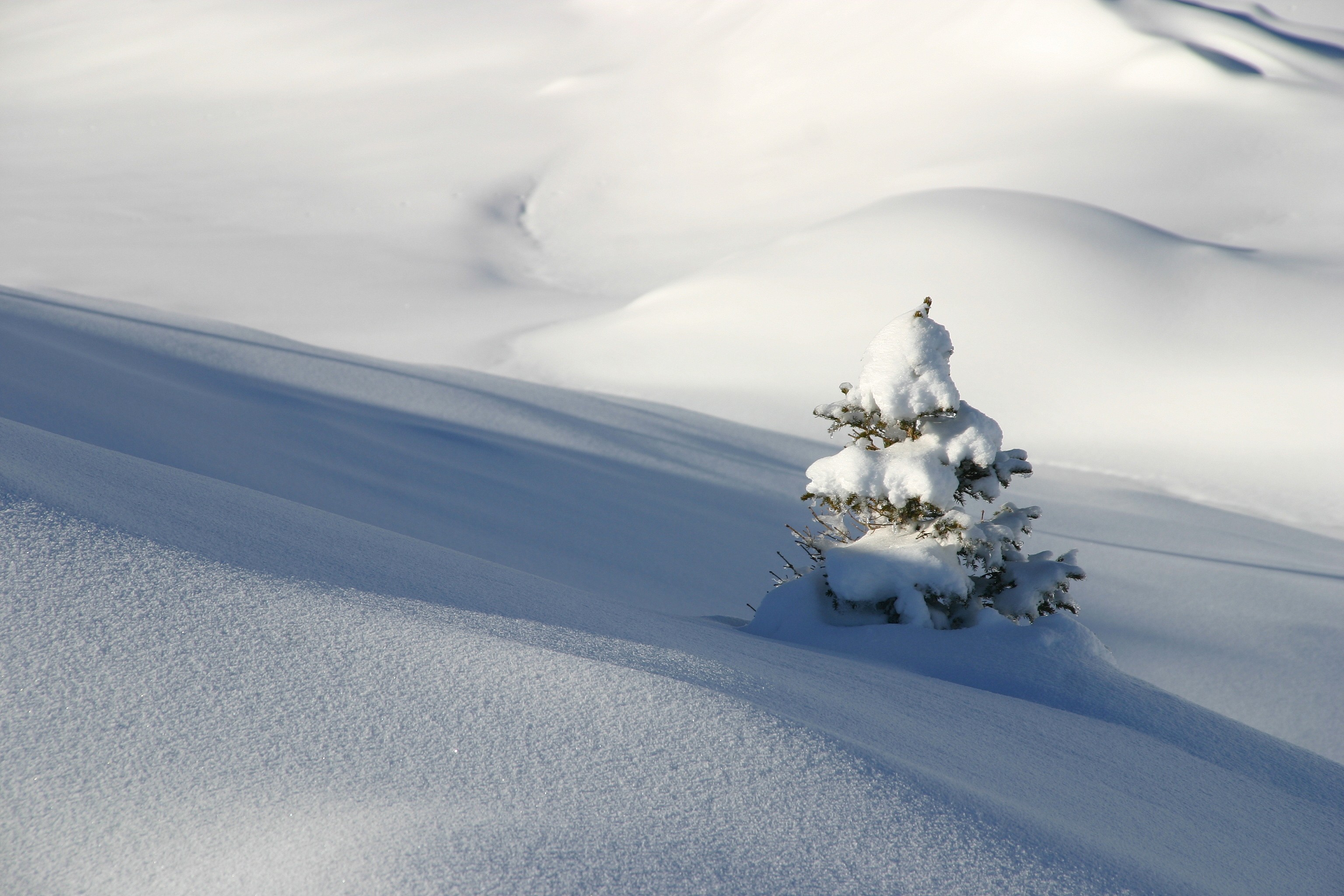
After a hot and dry summer, the cold season is drawing ever closer, with snow falling down to medium elevations, albeit only sporadically. Since mid-October, many mountain peaks are already glistening white. Winter sports enthusiasts are getting ready and hoping that a thick, white blanket of snow will soon cover the mountains. But it’s best if that doesn’t happen too quickly. A great deal depends on whether the ground can cool down before the snow starts falling in large quantities – everything from the quality of winter activities to the avalanche risk and the condition of permafrost.
After hot summers, the snow arrives late 
During the summer, snow was in short supply in many places, even at high elevations. At the Weissfluhjoch test site used by the WSL Institute for Snow and Avalanche Research SLF, located 2,536 metres above sea level above Davos in the canton of Graubünden, it was entirely absent throughout July, August and September. “That was the first time in the measuring site’s 90-year history,” explains Christoph Marty, a snow climatologist at the SLF. Even during other notably hot summers – in 1947, 2003, 2015, 2018 and 2022 – snow was present for at least brief periods during these months. But the record doesn’t come as a complete surprise, says Marty: “The long-term trend towards fewer days of snow in summer is clear.” In the first 45 years of the measurement series, the median was 26 days; in the past 45 years, it has fallen to just 16 days.
However, that doesn’t necessarily mean that 2026/27 will be a low-snow season, as there is no clear link between a hot summer and the following winter, explains Marty: “There isn’t a consistent pattern.” He looked at the measurement series for Andermatt in the canton of Uri (1,440 metres above sea level) and the Weissfluhjoch test site. The winters of 2022/23 and 2015/16 were indeed characterised by low snowfall. In 2018/19 and 2003/04, however, the picture was mixed: in Andermatt there was as much snow as in other years, and at the Weissfluhjoch test site even more than usual. And after the hot summer of 1947, both locations saw large quantities of snow the following winter.
The picture is clearer when it comes to the onset of snow cover – the point at which a continuous winter snowpack is established. To assess this, Marty compared figures from the municipalities of Mürren (canton of Bern) and Davos, where, on average over the long term, continuous snow cover begins on 19 and 17 November respectively. “After hot summers, the onset of snow cover has always been later than usual,” he observed. In Mürren, the snow arrived between two and nineteen days later, and in Davos, between one and forty-seven days later. If it takes that long again, the municipality may not be covered by a continuous snowpack until 2027.
On ski slopes and cross-country trails, technology can still come to the rescue – for now 
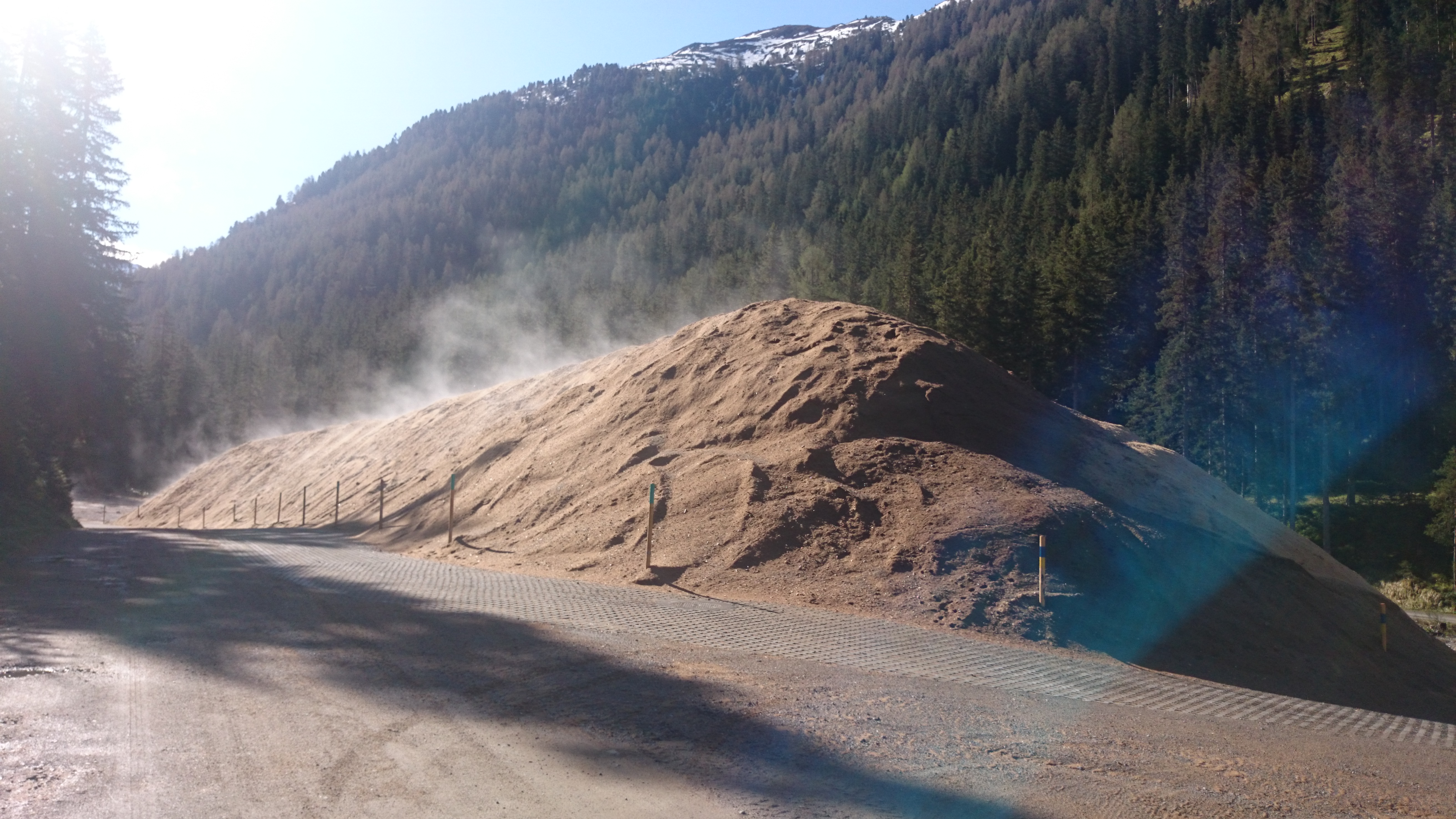
But even so, winter sports will still be possible before then. Municipalities and mountain railways take countermeasures using artificial snow and snow farming. Snow farming involves storing snow from the previous season over the summer, insulating it with fleece or a thick layer of sawdust to minimise melting. At the start of the season, the stored snow is spread over green fields, usually to create the first cross-country ski trails. “Most snow depots made it through the summer without any problems and are now well stocked,” says Fabian Wolfsperger, an SLF expert in artificial snow and snow farming. He does, however, know of one exception: a cross-country skiing area in Slovakia, where 50% of the stored snow melted, compared with the usual 30%.
The bigger question is whether there will be enough water in January and February 2027 to create fresh supplies of snow. During these months, winter sports resorts produce artificial snow to store over the following summer. This requires water, and Wolfsperger wonders whether there will be enough available everywhere after the drought: “That’s likely to be the case in the Alps, but cross-country skiing areas in the lower mountain ranges could run into difficulties.” If their snow depots are short of supplies next autumn, getting the season off to a good start will be challenging. The hot summer of 2026 would then have an impact on the 2027/28 winter season.

“Another key factor that’s often underestimated is the temperature of the water,” says Wolfsperger. If the streams and lakes supplying snow cannons and lances are too warm, the machines will be less effective at producing snow.
This isn’t just an issue for cross-country ski trails. “Some ski resorts will undoubtedly have insufficient water reserves, or reserves that are too warm,” explains the engineer. Elsewhere, air temperatures are simply still too high for snowmaking. Ideally, temperatures need to remain below −5 °C for an extended period for snowmaking to be effective, says Wolfsperger: “It takes 100 hours of cold weather to get the ski season under way – that’s enough to prepare the pistes.” What’s more, the cold doesn’t need to be continuous. Wolfsperger is optimistic about the chances, particularly for resorts at elevations of around 2,500 metres and above. The ground still being warm after the extremely hot summer will not pose a problem, he says: “The fact that slightly more machine-made snow will melt as a result won’t matter much.” At least, not on the ski slopes.
Warm ground, sliding snow 

It’s a different story in open terrain away from the pistes. If heavy snowfall at the start of winter settles on ground that is still warm, it can increase the risk of gliding avalanches, as happened in 2023. In that situation, a deep snowpack insulates the ground, preventing it from cooling down any further. As a result, the underside of the snowpack remains wet, explains Alec van Herwijnen, head of the SLF’s Avalanche Formation and Dynamics research group: “On smooth surfaces such as grass or rock slabs, the entire snowpack can then suddenly slide away.” After an exceptionally hot summer, this can also happen on slopes where gliding avalanches are otherwise rare, such as north-facing slopes at higher elevations. Often, but not always, gaps known as glide cracks form in the snow before the avalanche releases. They are a warning sign: people should avoid areas located beneath such cracks. If, on the other hand, the ground cools down sufficiently before the first heavy snowfall, the danger of gliding avalanches is lower.
Insulated mountains 
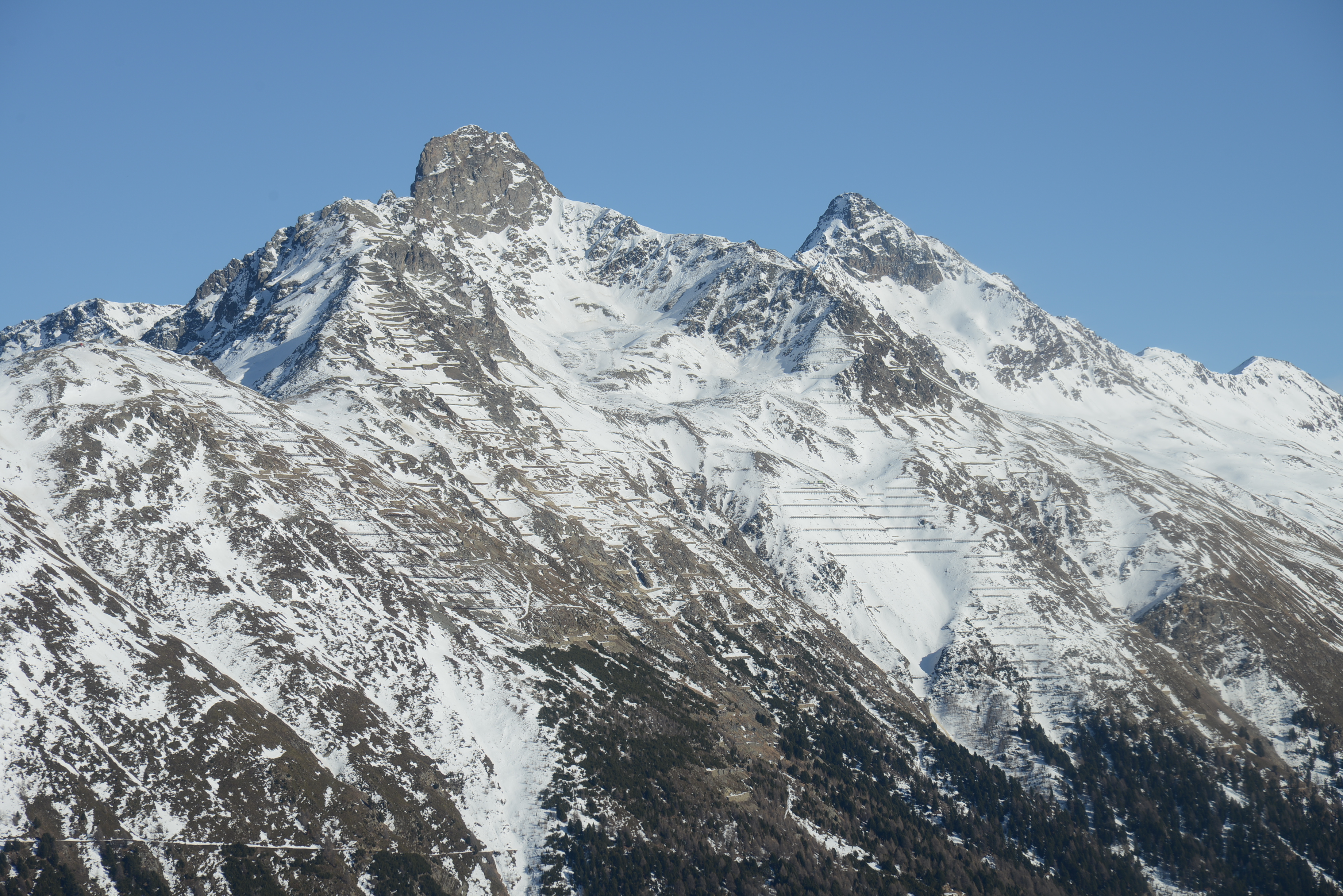
The timing of the onset of snow cover will also determine how much the hot summer ultimately affects permafrost (see box). Permafrost entered the warm season in spring 2026 in good condition, as the ground was relatively cool following the cold, low-snow winter of 2025/26. However, the summer heat was clearly measurable in the uppermost layers of the ground. Heat penetrates to depth only slowly, so it will take until 2027 to reach a depth of 10 metres. “Below a depth of 15 metres, seasonal temperature fluctuations aren’t measurable at all. We won’t see the effects of the heat from summer 2026 at that depth until winter 2027,” says SLF permafrost expert Jeannette Nötzli.
What happens next depends on how the winter gets under way. If continuous snow cover forms early in autumn, the ground will be unable to cool down. “The heat will then be trapped in the ground, allowing it to penetrate deeper and intensify the effects of the hot summer,” explains Nötzli. On the other hand, if snowfall comes late, giving the ground time to cool down, this may help to mitigate the impact of the hot summer. In permafrost below a depth of 10 to 15 metres, temperatures are influenced by long-term changes at the surface, while seasonal fluctuations are barely measurable. Here, it is not individual summers that matter, but the numerous consecutive warm years over the past decade. 2026 was simply the most extreme year so far. Together, all the hot summers have led to an appreciable warming of the permafrost. This can cause ice loss in the ground and allow water to penetrate deep into the permafrost. In turn, this reduces the stability of mountain slopes and can ultimately lead to rockfalls and large-scale slope failures.
What is ... permafrost?
Permafrost is ground such as rock, debris or moraine that has temperatures below 0°C throughout and is therefore permanently frozen. Permafrost covers some five percent of Switzerland’s territory and is mainly found in scree slopes and rock walls in cold locations at elevations above 2,500 metres above sea level.
Links 
- Weissfluhjoch test site
- Time-lapse from 1 July to 30 September 2026 from the SLF Weissfluhjoch Experimental Site
- Article ‘Hidden Ice in the Swiss Alps’ (in German only)
- Swiss Permafrost Bulletin 2025
Contact 
SLF Media Office 
Phone: +41 81 417 01 90
Email: medien(at)slf.ch
Copyright 
WSL and SLF provide image and sound material free of charge for use in the context of press contributions in connection with this media release. The transfer of this material to image, sound and/or video databases and the sale of the material by third parties are not permitted.