
Intense heatwaves from May to September, combined with a winter with little snow, led to another devastating year for the glaciers. This is evident from the latest data from the Swiss Glacier Monitoring Network (GLAMOS) and the Swiss Commission for Cryosphere Observation of the Swiss Academy of Sciences (SCNAT).
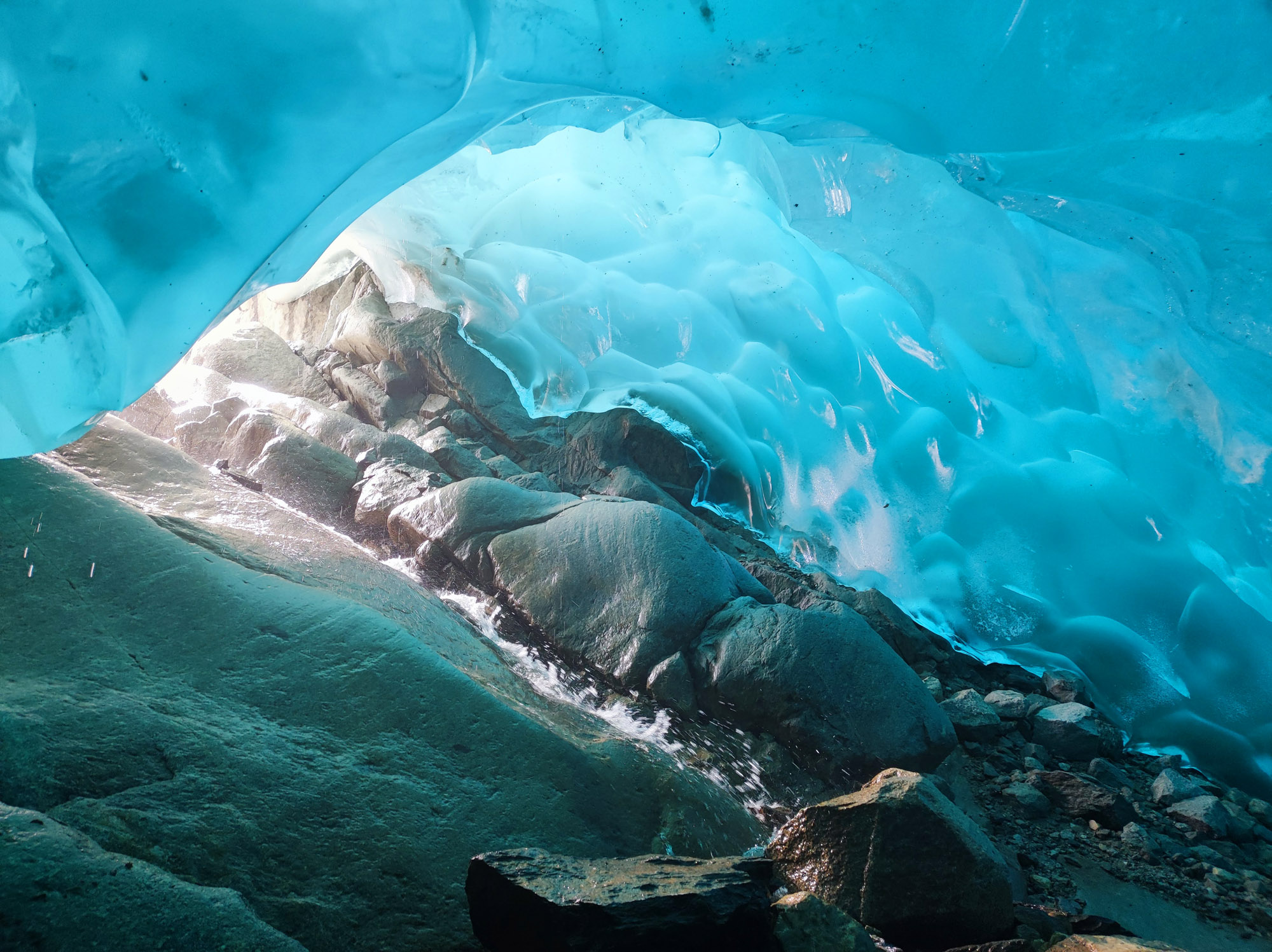
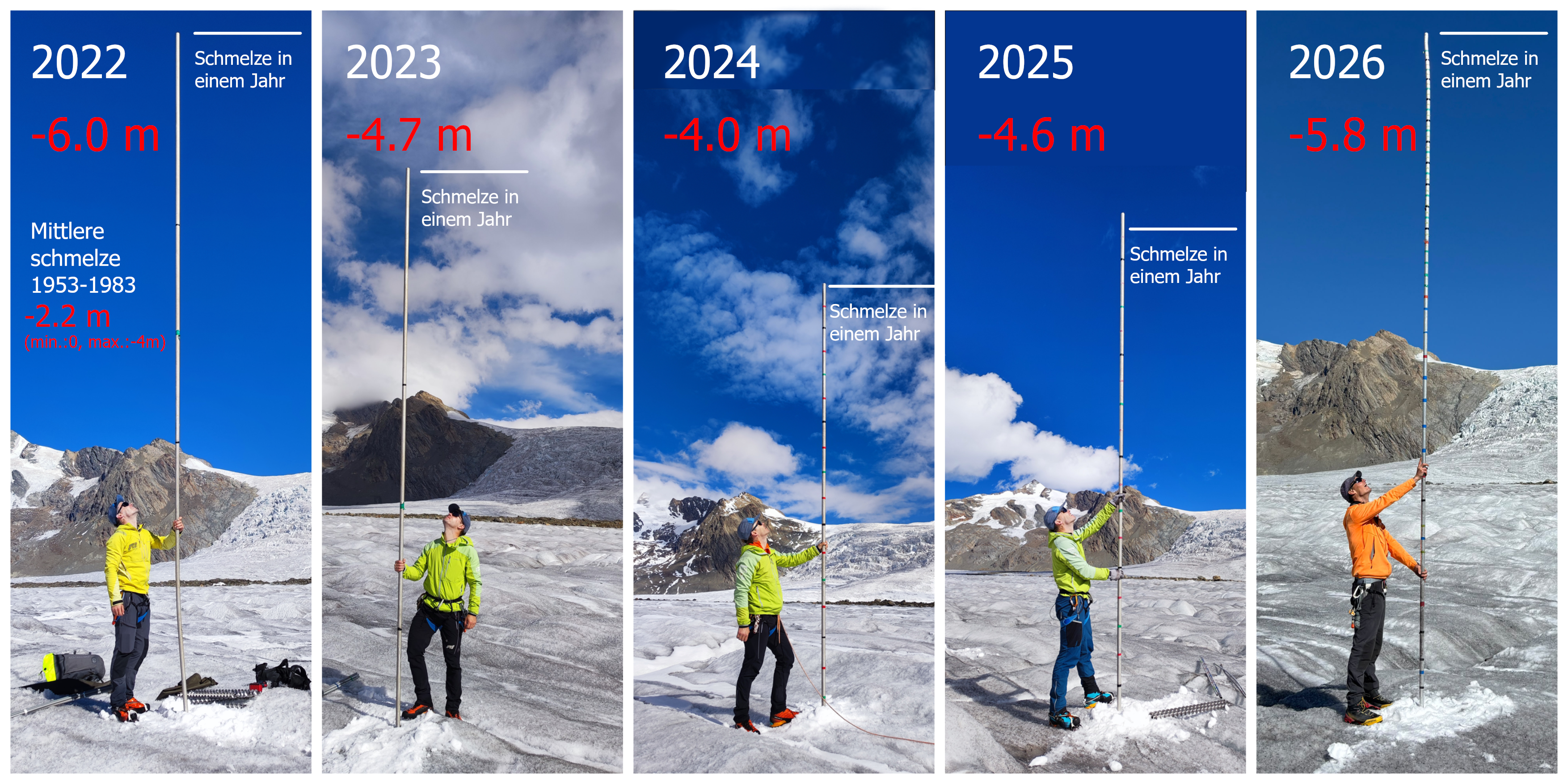
Swiss glaciers once again experienced extreme melting in 2026. More than 5 per cent of the ice has disappeared. The mean thickness of individual glaciers fell by between 2.5 and 4 metres. On glacier tongues, it decreased by as much as 10 metres in some places over the summer. In the past five years alone, the volume of ice in Switzerland has now fallen by almost 20 per cent.
Smaller glaciers have already disappeared 
As in the previous year, snow depths at all elevations in winter 2025/26 were far below the longterm average. The main reason was low precipitation. In terms of mean snow depth, the winter season (November 2025 to April 2026) was among the ten least snowy winters since measurements began. Every month from May to September was marked by dry conditions and at least one heatwave. During these months, the freezing level was above 4,000 metres on 76 days. This is more than twice the average and therefore a record.
The protective snow cover on the glaciers had already partly disappeared during the heatwaves in June. By September, no snow remained even at 3,500 metres above sea level. Alpine glaciers have no chance of surviving in the long term under such conditions. This is reflected in the disappearance of many small glaciers, such as the Bella Tola Glacier (VS) and the Griessfiren/Plattalvafirn (GL).
The 2026 measurement period ranks only just behind the record year of 2022. Despite higher temperatures, the losses of 2022 were not quite matched because many glaciers had slightly more snow than in 2022. In addition, less Saharan dust was deposited on the snow in 2026, allowing more sunlight to be reflected. However, there were exceptions: in 2026, some glaciers (Allalin, Clariden, Aletsch and Rhône) experienced their greatest melt on record. dem Schnee abgelagert. Somit wurde das Sonnenlicht besser reflektiert. Aber es gab Ausnahmen: So erlitten einige Gletscher (Allalin, Clariden, Grosser Aletsch und Rhone) dieses Jahr so starke Schmelze wie noch nie.
Meltwater eases water shortages 
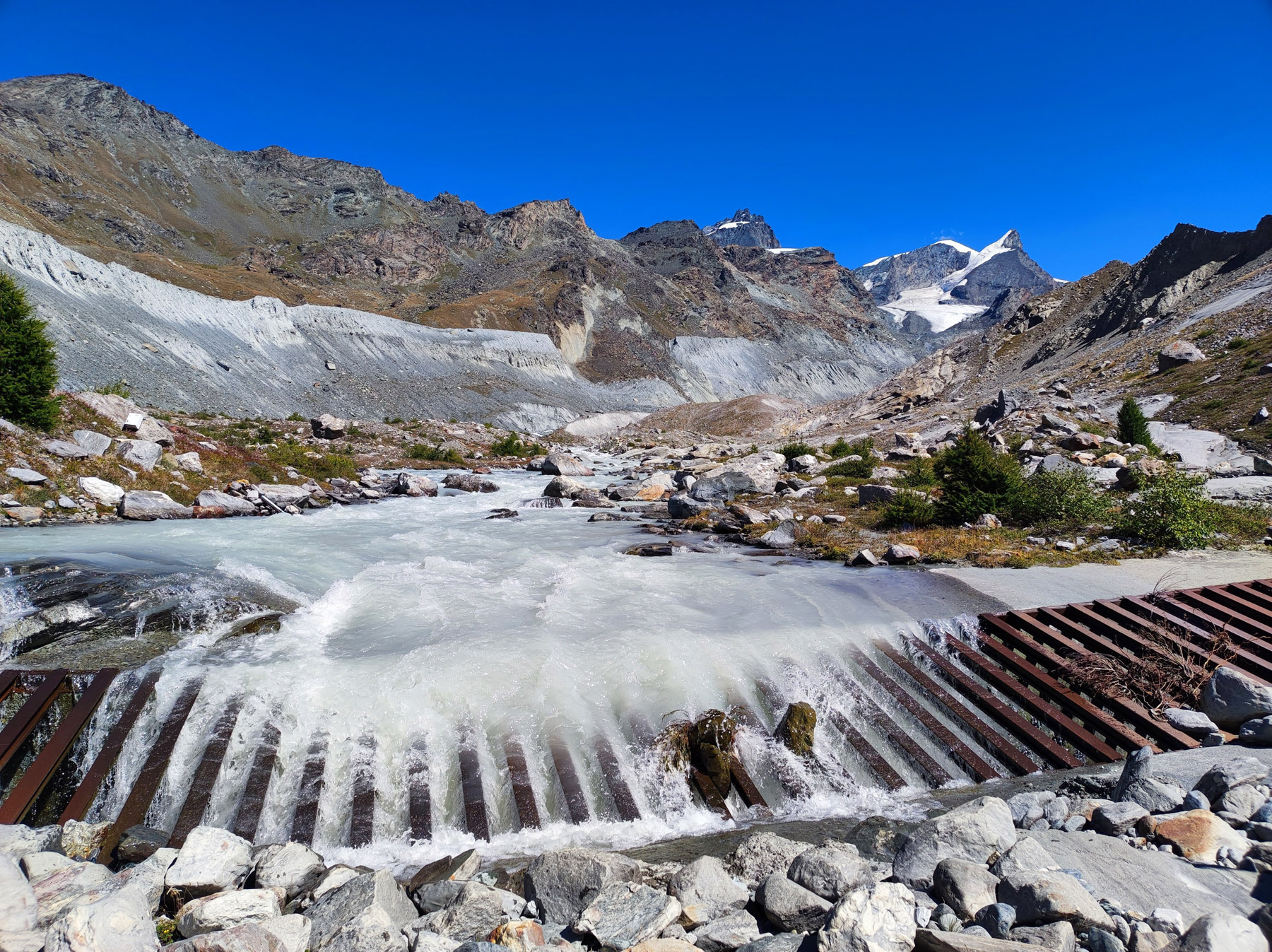
Between July and September, the glaciers lost a total of around 2,200 billion litres of water. This is more than four times the annual drinking water consumption of all Swiss households. For now, glacier melt is therefore still helping to ease summer water shortages. However, this effect is already diminishing significantly as the ice-covered area shrinks.
The Swiss Commission for Cryosphere observation (SCC) 
The Swiss Commission for Cryosphere observation (SCC) of the Swiss Academy of Sciences (SCNAT) documents changes in the Alpine cryosphere. It coordinates the long-term Swiss monitoring networks created for snow, glaciers (GLAMOS) and permafrost (PERMOS). The Swiss Commission for Cryosphere observation (SCC) therefore represents those institutions that look after national monitoring networks, such as the Swiss Federal Institute for Forest, Snow and Landscape Research WSL, the WSL Institute for Snow and Avalanche Research SLF, the Swiss Federal Office for Meteorology and Climatology (MeteoSchweiz), the Swiss Federal Institute of Technology in Zurich (ETH Zurich), the Universities of Zurich, Fribourg and Lausanne and the University of Applied Sciences and Arts of Southern Switzerland (SUPSI), or who contribute financially to long-term safeguarding, such as the Swiss Federal Office for the Environment (FOEN), the Swiss Federal Office for Meteorology and Climatology (MeteoSwiss), in the context of the Swiss Global Climate Observing System (GCOS), the Swiss Academy of Sciences (SCNAT) and the Swiss Federal Office of Topography (swisstopo).
Contact 
Link 
Copyright 
WSL and SLF provide image and sound material free of charge for use in the context of press contributions in connection with this media release. The transfer of this material to image, sound and/or video databases and the sale of the material by third parties are not permitted.