

Deadwood is valued for its ecological benefits and its role in protecting against natural hazards, but when it slides downslope, it can cause major damage. A new simulation model is helping to address this dilemma by providing a basis for weighing up the benefits and risks.
- Deadwood as a natural hazard: dead trees in mountain areas can slide downslope, posing a risk to roads or people.
- Three factors favour sliding: steep slopes, low friction and a particular decay stage. Only when these conditions coincide can deadwood become hazardous.
- Forests provide protection and pose a hazard at the same time: A new simulation model helps with assessing whether deadwood is more of a help or a hindrance.
During a summer thunderstorm in 2022, a dead tree became dislodged on the steep slopes of the Gruobenwald forest and slid down onto the road near Klosters, in the Swiss canton of Graubünden. A second tree followed two days later. “Sliding deadwood is nothing new,” explains Joël Borner, a doctoral researcher belonging to the Alpine Mass Movements research group at the WSL Institute for Snow and Avalanche Research SLF. A member of the local forestry service sent the SLF a photograph of the blocked road, prompting the institute to investigate the hazard more closely. This presented Borner with a dilemma: deadwood can slow or stop rockfalls and stabilise snowpack, making avalanches less likely to release. But what should be done when the protection forest itself becomes a hazard?
A secondary hazard, but a dangerous one 
Although the local forestry service removed deadwood at risk of sliding from the Gruobenwald after the incident, two more trees subsequently slid downslope, stopping just short of the road. Deadwood is a collective term for all forms of dead wood, including both standing and fallen trees. Standing deadwood is particularly hazardous because, when a tree falls, it already has momentum that can set it sliding. The Office for Forest and Natural Hazards of the Canton of Graubünden considers the hazard posed by sliding deadwood less significant than that posed by rockfall. All the same, it did help Joël Borner to identify other well-documented cases. In summer 2022, two people were killed when they were hit by sliding deadwood in the Tamina Gorge, in the canton of St Gallen. In February 2022, a log slid down a snow-covered slope at Rothenbrunnen, in the canton of Graubünden, so rapidly that it passed over a rockfall net like a projectile before becoming lodged in a road crash barrier.
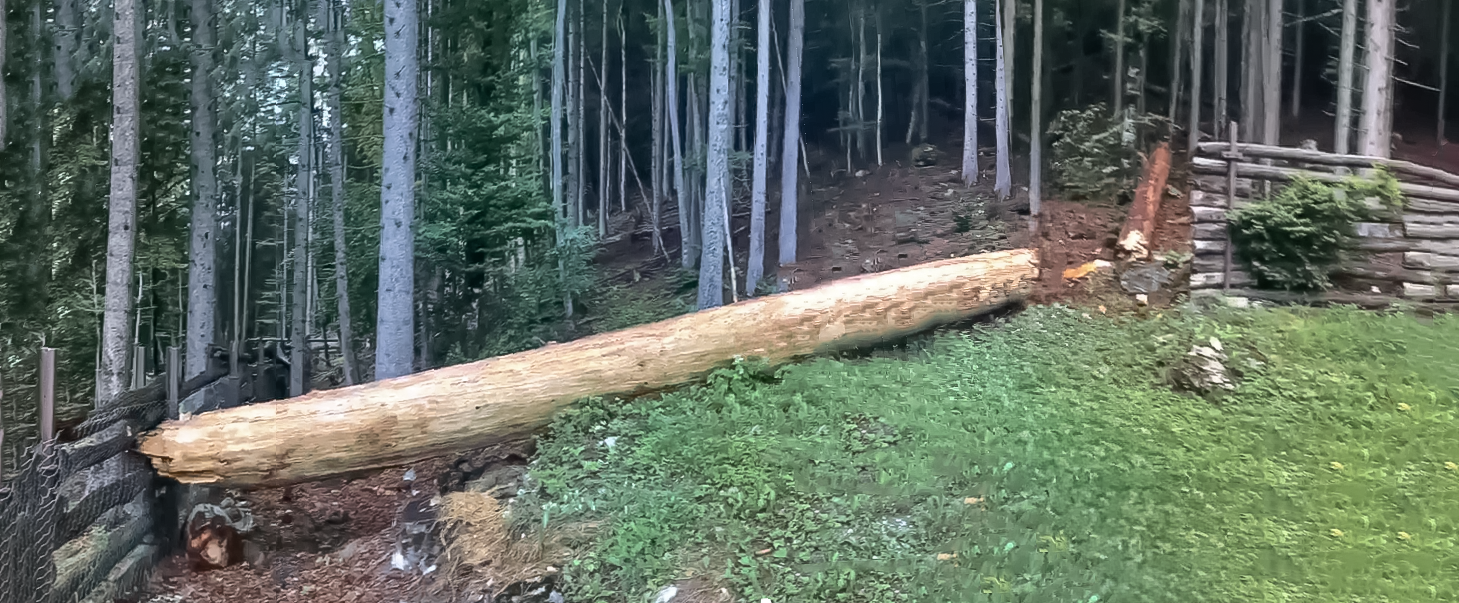
Sliding deadwood in the Gruobenwald (4): ... even at this stage, though, deadwood continues to play an important role in the forest by protecting against other natural hazards. (Photo: Flurin Wehrli/Forst Madrisa)
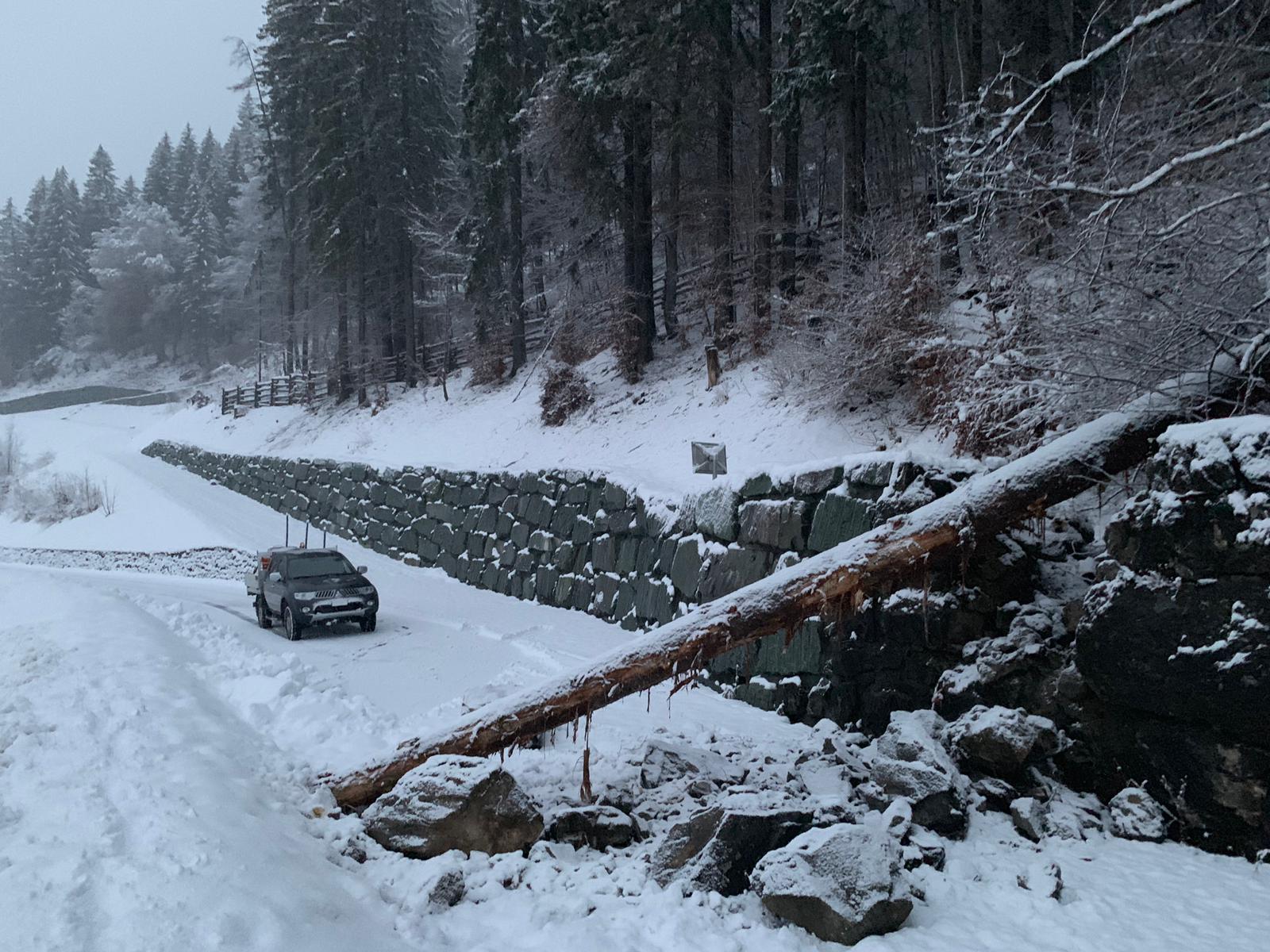
Sliding deadwood in the Gruobenwald (2): Once in motion, logs tend to follow gullies, where tree density is often lower. (Photo: Forst Madrisa)
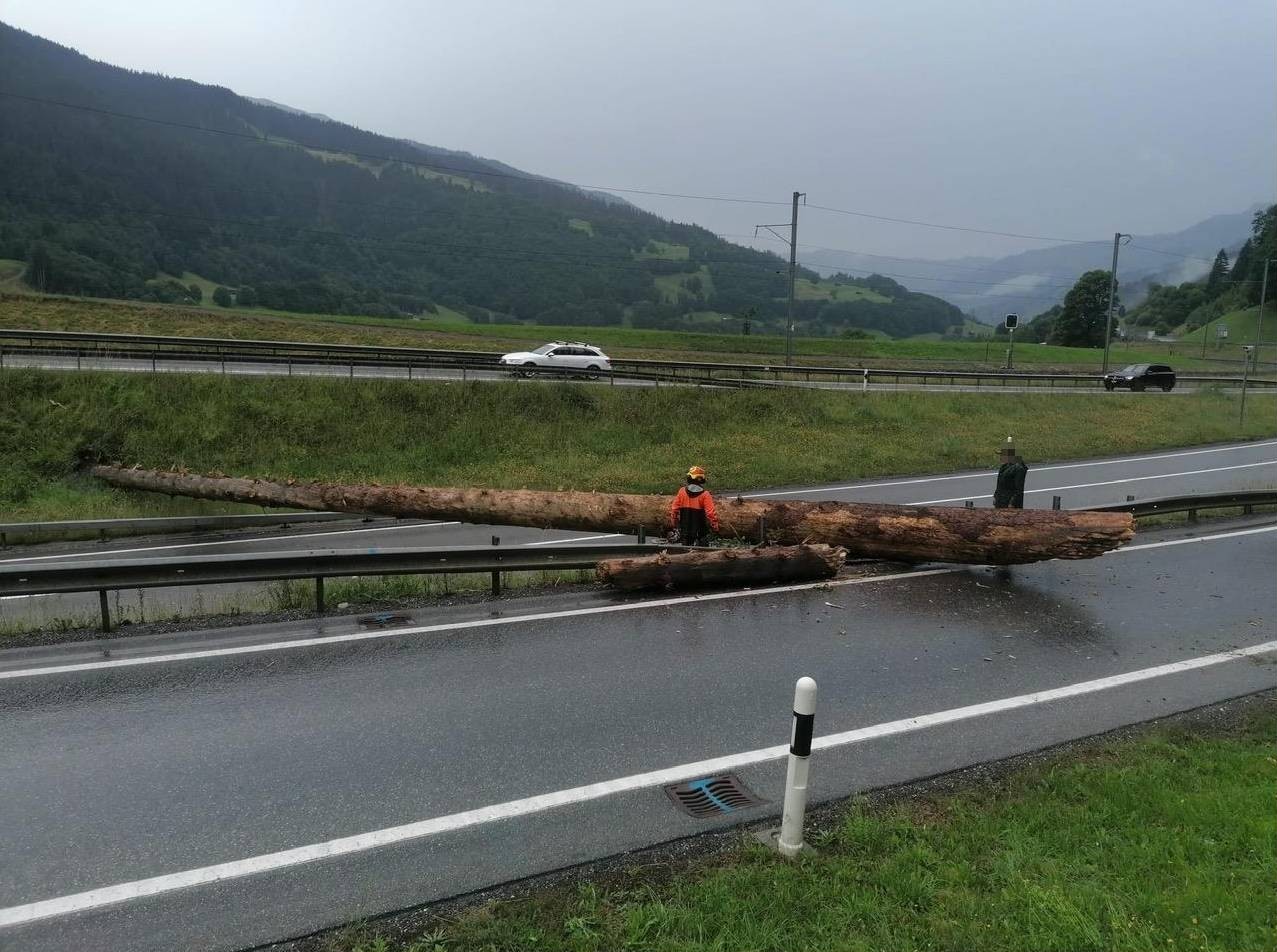
Sliding deadwood in the Gruobenwald (3): Deadwood logs become mobile only at a particular decay stage, typically around two to five years after the tree dies, when the bark and branches have fallen away, ... (Photo: Forst Madrisa)
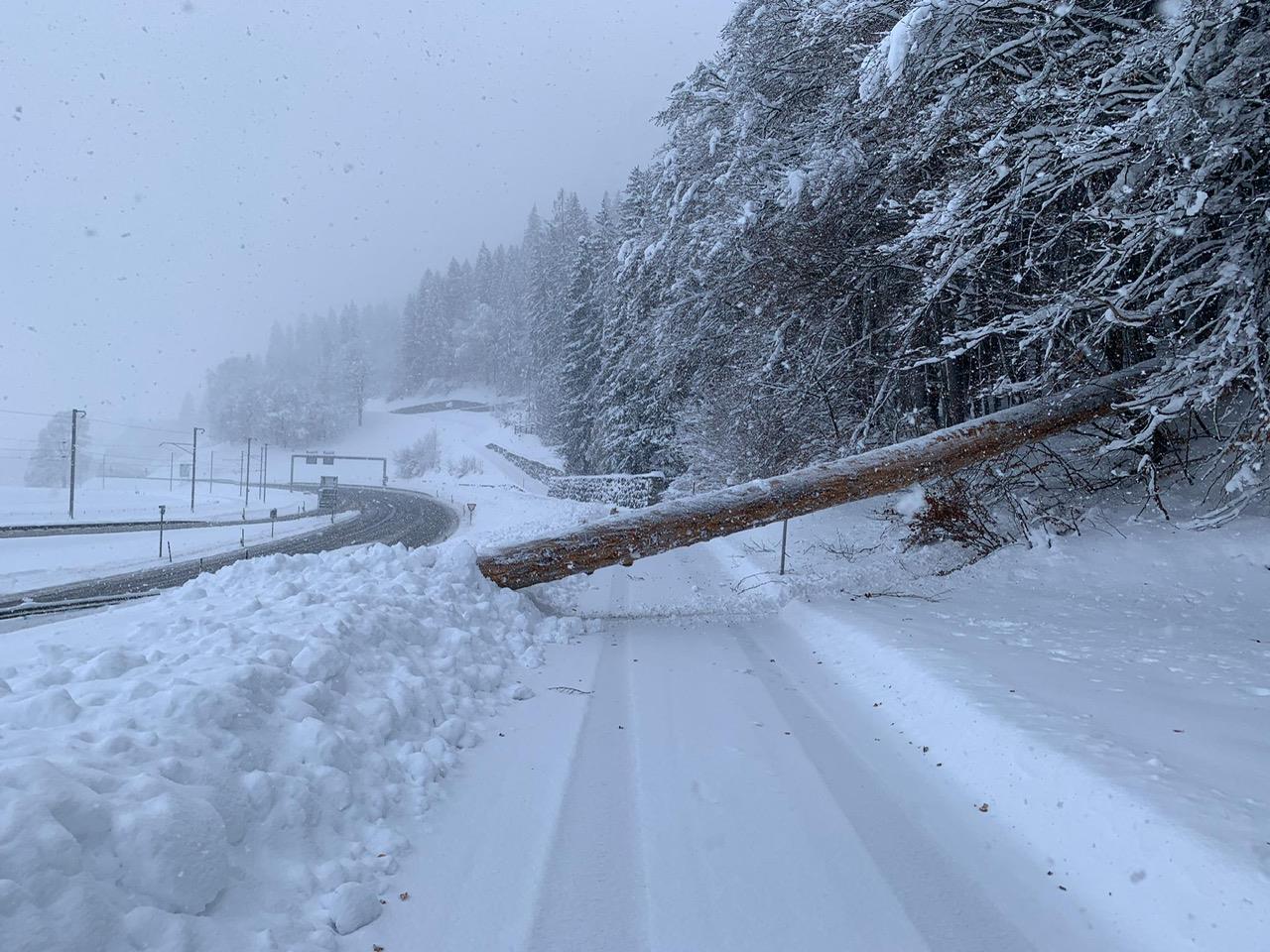
Sliding deadwood in the Gruobenwald (1): Snow reduced friction, allowing the deadwood to slide. (Photo: Forst Madrisa)
Scanning the forest, positioning the trees 
To investigate these processes, Borner adapted RAMMS::Rockfall, the widely used rockfall simulation module. The model uses a physics-based approach to simulate the movement of rigid bodies. By adjusting the shape and density parameters, the model can simulate 20,000 logs (rather than rocks) moving through a virtual Gruobenwald. To this end, Borner added a key component to the model: whereas in previous rockfall hazard assessments, trees in the protection forest were distributed randomly across the slope according to forest density, for his model, Borner used the precise position and size of the individual trees in the forest. This required laser-scanning data from the Swiss Federal Office of Topography (swisstopo), which was processed by co-authors of the study. The refined model revealed that: once in motion, deadwood logs tend to follow gullies, where tree density is often lower; randomly positioning trees in the model can artificially block these preferential paths.
No branches or bark 
One finding of Borner’s study is that the same forest that gives rise to the sliding deadwood hazard also stops many of the logs as they slide downslope. The forest is both a source of protection and a hazard. The model will provide an additional basis for assessing which effect predominates. The study also identifies three factors that favour log sliding: steep slopes, low friction between the log and the ground, and a particular decay stage. In spruce trees, this stage may be reached around two to five years after the tree dies, although the timing depends on the species and the site. At this stage, the logs have lost their branches and bark, allowing them to slide more easily, but the wood is not yet so decayed that the logs break apart on impact. Even at this stage, deadwood can still play an important role in protecting against avalanches and rockfall.
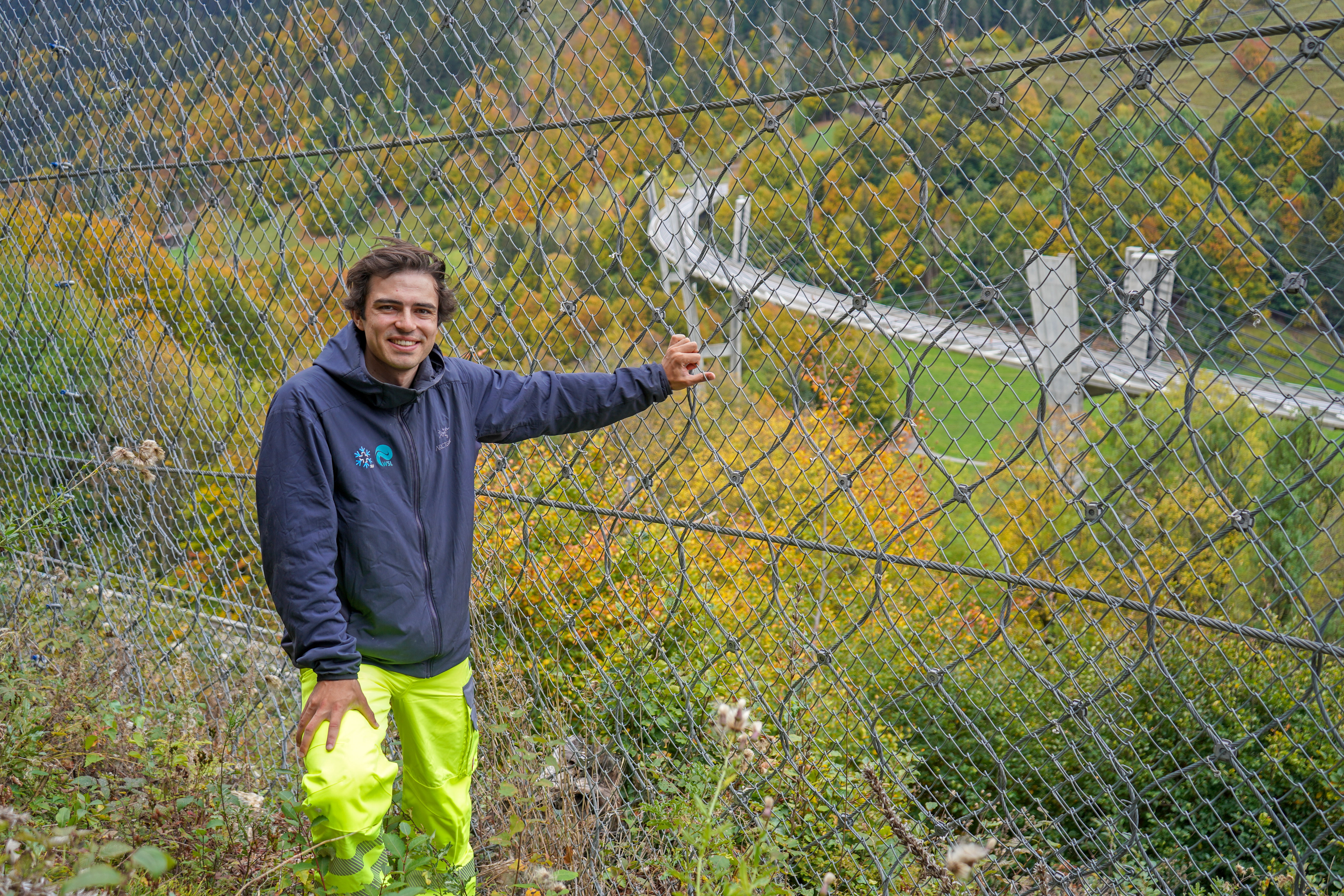
Borner suggests that one possible measure at particularly critical sites, albeit an expensive and labour-intensive one, is to selectively fell dead trees that could pose a hazard and anchor them across the slope. Another example is a measure rolled out in Klosters, in the canton of Graubünden, where rockfall nets and rockfall dams have been installed below the Gruobenwald since 2023. The road has not been affected by sliding deadwood since then. The protective measures had already been ordered by the time of the incident in summer 2022.
Links 
- Study “Simulation of sliding deadwood logs in mountain forests: towards a quantitative hazard assessment” (only in english)
- Simulation programme RAMMS “Rapid Mass Movement Simulation”
Contact 
Copyright 
WSL and SLF provide image and sound material free of charge for use in the context of press contributions in connection with this media release. The transfer of this material to image, sound and/or video databases and the sale of the material by third parties are not permitted.