

To mark the 2026 World Economic Forum (WEF), the ETH Domain presented highlights from its research, demonstrating how artificial intelligence is paving the way for greater sustainability. Policymakers and business leaders learned about practical AI applications for the environment and society.
- AI as a key technology for sustainability: The ETH Domain showcased pioneering research approaches at the SLF in Davos.
- Politics meets research: Distinguished guests from the worlds of politics and business gained direct insights into the work of the ETH Domain's six institutions.
- Science with impact: The ETH Domain stressed the importance of its work for society and the economy.
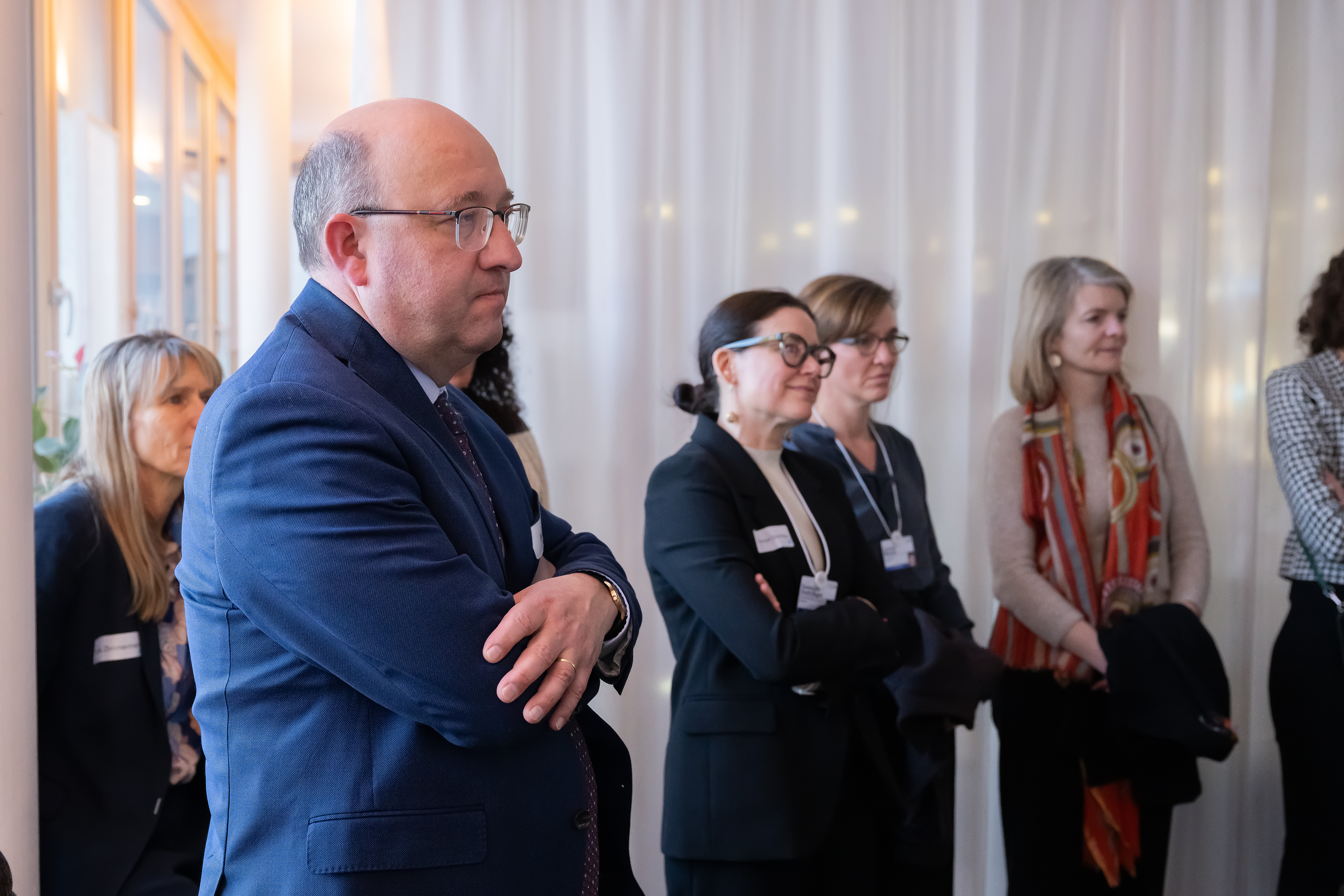
Artificial intelligence (AI) as a driver of sustainability – under this slogan, the ETH Domain invited a host of distinguished guests from the worlds of politics, business and science to the WSL Institute for Snow and Avalanche Research (SLF) in Davos. The visitors included government councillors from four cantons, including Carmelia Maissen, Marcus Caduff and Jon Domenic Parolini from Graubünden. "AI is more than just hype. We'll be showing you some pioneering applications in the environmental sector," said host, SLF Head Jürg Schweizer, in his welcome speech to the assembled guests. At six stations set up in the SLF premises, the visitors gained insights into the work of the six institutions making up the ETH Domain, namely the universities ETH Zurich and EPFL, and the research institutes PSI, WSL, Empa and Eawag.
Using AI to deal with avalanches and landslides: how far can we trust machines? 
SLF researcher Andri Simeon and his WSL colleague Fabian Walter demonstrated how they use artificial intelligence to develop algorithms for analysing data streams from seismic networks. These are actually intended to detect earthquakes. However, the researchers can also identify avalanches, debris flows, rock avalanches and even small rockfalls in their data, sometimes over distances of several thousand kilometres. They want to integrate the AI-based algorithms into operational warning systems that will help give the public timely warning of impending events.

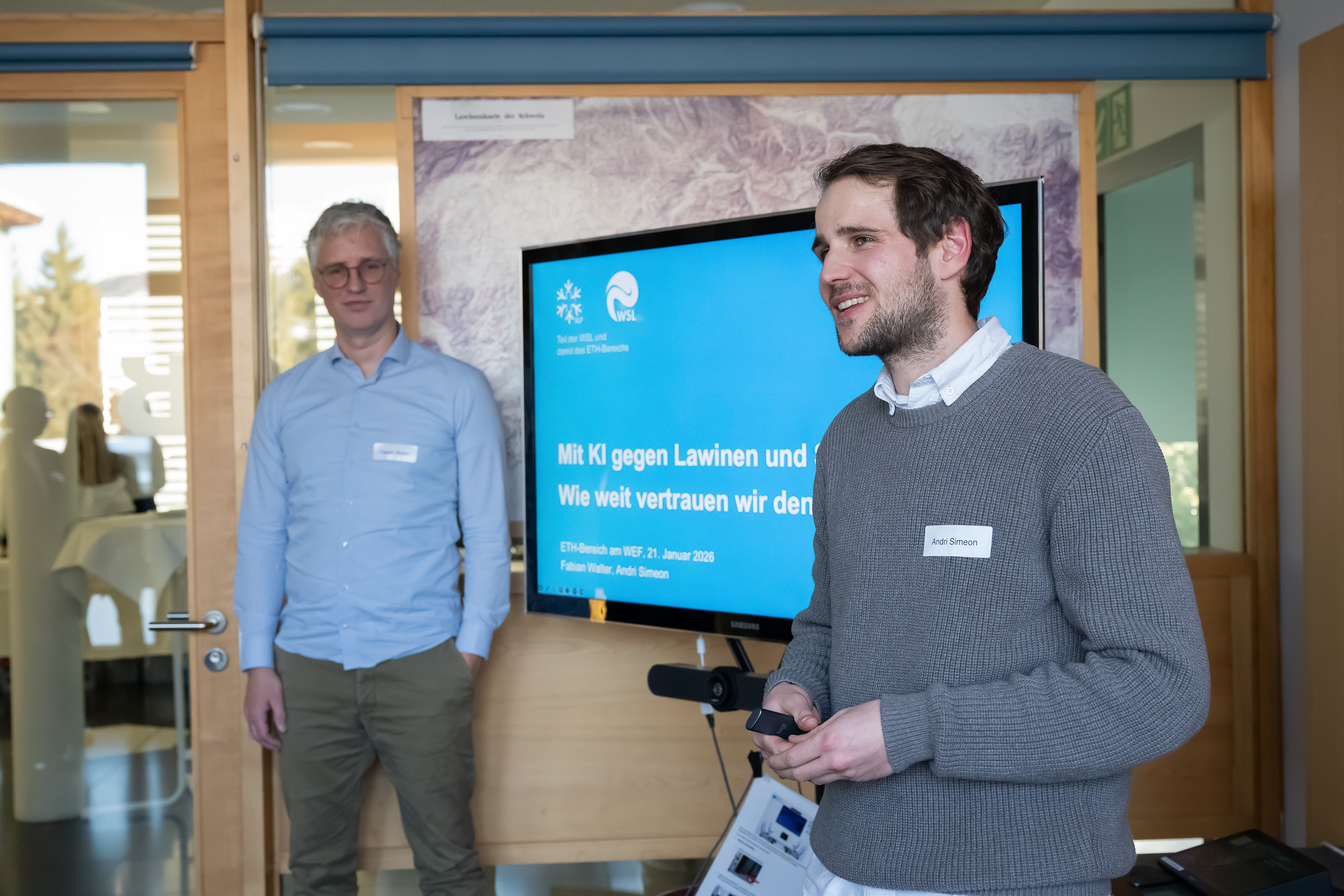
Image 1 of 6
SLF researcher Andri Simeon (right) and Fabian Walter from WSL explain how AI helps warn the public about avalanches, rockfalls and rockslides. (Photo: Luzia Schär)


Image 2 of 6
Kathrin Fenner from Eawag informs how AI models help researchers develop chemicals and materials that release few pollutants, conserve resources and are easily biodegradable. (Photo: Luzia Schär)

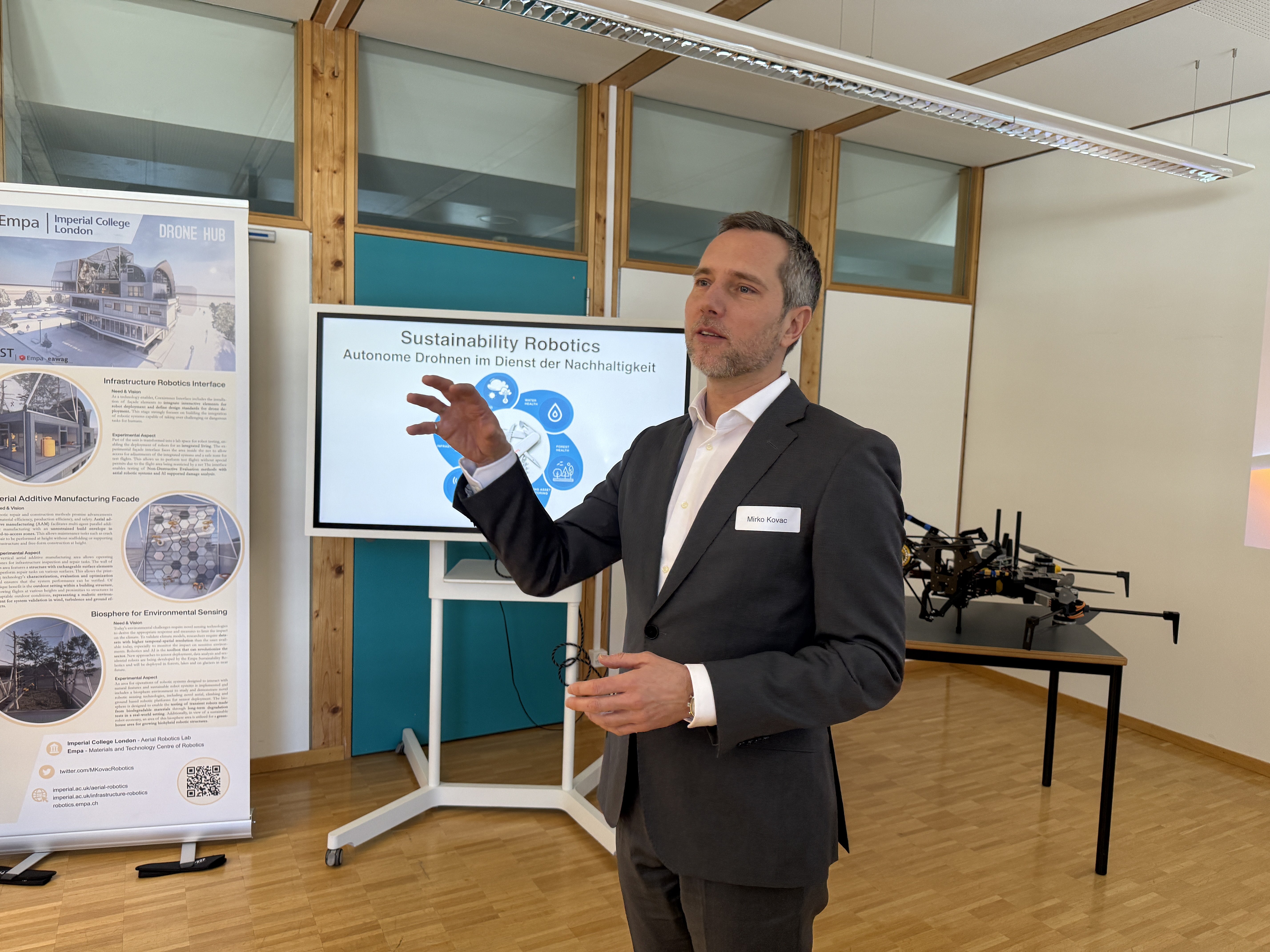
Image 3 of 6
Empa researcher Mirko Kovac vividly describes how drones and robots are used to assess the health of ecosystems, for example in terms of biodiversity and water quality. (Photo: Luzia Schär)

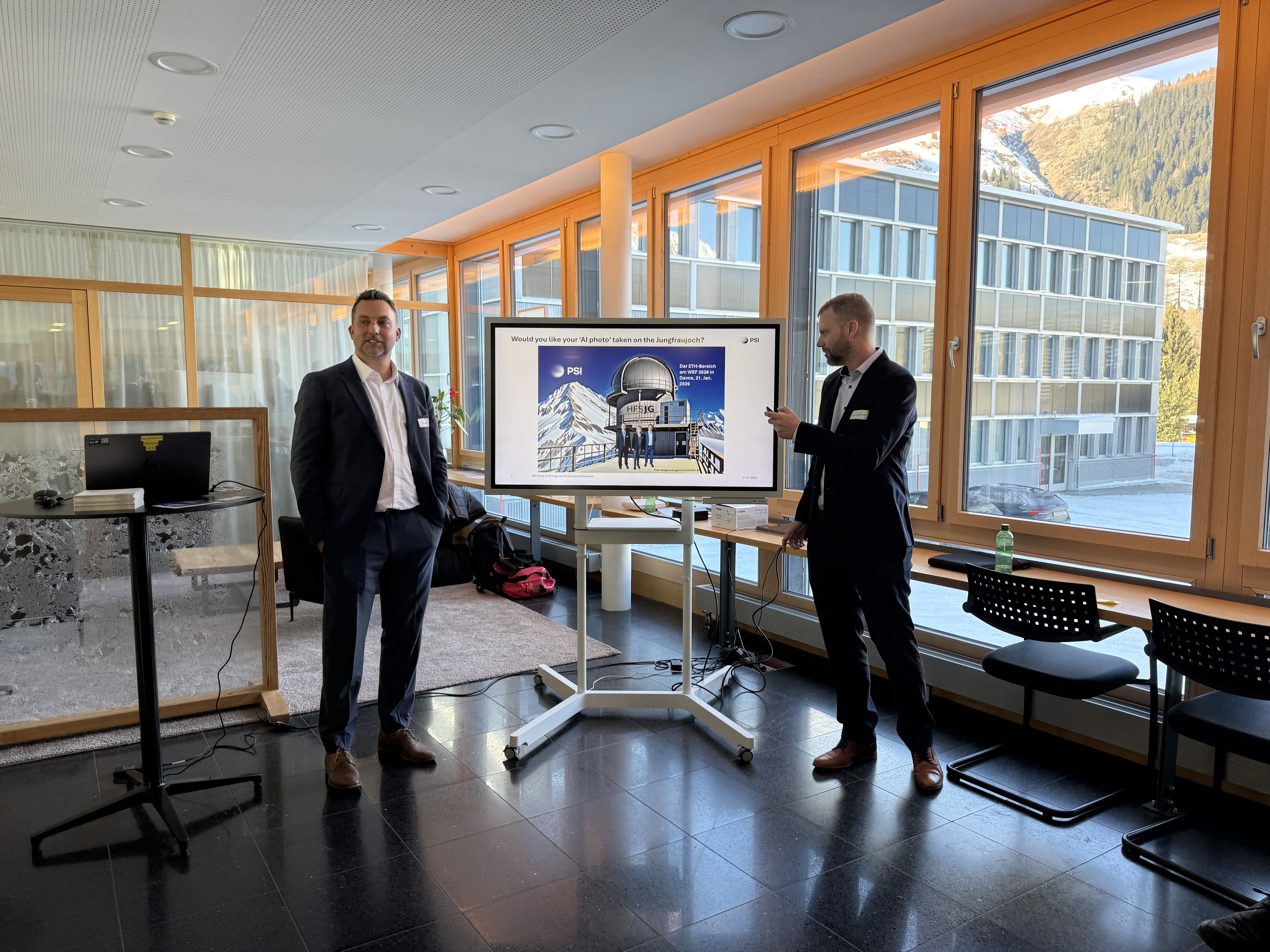
Image 4 of 6
The aerosols present in the air we breathe are constantly changing, with pollution, forest fires, sandstorms and many other factors affecting its composition. Rob Modini (right) and Kaspar Dällenbach from the Paul Scherrer Institute (PSI) show how AI is being incorporated into air monitoring models. (Photo: Luzia Schär)

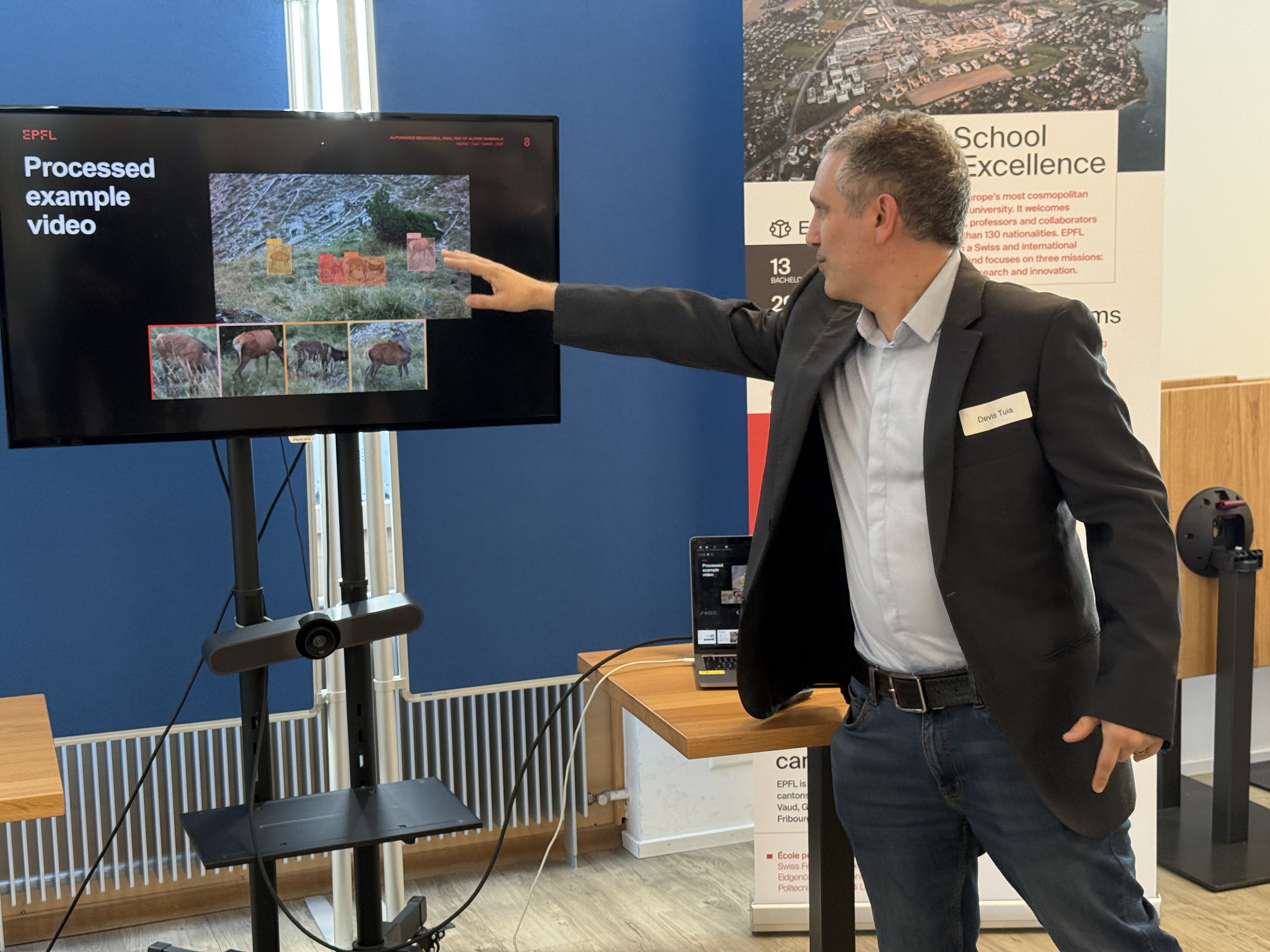
Image 5 of 6
EPFL researcher Devis Tuia gives an insight into how AI is used to analyse observations of wild animals recorded using camera traps and microphones. (Photo: Luzia Schär)

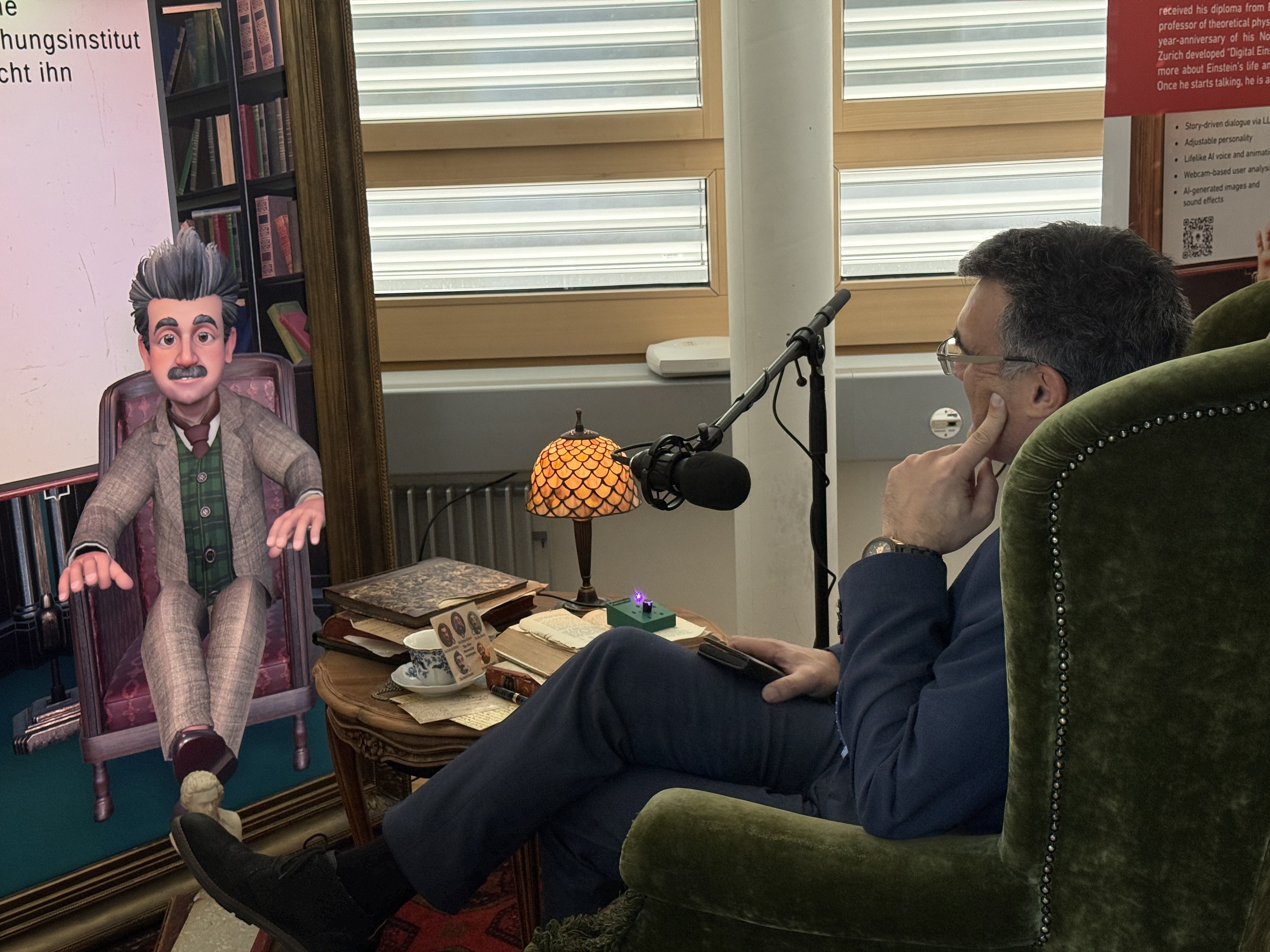
Image 6 of 6
Graubünden Cantonal Councillor Marcus Caduff chats with the digital Einstein from ETH Zurich. (Photo: Luzia Schär)
Research for the economy and society 
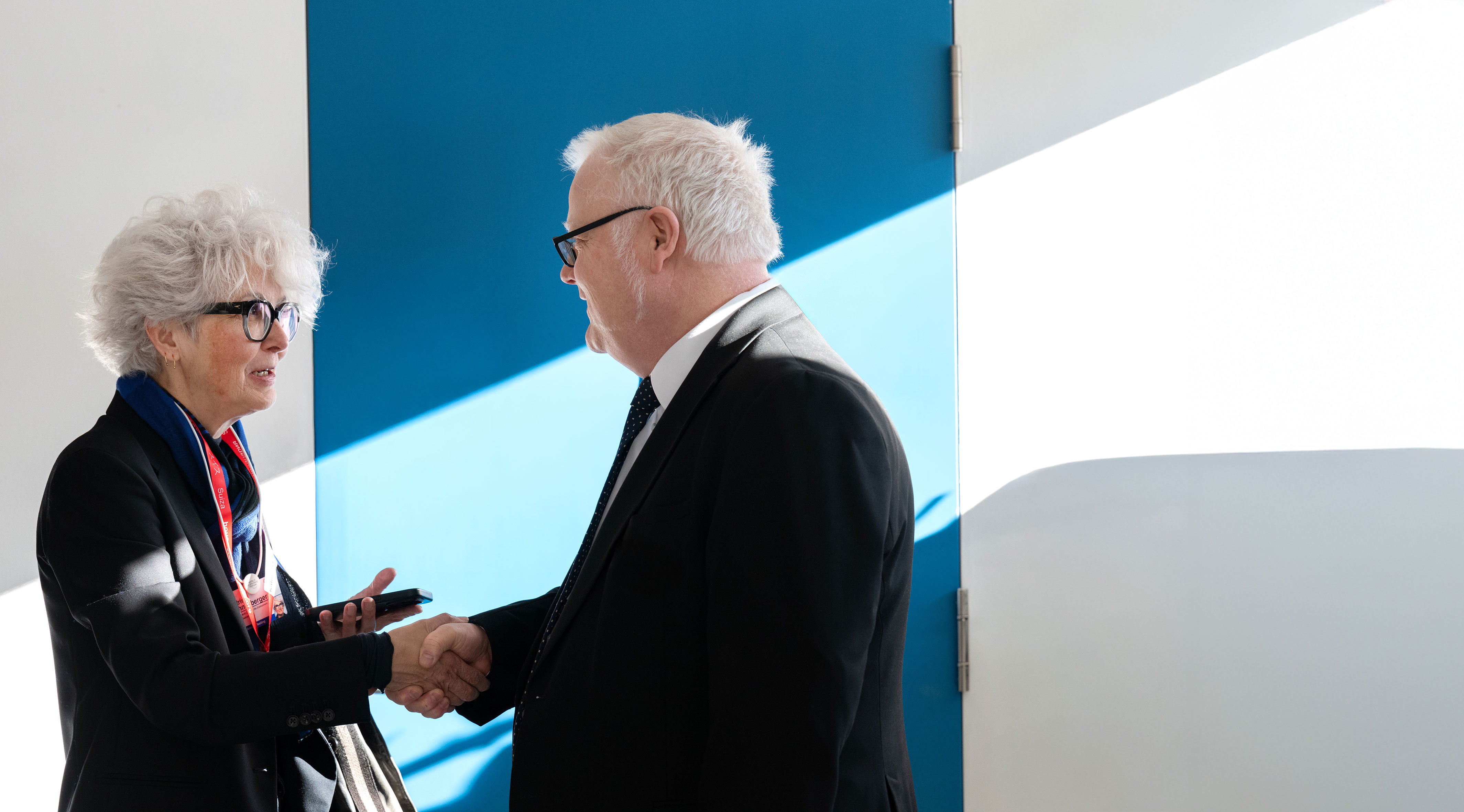
The ETH Domain used this event, coinciding with the World Economic Forum in Davos, to showcase what science can do for the economy and society. "It's important to keep policymakers informed about our work because researchers' findings help politicians make the right decisions for society," said WSL Director Rolf Holderegger.
The ETH Domain is synonymous with cutting-edge research that is also highly regarded internationally – not only within the scientific community but also in the private sector, as attested by numerous collaborations and partnerships. "Our universities ETH Zurich and EPFL and research institutes PSI, WSL, Empa and Eawag make major contributions to research as well as to administration and the Swiss economy," explained Michael Hengartner, President of the ETH Board.
Contact us 
SLF Media Office
Phone +41 81 417 01 90
E-mail: medien(at)slf.ch
Links 
Copyright 
WSL and SLF provide image and sound material free of charge for use in press releases in connection with this media release. The use of this material in image, sound and/or video databases and the sale of the material by third parties is not permitted.