
08.04.2026 | Delia Landolt | SLF News
With 40% of Switzerland's runoff coming from snowmelt, the WSL Institute for Snow and Avalanche Research SLF has conducted the first large-scale study into the influence of a key factor – forests, which cover a third of the country's land area.
- Forests influence snowmelt: For the first time, the three main factors – forest structure, topography and weather – have been studied across the whole of Switzerland.
- Essential water storage: Forests account for 20–30% of total snow storage in Switzerland in winter, impacting water availability.
- Findings from eight years of data: On south-facing slopes, snow in forests melts more slowly, while on north-facing slopes it often melts faster – particularly in winters with little snow.
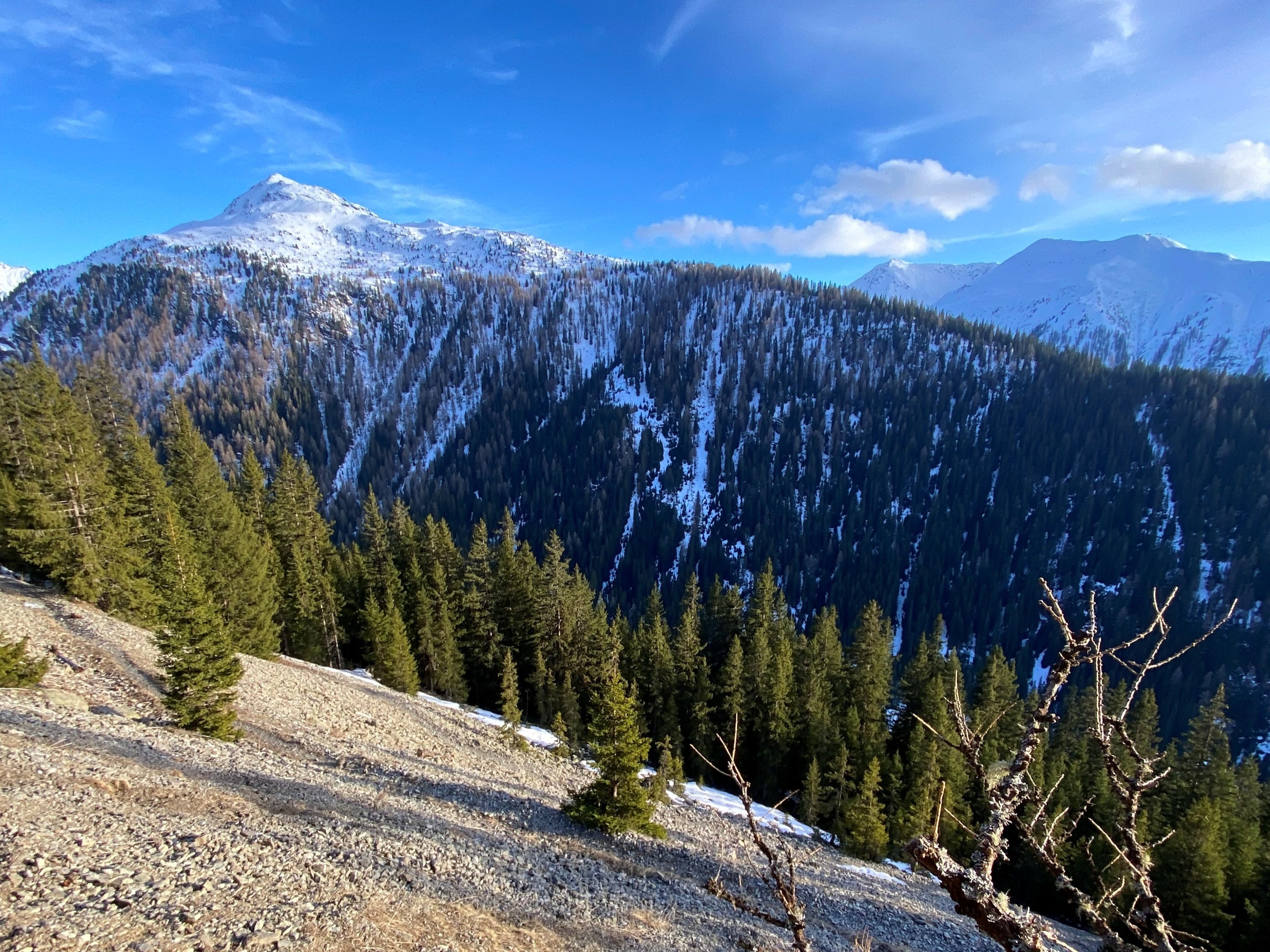
Silver firs, their branches sagging slightly under the weight of snow, make for the perfect winter picture. But as well as being pretty to look at, this phenomenon also has implications for snow cover in forests and how quickly it melts away. "We were able to show in detail how forest causes a spatial and temporal shift in snowmelt, depending on aspect and elevation," says Vincent Haagmans, a doctoral student at the WSL Institute for Snow and Avalanche Research SLF, summarising his findings. The amount of snow the forest stores, as well as when and how fast it melts, can influence flooding and water availability, and also has ecological relevance.
Forests as reservoirs 
Haagmans analysed eight years of data from across Switzerland, taking into account the three main factors affecting snow dynamics in forests: forest structure, topography and weather. These factors influence where and how much snow accumulates, and how quickly it melts. Until now, little was known about this in forested areas, as most measuring stations are located in open terrain. However, forests are significant because they account for 20–30% of total snow storage in midwinter. Haagmans explains his findings: "On south-facing slopes, snow usually lingers longer in alpine forests than in the neighbouring open terrain. On north-facing slopes, the opposite is true, although these differences can vary depending on weather and snow conditions."
Effect heightened during winters with little snow 
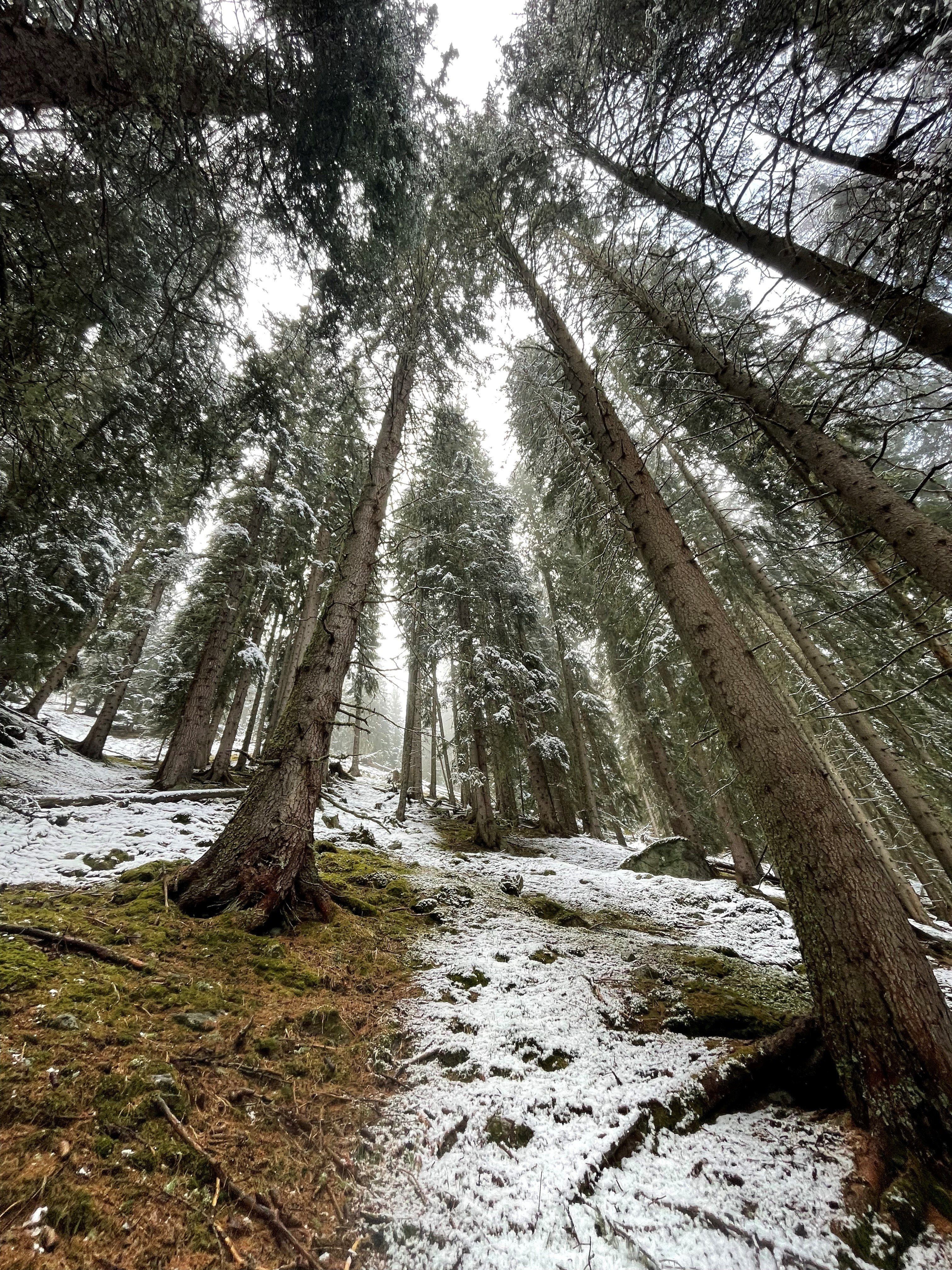
A few days after snowfall, the snow on trees usually disappears. Some of it returns to the atmosphere as water vapour, meaning there is less snow on the forest floor than in open terrain. On north-facing slopes, which receive no sun in winter, this often leads to the snow melting away early in forests, as there is simply less snow to melt there. On south-facing slopes, the sun is an additional factor. The shade provided by the trees slows down the melting process, so that in forests on south-facing slopes, the snow usually does not melt away until later. Such contrasts are particularly pronounced in winters with little snow.
It is well known that south-facing slopes thaw before north-facing ones, but Haagmans has now demonstrated in detail how forest introduces a further dynamic into the snowmelt process: snowmelt varies even more significantly there, which gives forests additional hydrological importance.
Links 
Contact 
Copyright 
WSL and SLF provide image and sound material free of charge for use in the context of press contributions in connection with this media release. The transfer of this material to image, sound and/or video databases and the sale of the material by third parties are not permitted.