

A substantial part of the image archive of the research institute WSL is freely available on the image platform E-Pics by ETH Zurich. The roughly 28’000 glass plates, film negatives, and slides provide insight into over a century of research, technology, and everyday life.
- 28'000 historical photos by WSL and SLF have been catalogued and digitised. They mainly depict motifs from the areas of forests, avalanches, snow, and landscapes.
- The digitised glass plates, film negatives and slides possess great cultural-historical value. They document research and every day life since 1902.
- The photos are available on the images platform E-Pics by ETH Zurich. The majority can be used freely (Creative-Commons-License).
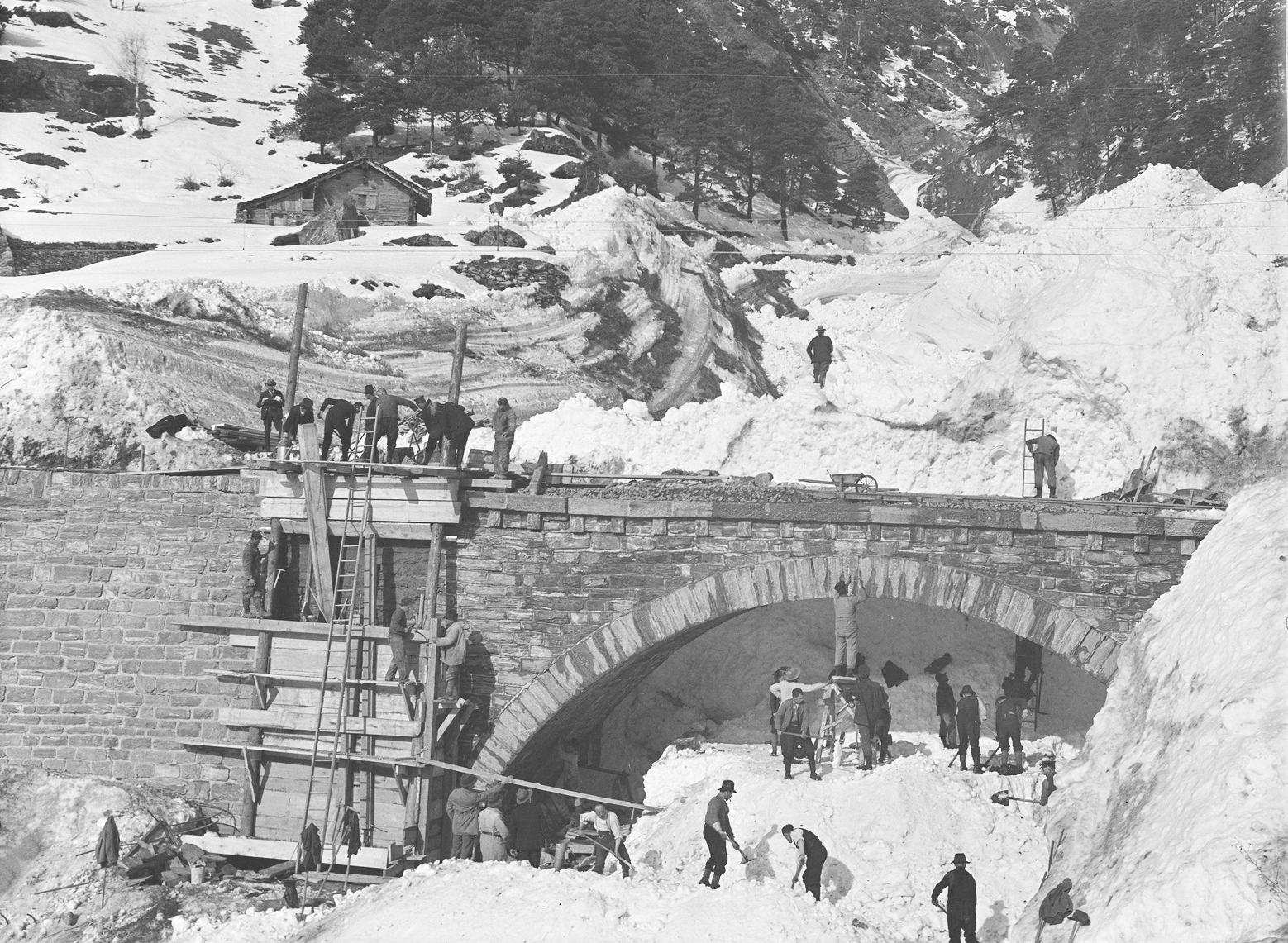
Clearance work for the construction of the airport in Kloten, men in hats and suits clearing buried railway tracks, construction of wooden terraces for measurements in alpine regions, horse sledges in winter or innovative bow bar chainsaws: the Swiss Federal Institute for Forest, Snow and Landscape Research WSL and its affiliated WSL Institute for Snow and Avalanche Research SLF are making the oldest part of their visual heritage freely accessible.
Various photo collections from WSL’s archives depict the researchers’ work and everyday life. The digitised images include the extensive collection of federal forest inspector Franz Fankhauser (1849-1932) and photos by the pioneer in avalanche research Ernst Eugster (1903-1977). “The images are of great cultural and historical value, not least because they document a significant part of the forest and avalanche research in Switzerland”, says project coordinator Thomas Reich. The oldest image dates back to 1902.
Source of the photographs
Most of the published photographys date from before the founding of today’s WSL. They originate from two independent federal reseach institutes:
- The Swiss Federal Institute for Forest Research (EAFV), formerly the Central Institute for Forest Research, was founded in 1885. In 1958, it relocated from the Swiss Federal Institute of Technology (today ETH Zurich) in Zurich to Birmensdorf. In the early days, its research focused primarily on forest management.
- The Swiss Federal Institute for Snow and Avalanche Research (EISLF) emerged from the ‘Snow and Avalanche Commission’, which was founded in 1931 as the ‘Swiss Avalanche Commission’.
Over the decades, the topics and research areas of the two institutions expanded increasingly. In 1989, the EAFV and EISLF were merged to form the Swiss Federal Institute for Forest, Snow and Landscape Research (WSL) as part of the ETH Domain. The former EISLF was renamed the ‘WSL Institute for Snow and Avalanche Research SLF’ within the new institution. Further information on the history of WSL and SLF.
Rescue Mission Requiring Considerable Manual Labour 
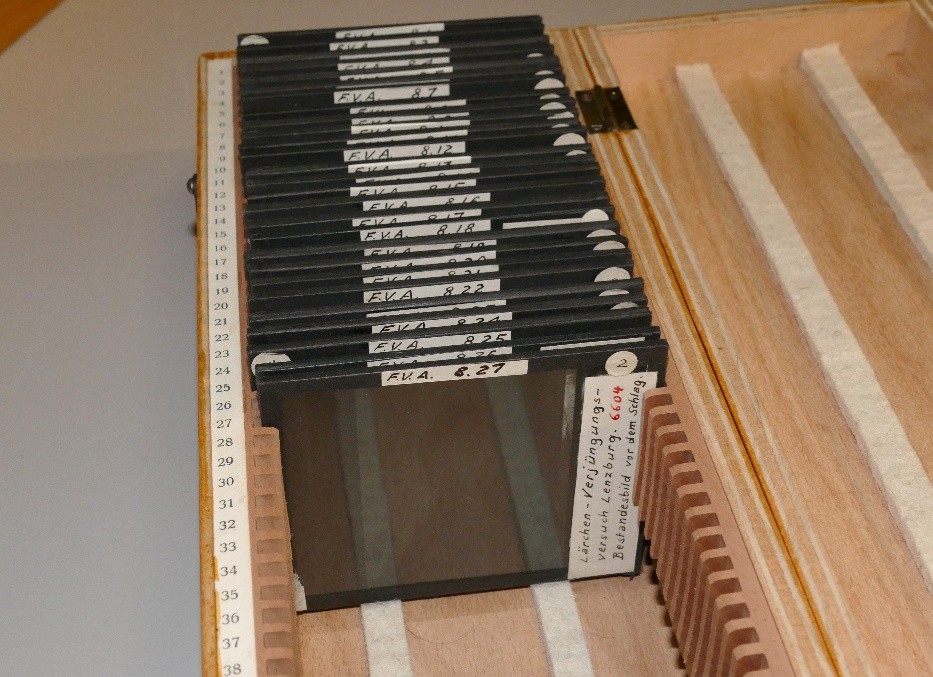
For decades, the collections were stored in different locations in Birmensdorf and Davos, some of them under subpar conditions. This has left its mark on the photographs. Changes in temperature, humidity and dust took their toll on the valuable originals and attacked the sensitive photographic emulsions.
“It was high time to stop the images from further deteriorating and store them more appropriately”, empasises Reich. The WSL directorate agreed and allocated the necessary funds. Several thousand hours of manual labour were required to review the collection, and sort and digitise the many thousands of photos. The photos were then packed into special archival boxes in accordance with the latest requirements. Now, they are protected from light and dust, and they are stored under controlled temperature and humidity conditions. “This ensures that these unique image collections will be preserved for as long as possible,” explains Reich.
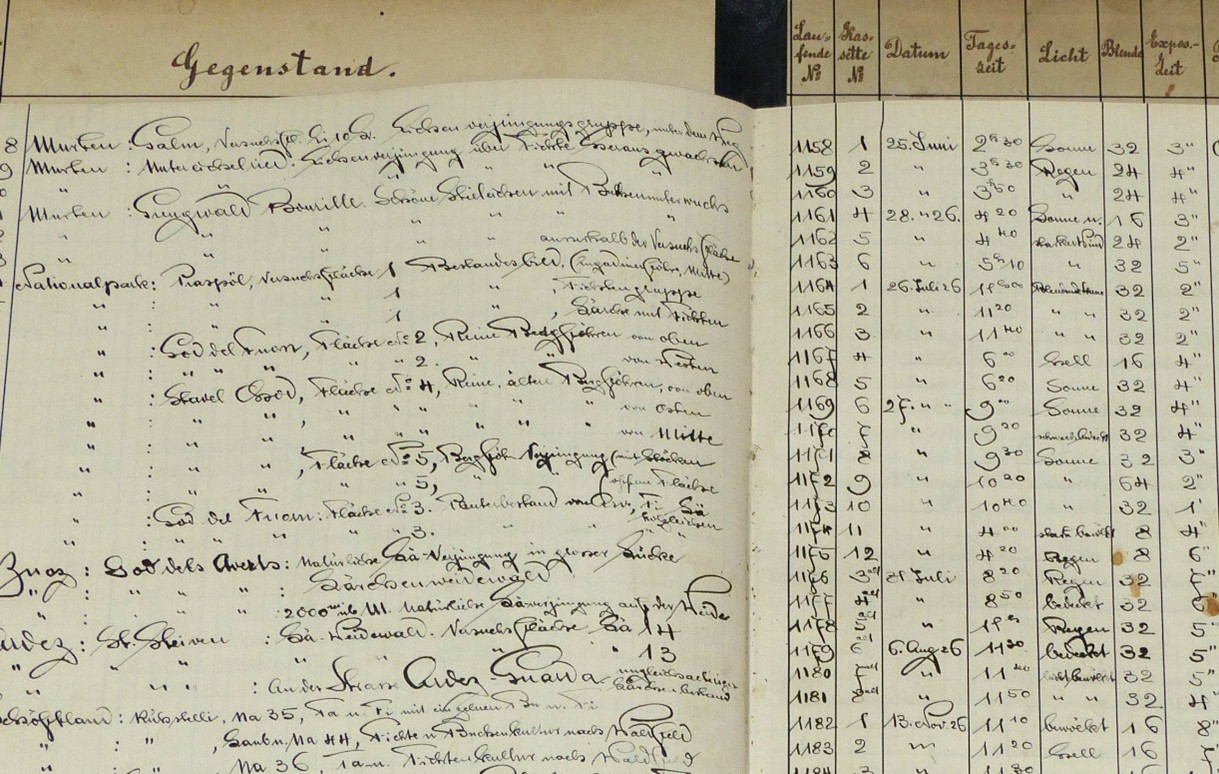
After digitising them, Reich and his team edited the images on the computer, albeit very lightly. Furthermore, they continuously recorded the metadata. This includes, for example, the original image number, the photographer’s name, the date and location of the photograph, the dimensions and type of image carrier, and the original image description.
ETH's Image Platform with over 1,5 Million Photographs 
The valuable images are not only meticulously archived, they have also been made available to the public. “Images exist to be seen. If they are only data on a hard drive, they are of no use”, says Reich. The already established image platform E-Pics by the ETH libraries was the ideal way to present the images on the internet. Over one and a half million photos have already been published there, including the ETH Library's image archive, the architectural history photo archive of the city of Zurich, and Thomas Mann and Max Frisch image collections.
All photograps by WSL and SLF can be downloaded free of charge from E-Pics. Most images are available under a Creative Commons License.

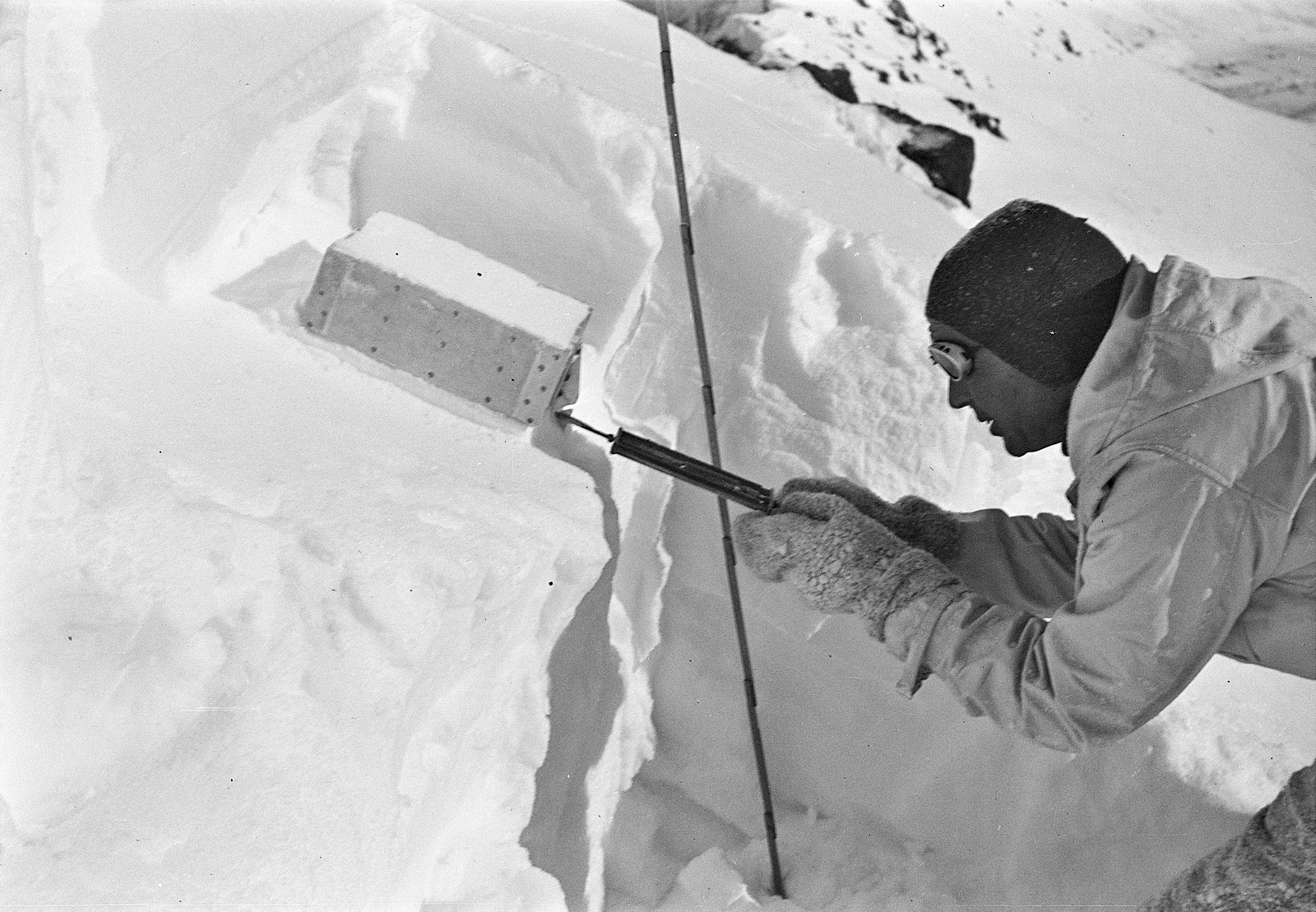
Image 1 of 19
Glaciologist Robert Haefeli examines the snow cover with a shear apparatus. Davos (GR). Film negative 4.5 × 7 cm. Photo: Edwin Bucher, winter 1937/1938.

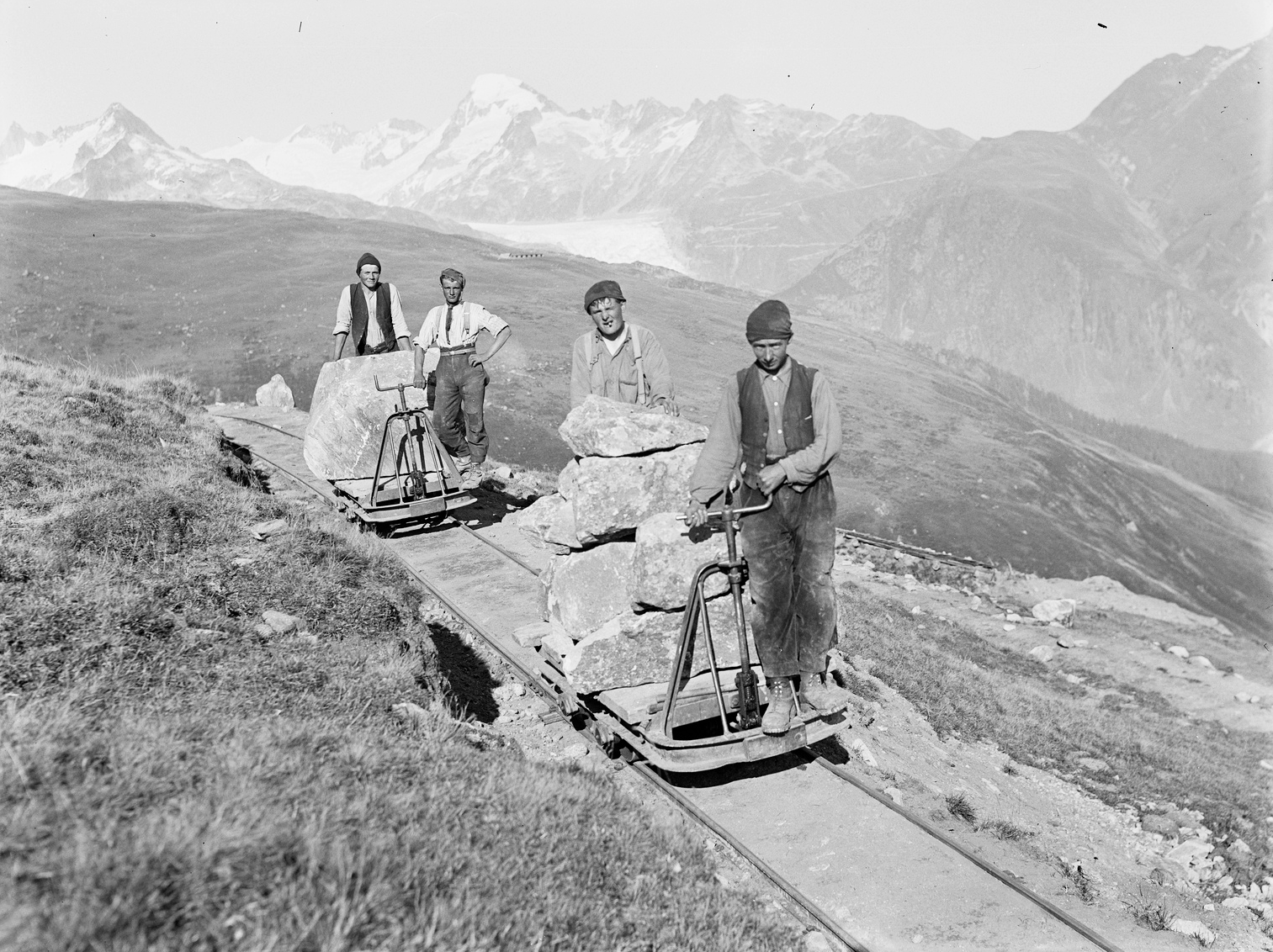
Image 2 of 19
Transporting stones on rails specially laid for the construction of a dry stone wall in Obergoms (VS). In the background, the Rhone Glacier and Galenstock. Film negative, 9 x 12 cm. Photo: Ernst Eugster, 1931.

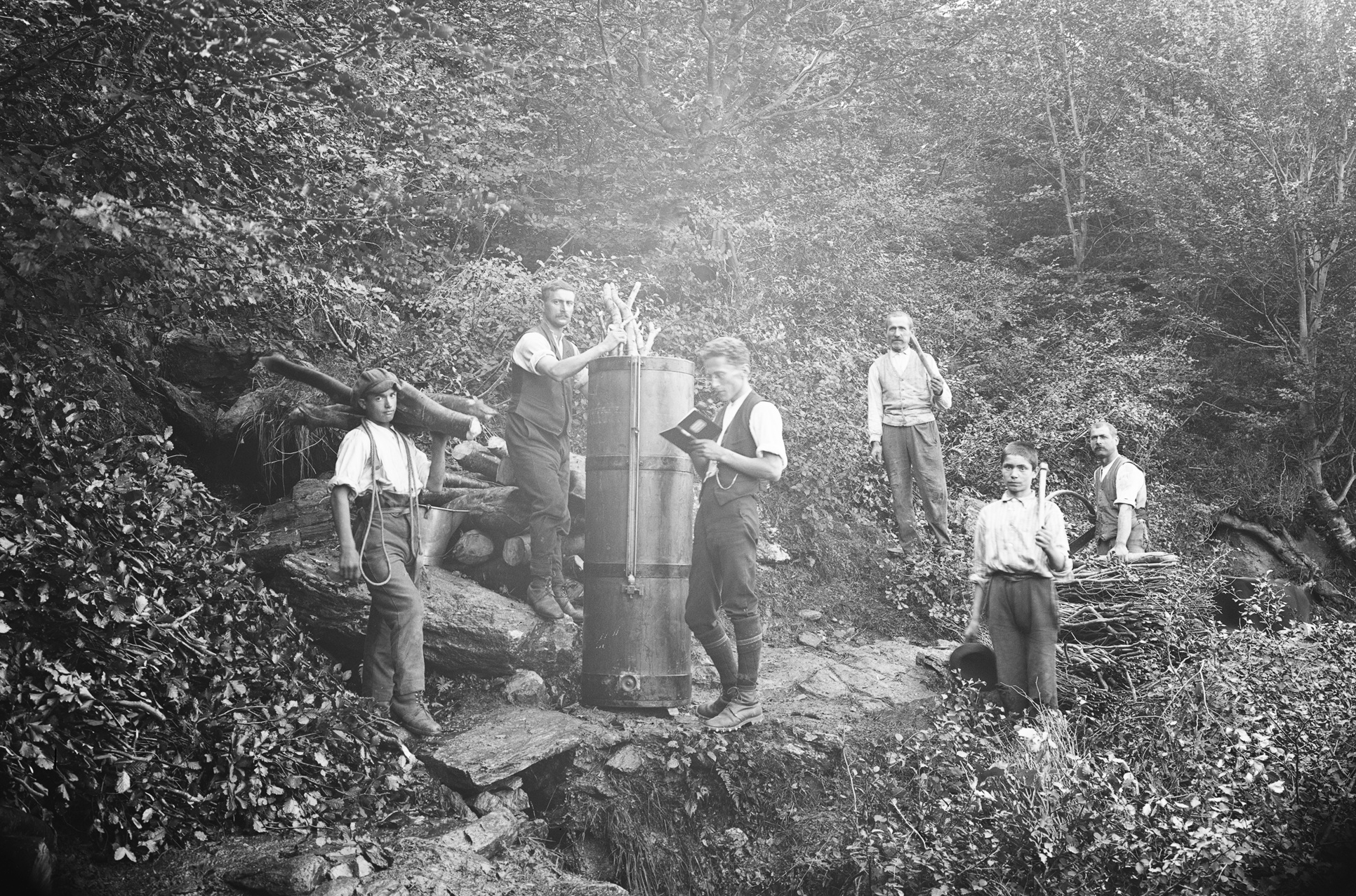
Image 3 of 19
Using a ‘xylometer’ to measure the volume of branches, Sonvico (TI). Glass plate 13 x 18 cm. Photo: Hans Burger, 1919.

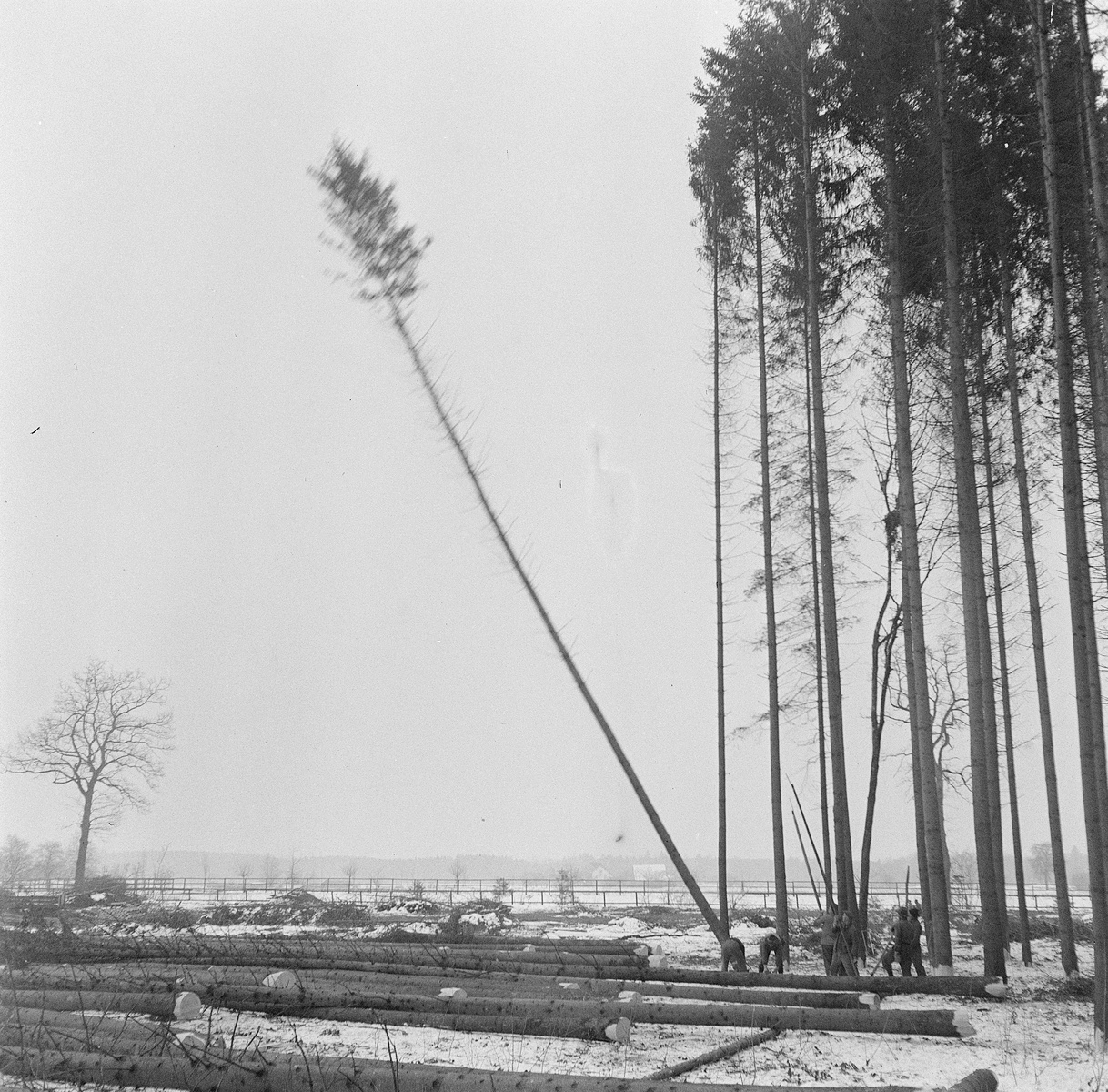
Image 4 of 19
Clearance work for the construction of the airport in Kloten (ZH), December 1946. Film negative 6 x 6 cm. Photo: Jakob Zehnder, 1946.

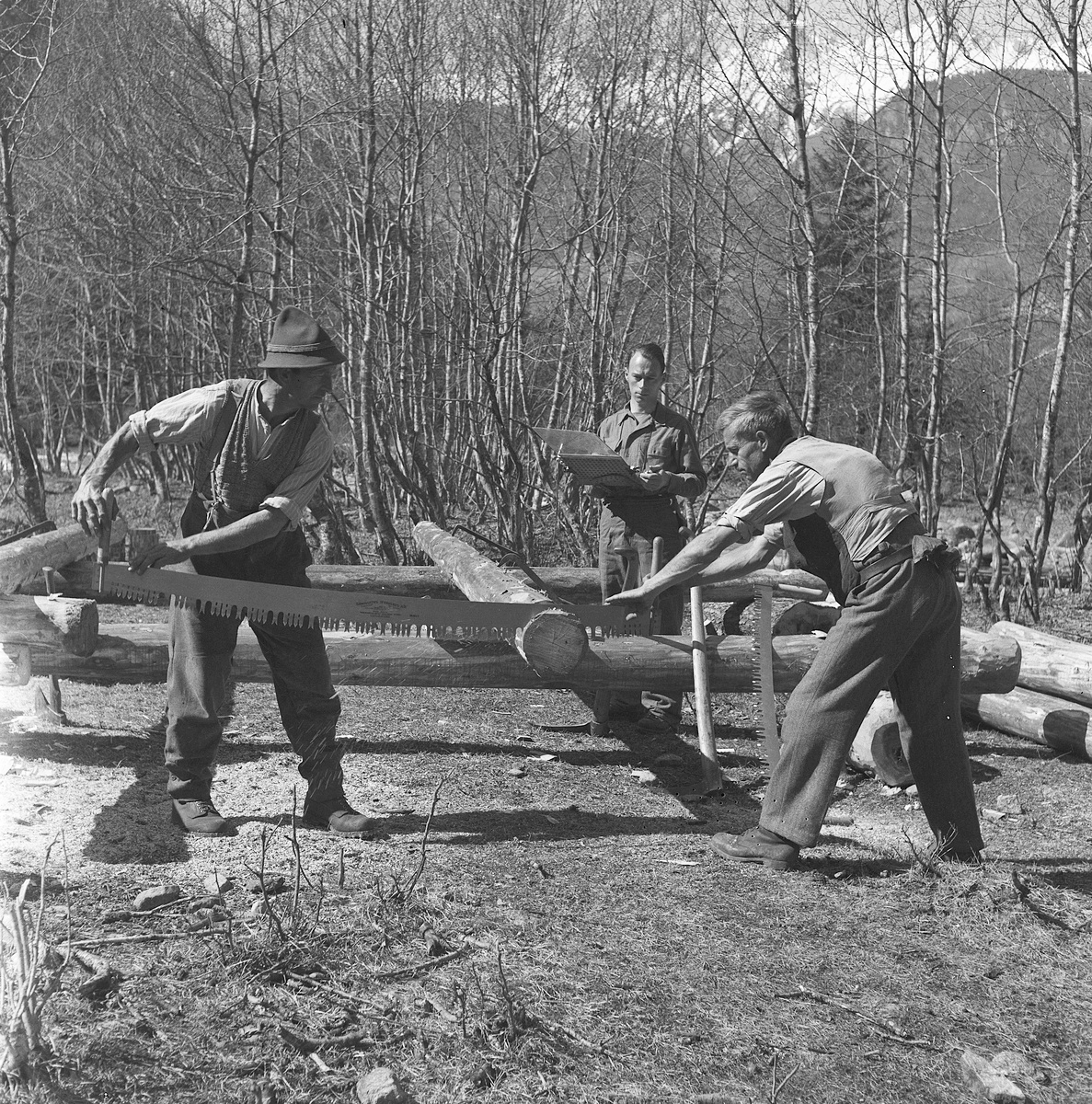
Image 5 of 19
In Filisur (GR), two men saw through a log using a two-men saw, while a researcher records the time needed. The goal is to calculate the labour intensity. Film negative 6 x 6 cm. Photo: Jakob Zehnder, 1945.

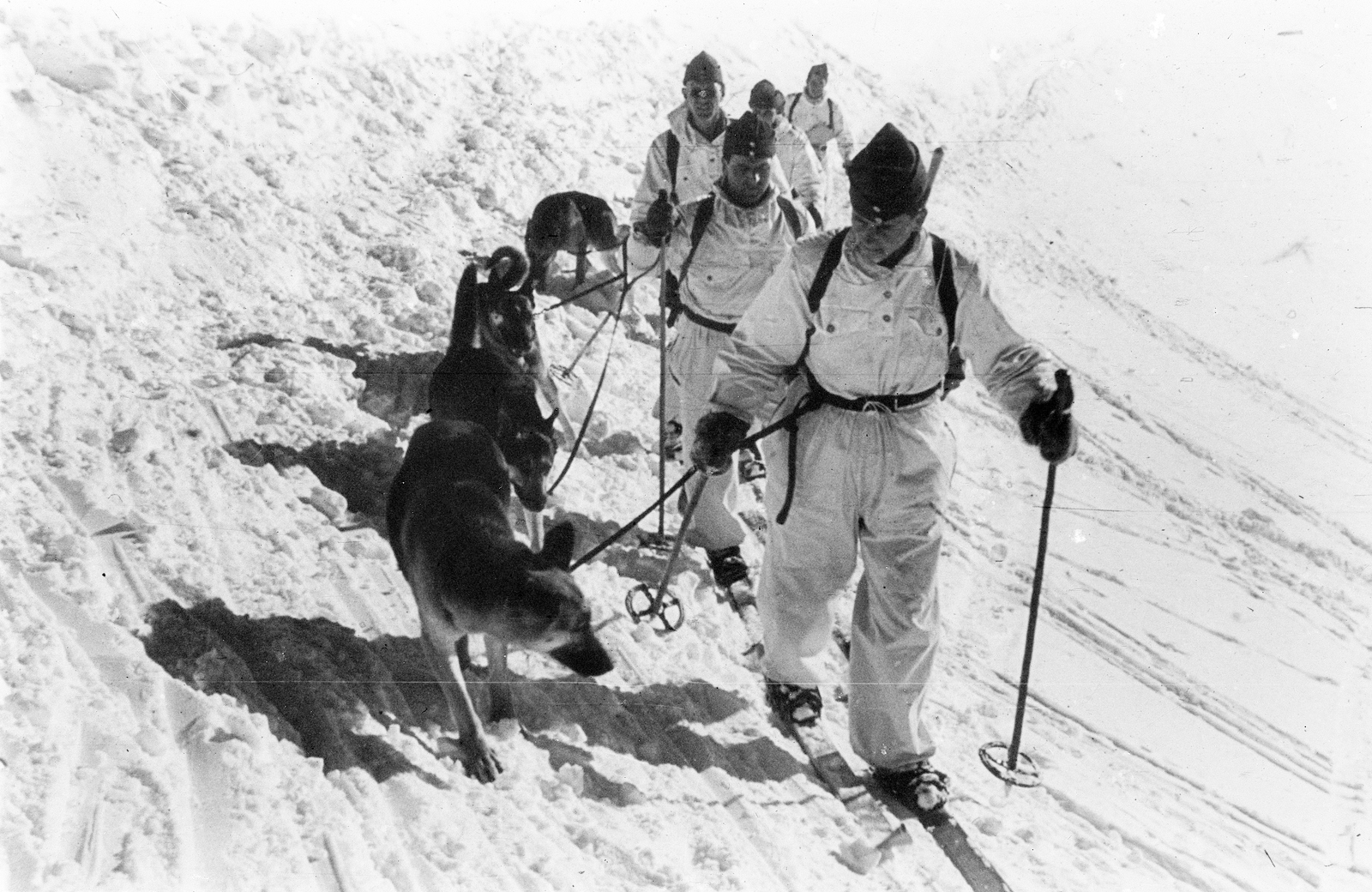
Image 6 of 19
Rescue exercise to train avalanche dogs at Hauptertäli in Davos (GR). Film negative 6 x 9 cm. Photo: Schmutz, 1942.

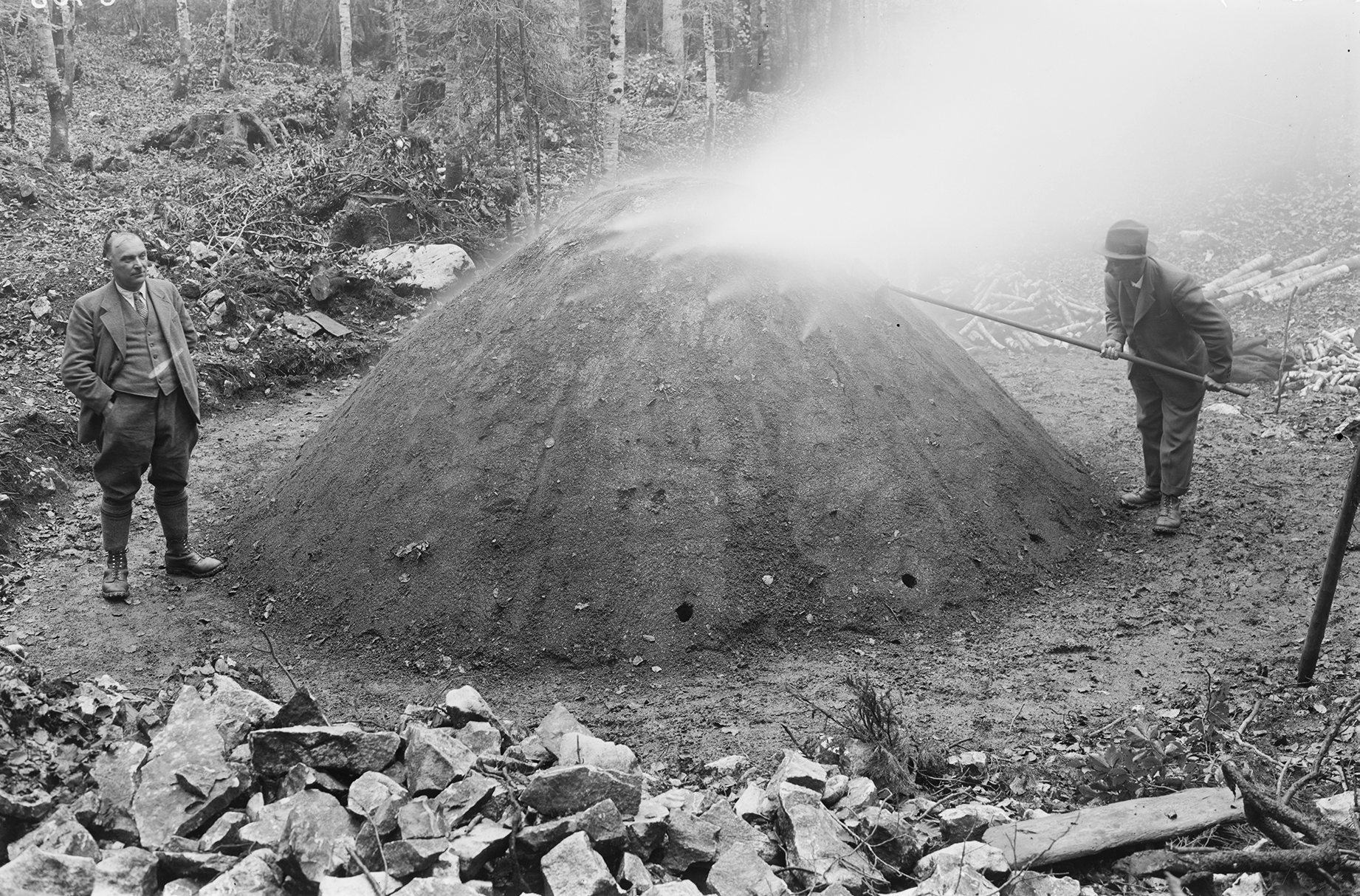
Image 7 of 19
Charcoal kiln in Risoux near Vallorbe (VD). Glass plate 10 x 15 cm. Photo: Werner Nägeli, 1935.

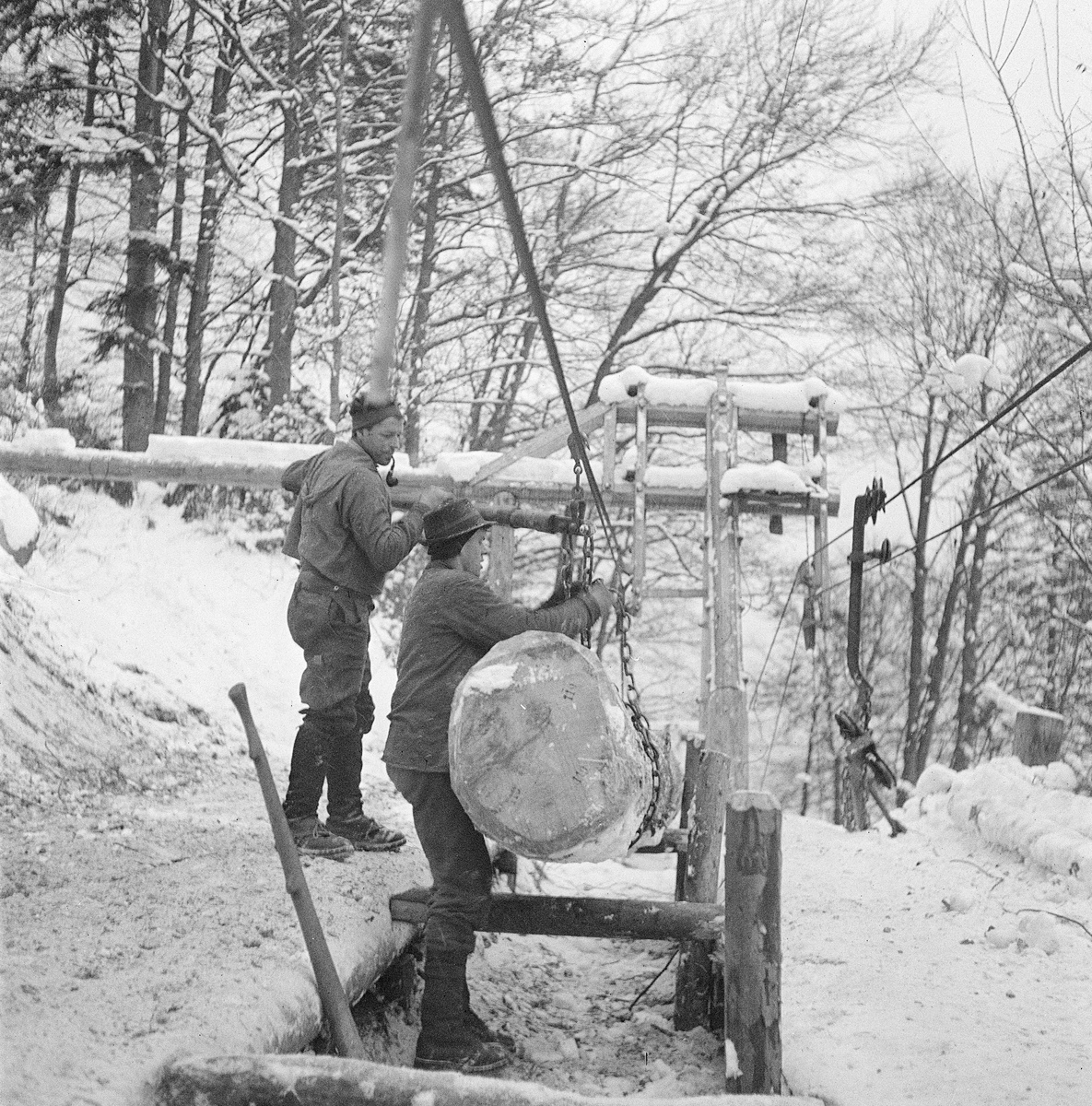
Image 8 of 19
A tree trunk is suspended from the Wyssen cable crane for transport. Ober Stockbann on the northern slope of the Rigi (SZ). 6 x 6 cm film negative. Photo: Erich Soom, 1948.

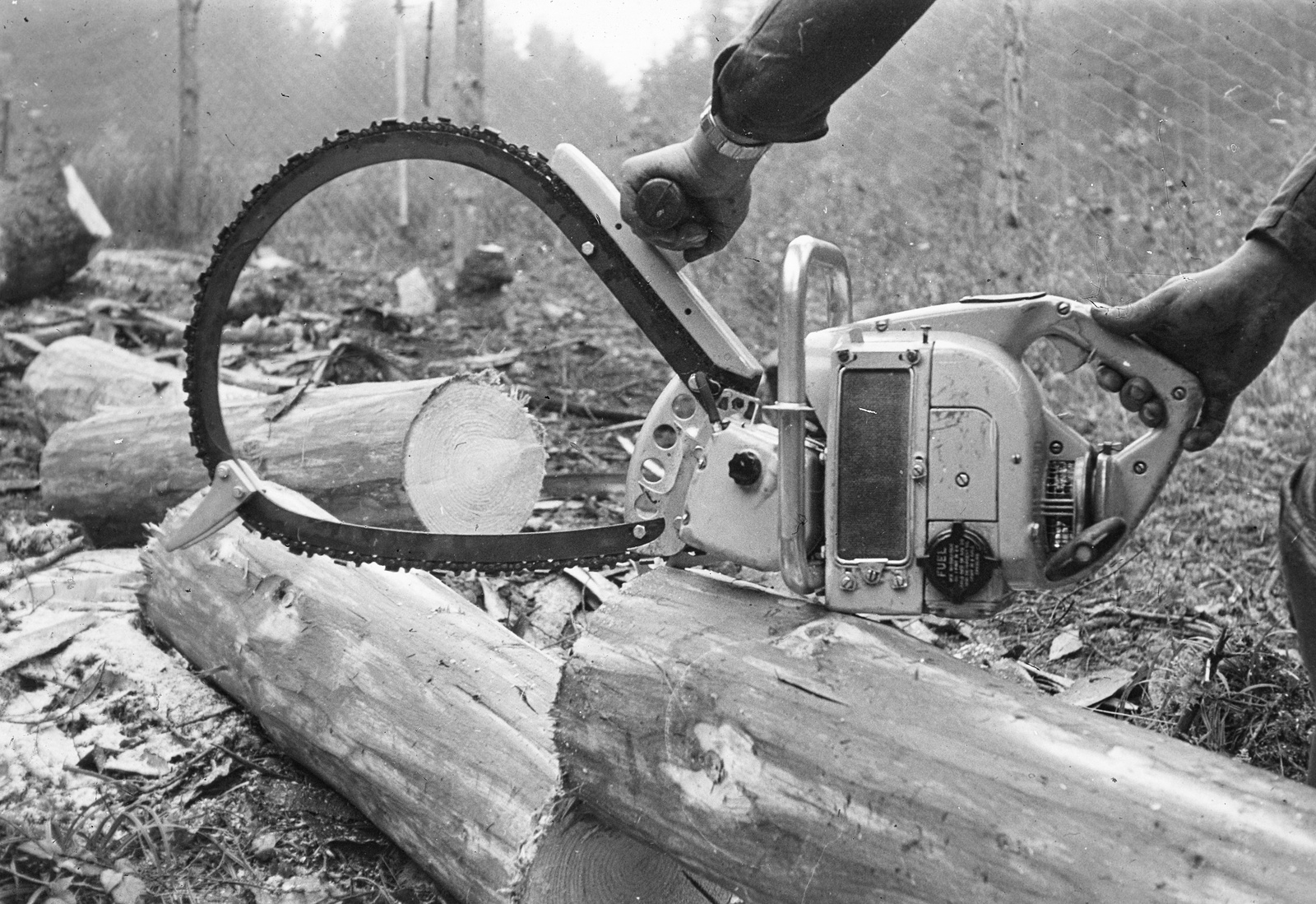
Image 9 of 19
Testing a McCulloch bow bar chainsaw. Slide 2.4 x 3.6 cm. Photo: unknown, 1955.

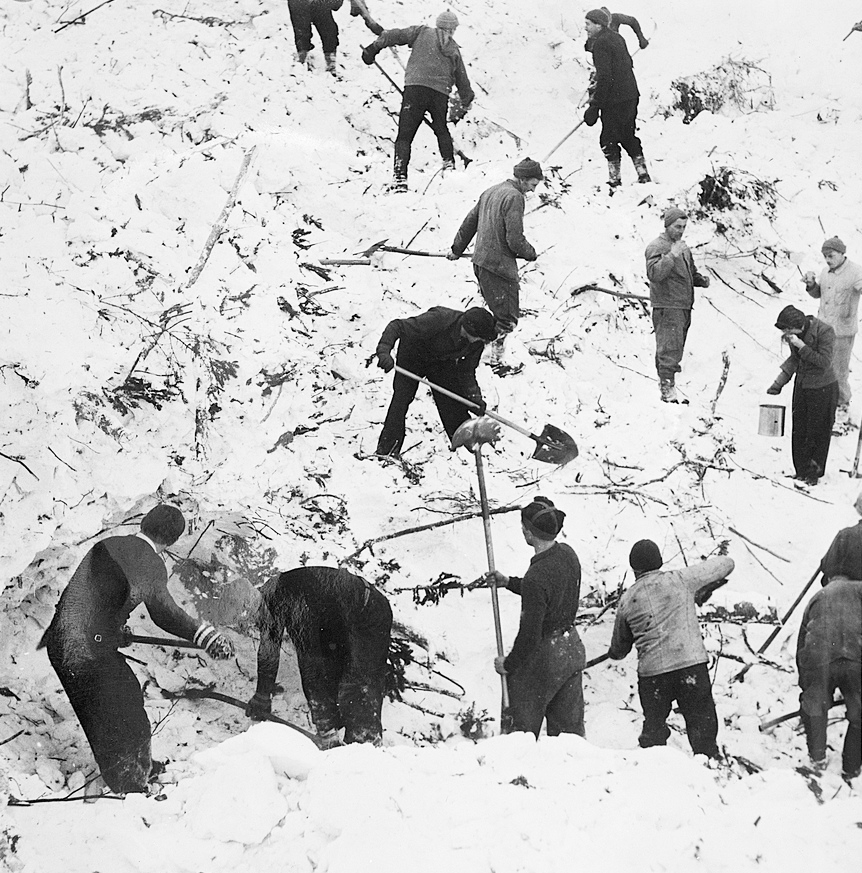
Image 10 of 19
Rescue efforts following an avalanche disaster in Beckenried (NW) on 1 February 1948. Seven people lost their lives in the avalanche. Film negative 8 x 11 cm. Photo: Georges Tièche, 1948.

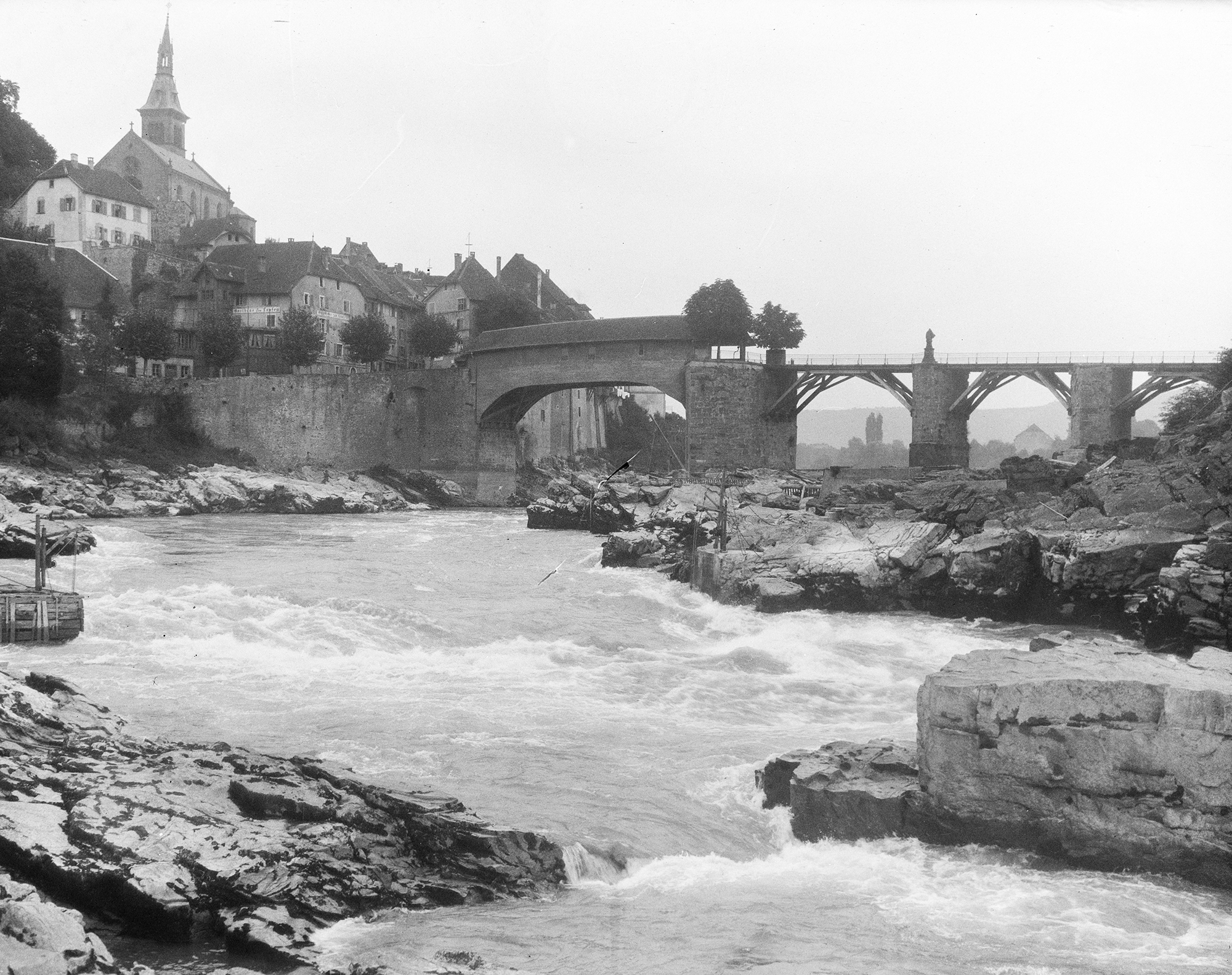
Image 11 of 19
The still untamed Rhine near Laufenburg (AG) in 1904, with wooden salmon fishing equipment. The rapids were called ‘Kleiner Laufen’ (Little Falls) in contrast to ‘Grosser Laufen’ (Big Falls), the Rhine Falls. Film negative 9 × 12 cm. Photo: Franz Fankhauser, 1904.

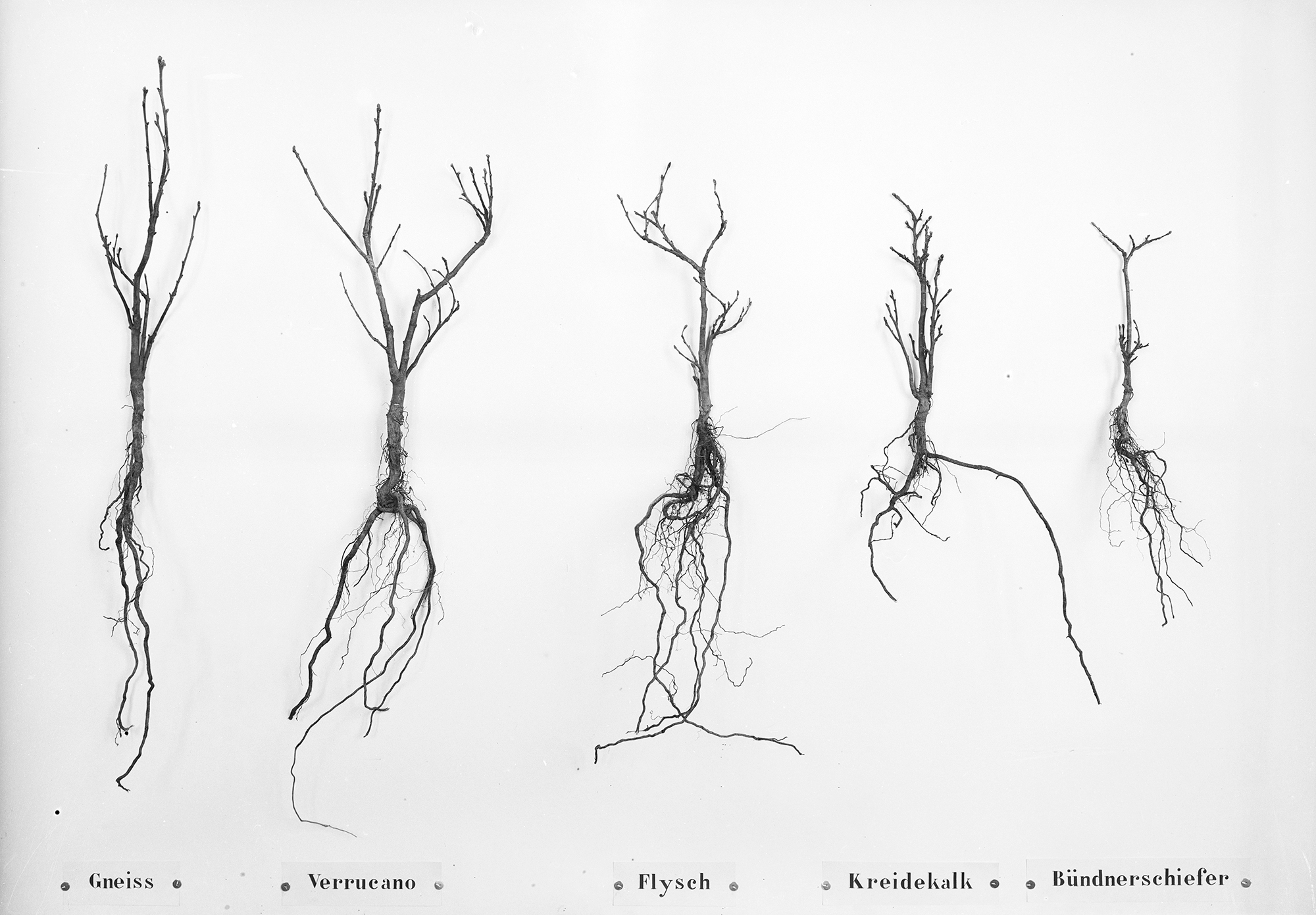
Image 12 of 19
Even 120 years ago, forestry scientists were investigating how trees of different origins grow in different soils. Today, similar experiments are being continued with regard to climate change. The photo shows four-year-old chestnut trees from the experimental garden on the Adlisberg near Zurich. Glass plate 13 × 18 cm. Photo: Robert Glutz, 09.02.1906.

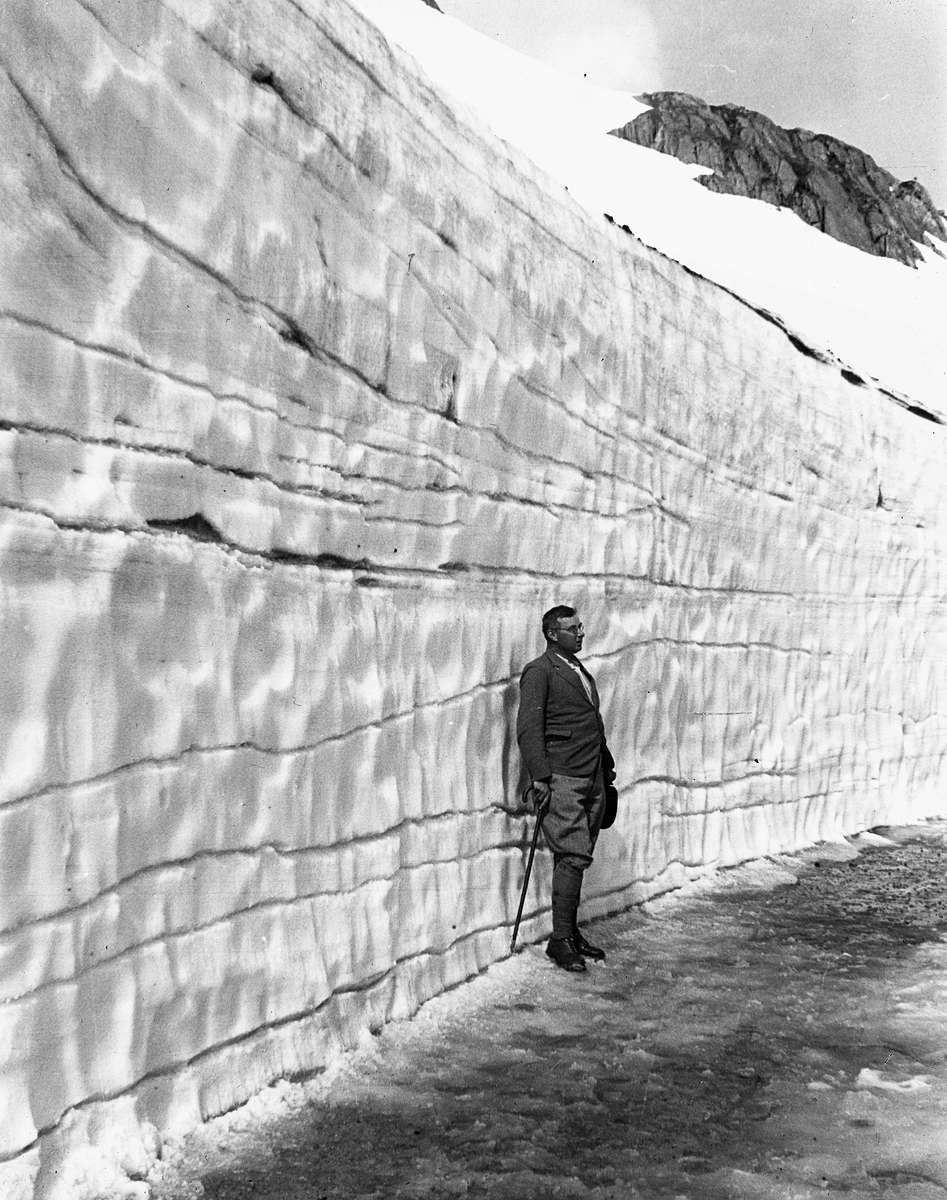
Image 13 of 19
Wall of snow on the Grimsel Pass after the pass road opened in June 1936. Glass plate 8.5 x 10 cm. Photo: Emil Müller, 22.06.1936.

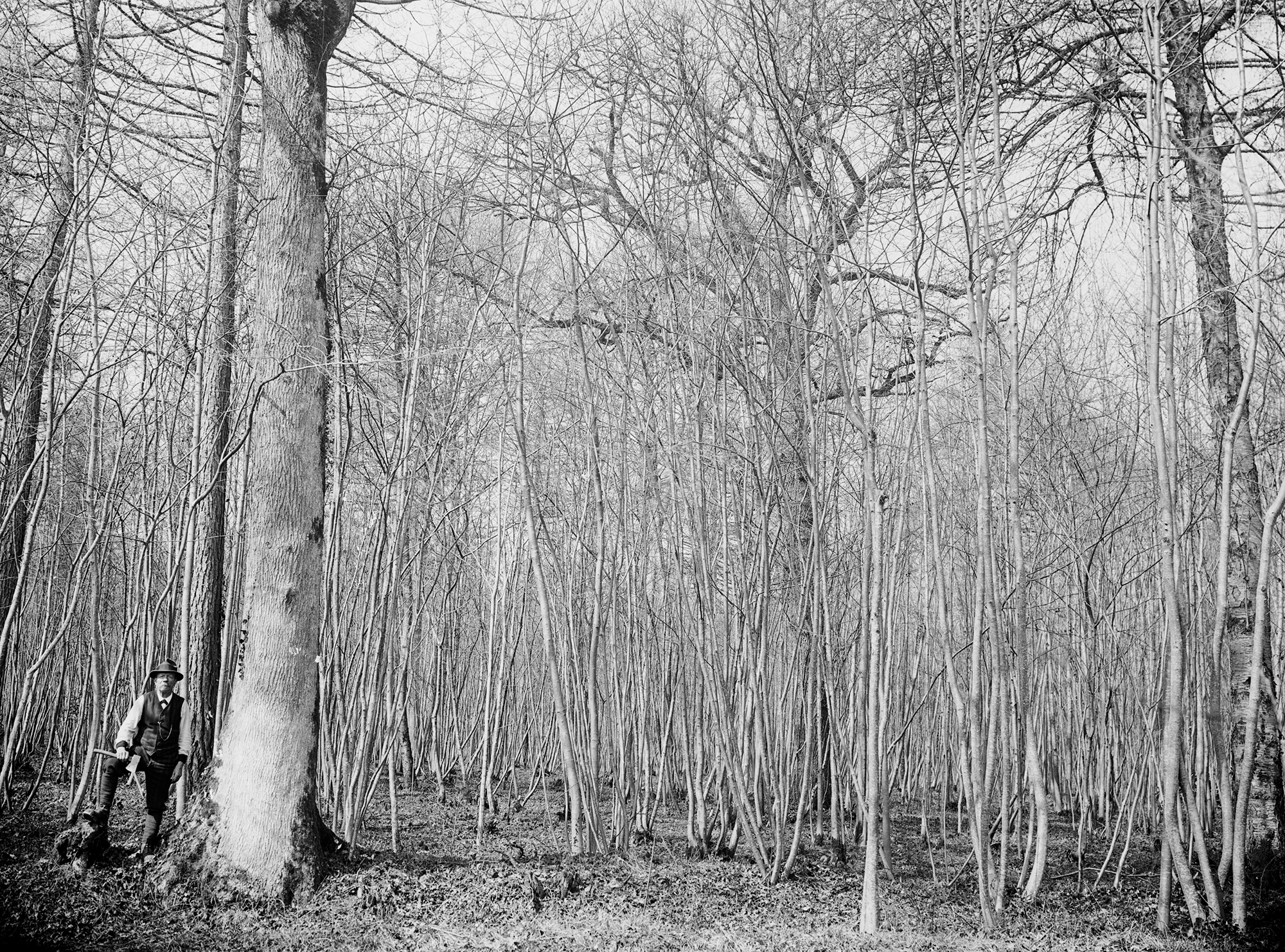
Image 14 of 19
The coppice with standards is an old form of forest management with individual ‘standards’ (mostly oaks) and a periodically felled understorey. Today, it is being used again in nature conservation to promote animal and plant species that require light and warmth. The picture shows a coppice with standards in Güttingen (TG), 20 years after the last felling of the understorey. Glass plate 8.5 × 10 cm. Photo: Hans Burger, 02.04.1925.

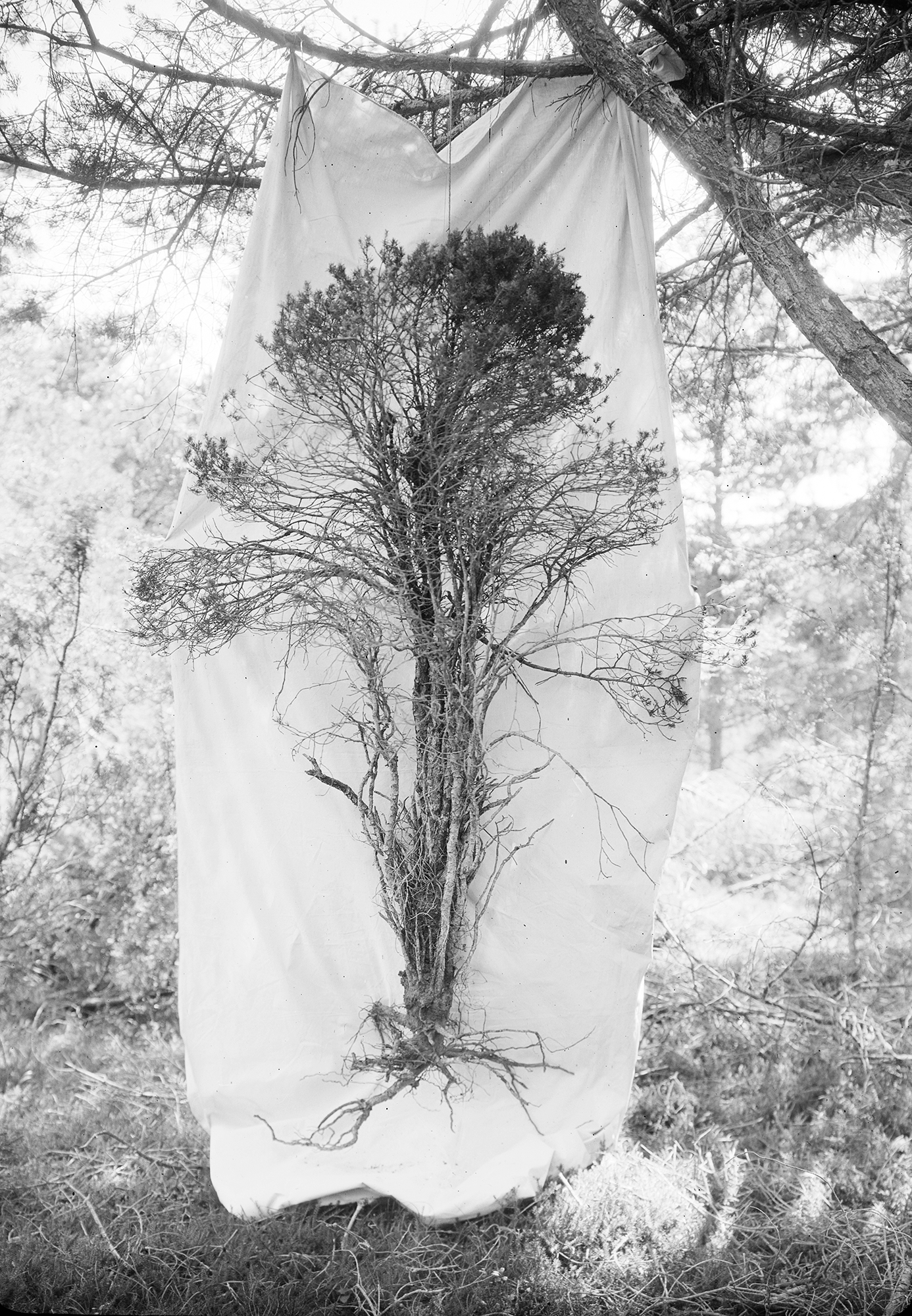
Image 15 of 19
Presentation of a 2.15 m tall Fastigiata pine tree with shallow roots in Bonaduz (GR). Film negative 13 × 18 cm. Photo: Robert Glutz, 14.08.1907.

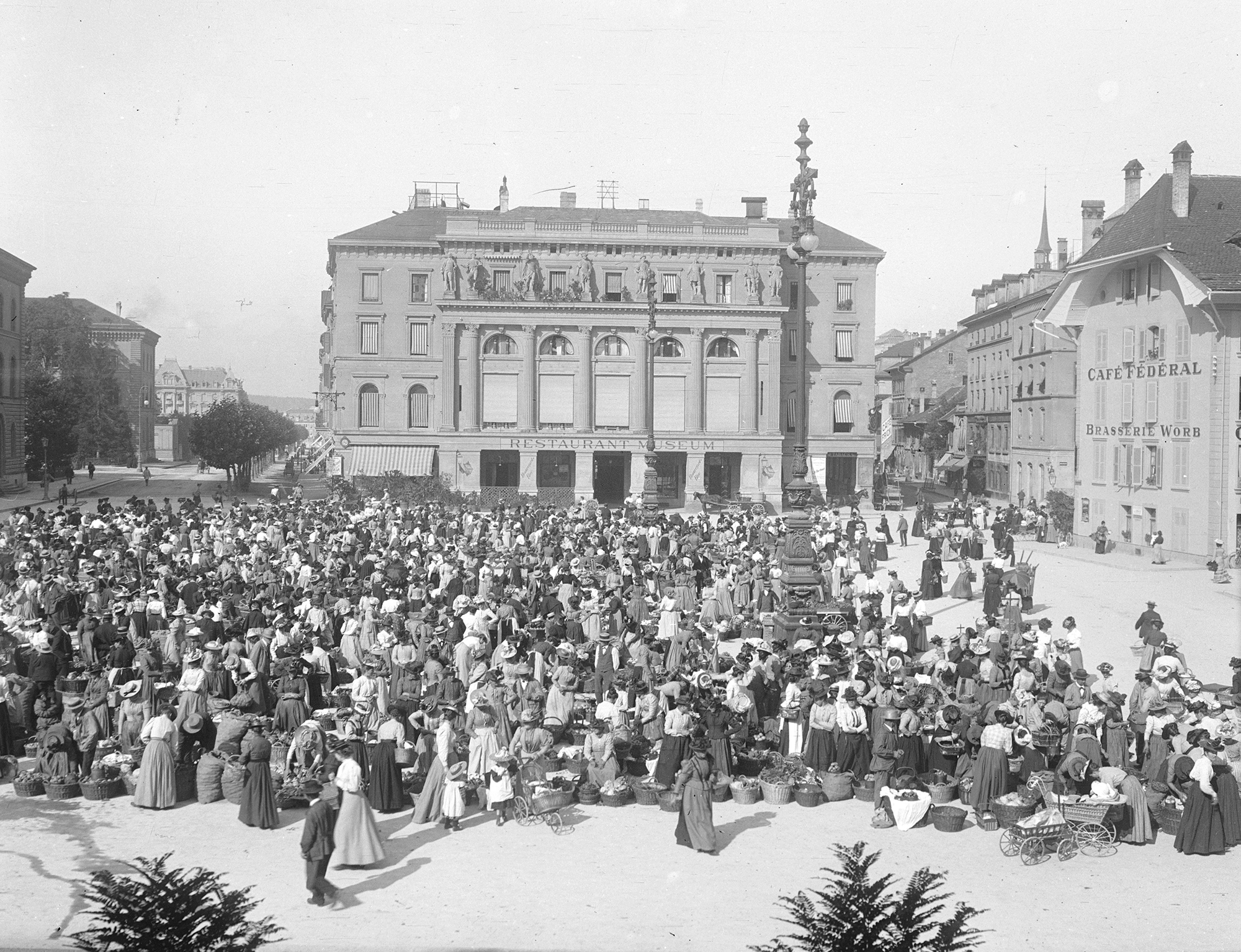
Image 16 of 19
Weekly market on Bundesplatz in Bern, early September 1902. Film negative 9 x 12 cm. Photo: Franz Fankhauser, 1902.

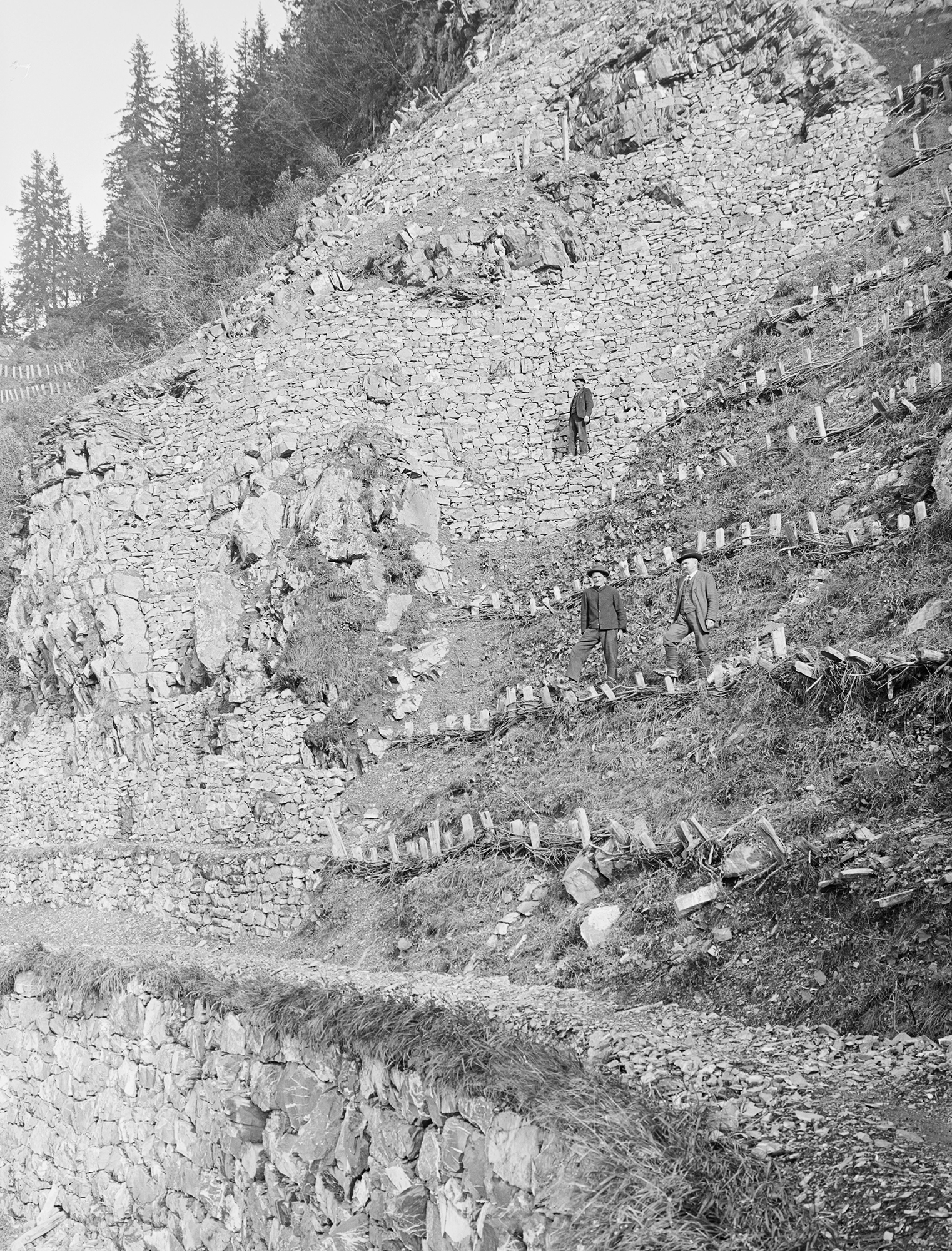
Image 17 of 19
Numerous erosion-prone slopes in the Swiss Alps were reinforced with dry stone walls and wooden posts in an almost unimaginable feat of manual labour. Some of these walls can still be found in the terrain today, well over 100 years after they were built. The picture shows the ‘Ätsch’ area on the Kilchenstock near Linthal (GL). Glass plate 9 × 12 cm. Photo: Franz Fankhauser, 05.10.1914.

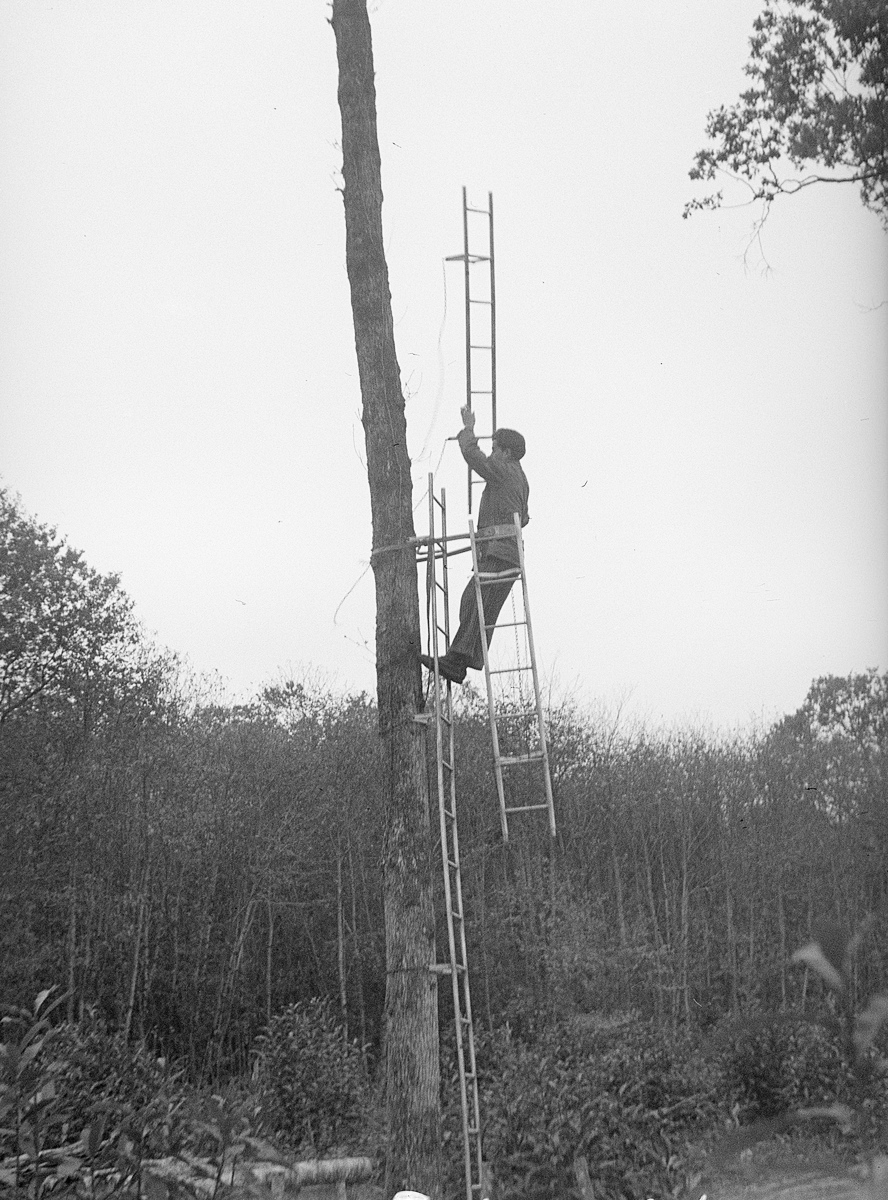
Image 18 of 19
Assembly of a multi-part ladder used for pruning trees. Branches are removed directly from the trunk to increase the tree's value. Niort, Nouvelle-Aquitaine region, France. Film negative 4.5 × 6 cm. Photo: Hansjürg Steinlin, 1953.

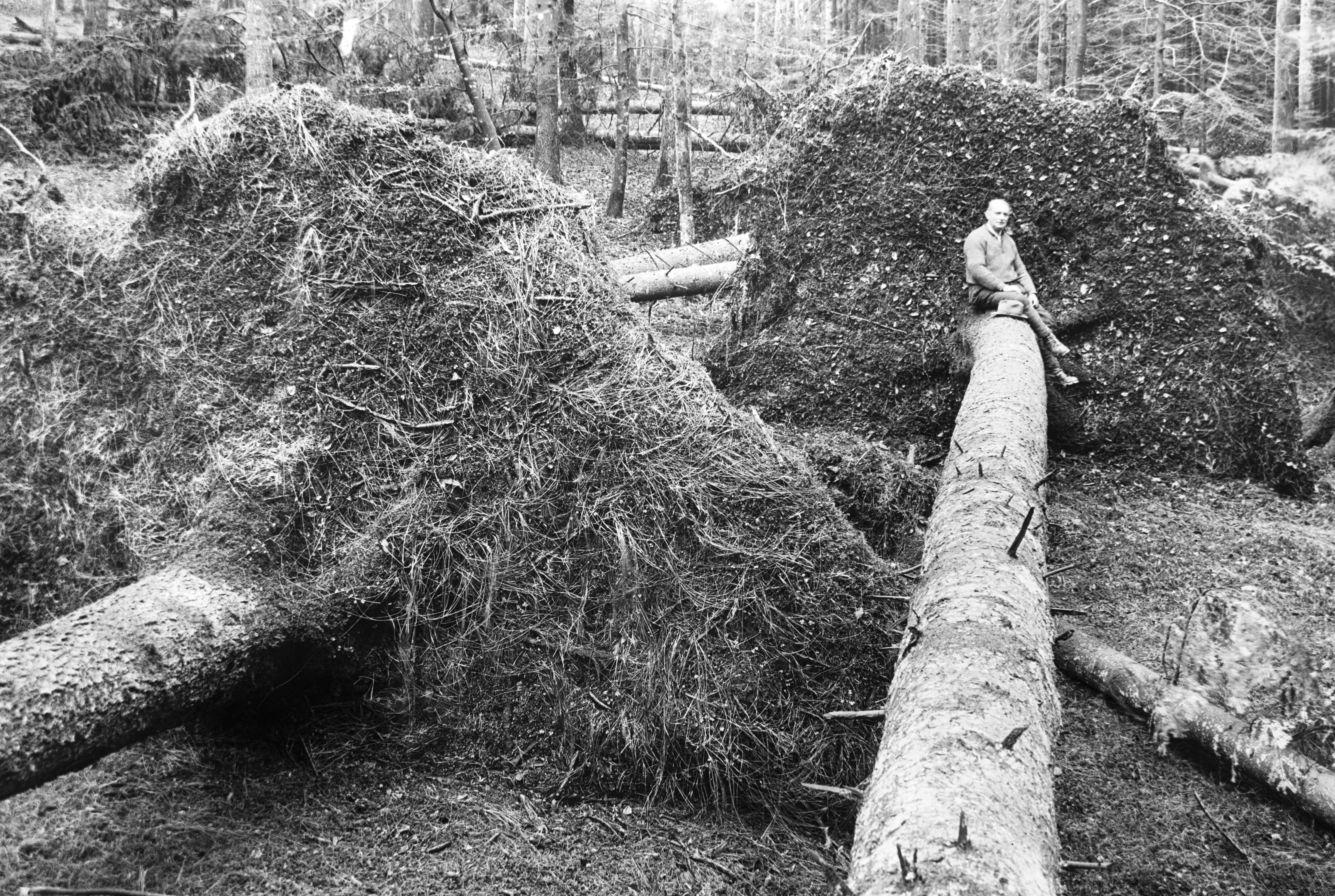
Image 19 of 19
Conifers blown down by a storm on 19 November 1939 in test area ‘Fichte 282’ near Gränichen (AG). Glass plate 8.5 × 10 cm. Photo: Werner Nägeli, 30.11.1939.
Links 
Contact 
Projects 
Copyright 
WSL and SLF provide image and sound material free of charge for use in the context of press contributions in connection with this media release. The transfer of this material to image, sound and/or video databases and the sale of the material by third parties are not permitted.