

Contact us 
Anja Mödl is a PhD student in the Snow Processes group at the SLF. She is spending one and a half months at the Italian Mario Zucchelli station in the Antarctic. Together with her Finnish colleague Roberta Pirazzini, they want to determine the properties of the surface scattering layer. In the logbook blog, she reports on her work and her stay in Antarctica. Part 1.
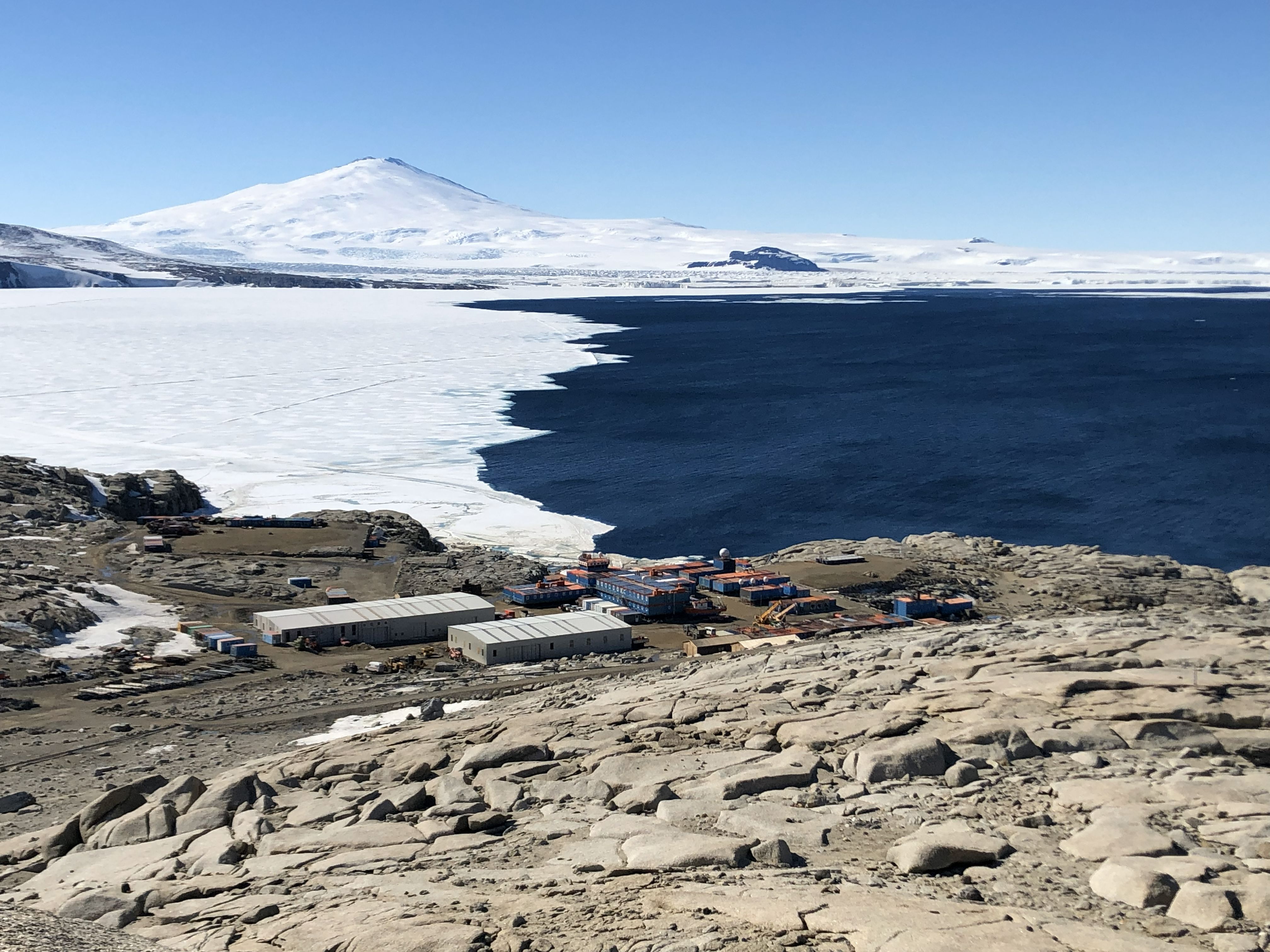
This text was automatically translated.
The Mario Zucchelli Station is located on the Ross Sea in Terra Nova Bay on an ice-free rock not far from the coast. Due to its location in the bay and protected by the surrounding hills, it is usually relatively windless at the station and therefore pleasant. The inhabitants of the station say that this is the Riviera of the Antarctic. In terms of scenery, the comparison certainly works. We are right on the coast here, but at the same time we are already in the mountains of Victoria Land. Within a few meters, the view can change from rocky slopes and huge glaciers to sea ice or the open sea. Especially now, when the sea ice is breaking off the coast and being blown into the open sea by the wind, the surroundings are constantly changing. On my first long run, I couldn't stop being amazed. The fact that I can also explore the area on my running shoes is particularly practical and only possible because the station is not on the ice, but on rocks. There are several roads inland to reach nearby research sites by pickup truck. But of course I can't just put on my running shoes and start walking. In this remote region, safety is paramount, which is why it is mandatory to take a radio with me whenever I leave the area and inform the control center. I also don't want to go further than about 3 km from the station on my own and always stay on the paths. Nevertheless, I get a strong sense of the untouched nature of this place when I walk.
The ward building is a blue and orange T-shaped container building. The building has two floors and contains dormitories (four-bed rooms), laboratories and other workstations, the cafeteria, a bar and two leisure rooms. The site also includes two assembly halls with workshops and storage facilities. There is also a wooden hut for leisure activities, equipped with a mini gym, table tennis table and a small stage, as well as a number of other storage containers. There are currently 69 other people on the station in addition to myself. Of these, 17 are scientists working on nine different projects and the remaining 52 are operational staff. We are nine women in total. The station itself is not a beauty, but it is functional and that is what matters.
In terms of food, we are really lucky here compared to other research stations in Antarctica, at least that's what I was told. Among other things, there is a portafilter coffee machine and even an ice cream machine. Fridays are also pizza day and on Thursday evening and Sunday lunchtime there is even Italian wine with the food. Unfortunately, as a vegan who doesn't drink coffee or alcohol, I can't do much with all these benefits. But even I don't just have to eat dry rice or pasta with olive oil, there is always a vegetable alternative. I am also very grateful to the two chefs who sometimes prepare tofu or a pizza without cheese especially for me.
A bigger problem, however, is the language barrier. I don't speak any Italian myself (or let's say the basics that you learn with six months of Babble), but only the scientists on the ward speak fluent English. Fortunately, I have Roberta, who was born in Italy, and she always translates for me. Otherwise, I communicate with my hands and feet or use Google translate. Thanks to Starlink, we even have reasonably fast Wi-Fi here, only social media and streaming are blocked.
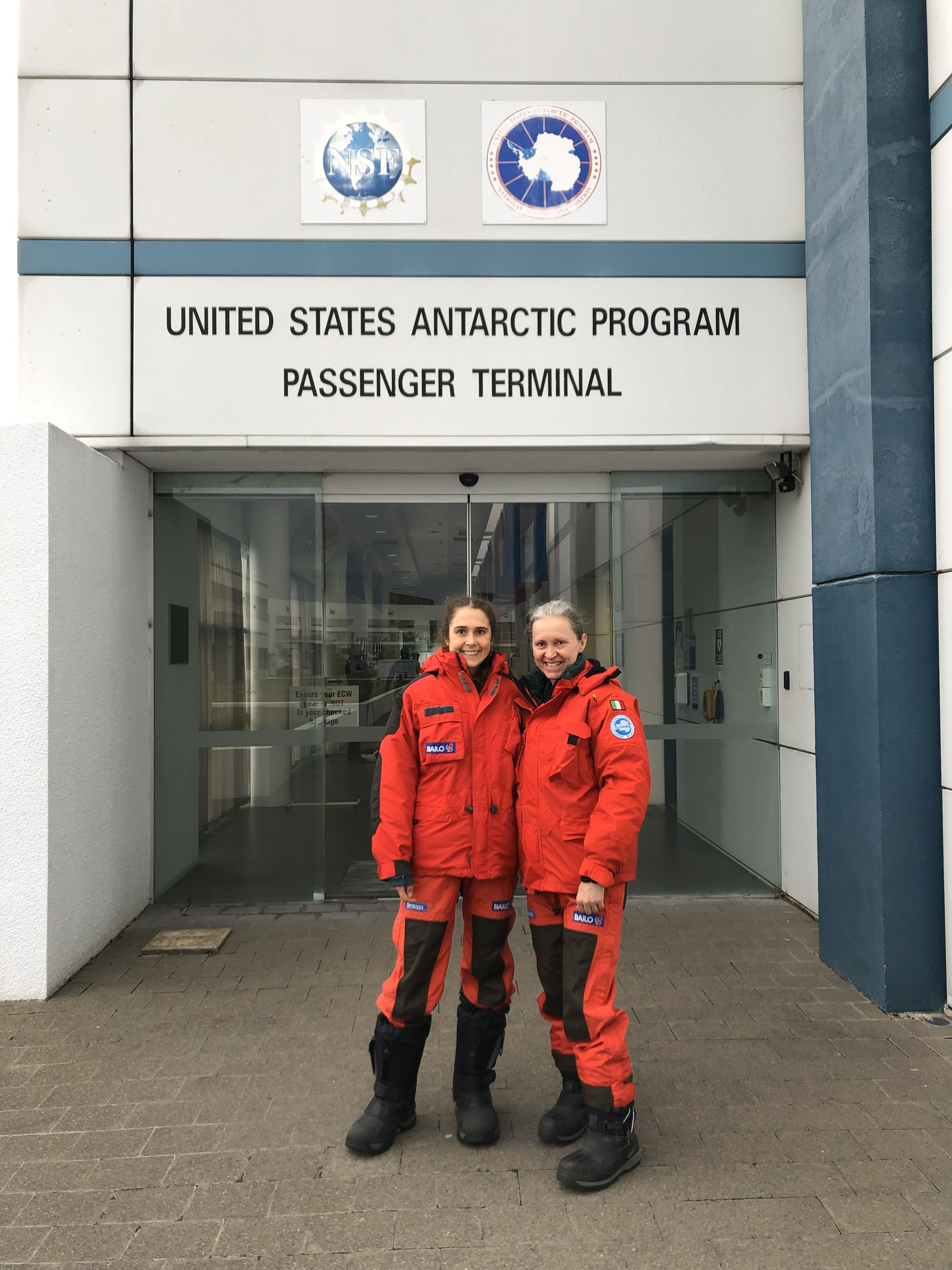
It wouldn't actually be possible for Roberta and I to do research at the Italian station, as we don't belong to an Italian research institute. But since this year, the Polarin (Polar Research Infrastructure Network) is an EU project that enables us to work as guest scientists on the stations within the network, regardless of the nation. We are therefore not directly affiliated with the Italian Antarctic research program PNRA, and are funded for our work by the Polarin project. As we are the first year in this constellation, this has already led to some problems in the run-up. For example, there was initially a misunderstanding about our clothing. It was not certain whether we would receive our clothing from the Italian Antarctic Logistics or whether we would have to organize all the equipment ourselves. Fortunately, the misunderstanding was eventually cleared up and we were equipped in the same way as the PNRA people.
In our project, we want to investigate the surface scattering layer in more detail. The surface scattering layer is a snow-like structure that forms on the surface of bare ice when the ice melts. During this process, the ice decomposes through metamorphosis and becomes a granular white structure. Here in the Antarctic, this transformation was only recently documented for the first time on the Nansen Ice Sheet, which is why we are also carrying out our measurements there. However, the same process can also be observed on sea ice in the Arctic and on glaciers in the Alps and Greenland. As the structure and color of the ice changes, the surface reflectivity also changes, which has a direct influence on the surface energy balance. We want to use our measurements to determine the exact causes for the formation of the surface scattering layer. in addition to reflectivity, we also measure surface roughness and structural properties such as density, temperature and size of the crystals. We have also installed an automatic weather station and a mini-radiation station that continuously measures atmospheric variables such as air temperature, wind strength, wind direction, incoming and reflected radiation in broadband and spectral resolution, as well as turbulent fluxes. The data and findings that we collect here will be used, among other things, to represent the surface scattering layer in climate models. So far, this has not been the case.
So much for the general conditions, now a few impressions of my trip and the first few days in Antarctica.
I first flew from Davos to Christchurch in New Zealand (25 hours). There I also met Roberta and other participants in the Italian Antarctic expedition. We had a two-day layover before continuing on to Antarctica, although the departure time kept changing. in the end, we flew on with a New Zealand military plane, initially to the US station McMurdo. The flight with the military aircraft was an experience in itself. It was cramped, noisy and too warm at first, but later it got colder and colder. It was particularly frosty on my feet and bottom, because what was that again, 'warm air rises'. You could clearly feel it in the plane.
From there, we flew on to the Mario Zucchelli station in a Basel BT-67. At the beginning of the season in November, the planes can also fly directly from Christchurch to Mario-Zucchelli and land on the sea ice there. However, the ice was already too thin when we arrived, which is why we made the stopover at McMurdo and flew on with a lighter plane. In the meantime, there is not much left of the landing strip on the sea ice. Within a few days of strong winds, most of the sea ice was blown towards the ocean. For our return flight at the end of January, we will take off from another runway on land, which is currently being prepared.
At the station, we spent the first few days organizing and testing our equipment and waiting to fly to our measuring field. The measuring field is about 37 km away from the station and can only be reached by helicopter. For me, it was the first time flying in a helicopter - another interesting experience. The station has two helicopters, but we are not the only group that needs them for our research. Therefore, our measurements are always dependent on when a helicopter is available for our project and when the weather permits a flight. All the logistics are coordinated by a team at the station. I imagine it is very challenging to meet all the requirements.
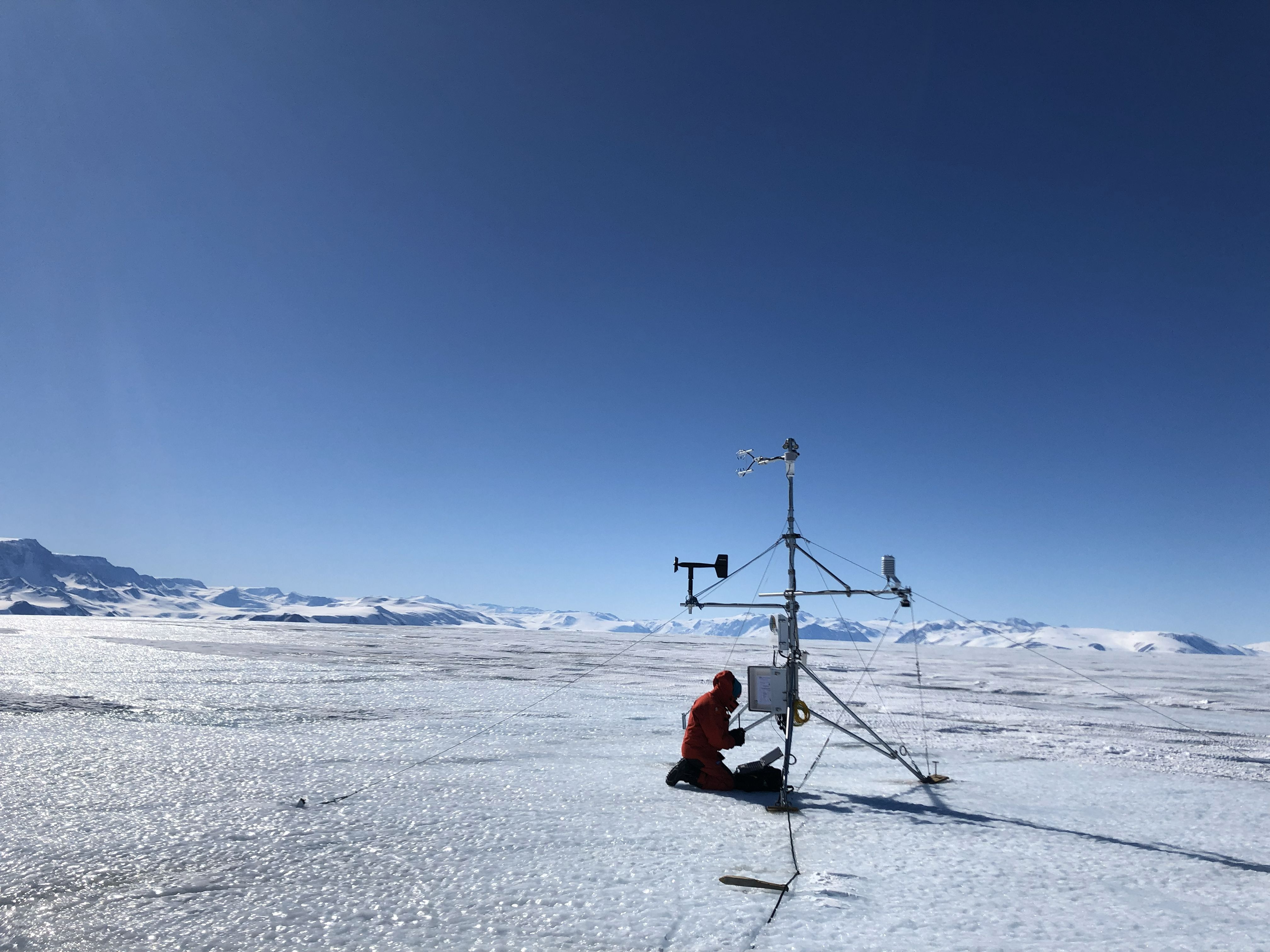
On the third day, we were finally able to enter the field for the first time, and the flight was almost canceled at short notice due to the strong winds. On site it was very windy with around 36 km/h. This meant that the measuring instruments we had brought with us could not heat up properly and therefore did not measure at all or not correctly. Another problem that awaited us was that both fixed stations were no longer straight, making the measurements virtually unusable. The reason for this is that the sun has heated the metal for the mooring and the ice on the outside has melted. As a result, the entire mooring has become loose and can no longer hold the station. unfortunately, we couldn't do much about it on site as we would have needed more equipment. So we mainly took photos so that we could later plan exactly what we needed to stabilize the stations again. It was a sobering first day of measurements. But this experience also made me realize that different rules apply in the Antarctic and that we have to adapt to them. I hope that we can still successfully master the campaign. I will be able to tell you what happens next in the next blog.
Until then, all the best.
Links 
Copyright 
WSL and SLF provide image and sound material free of charge for use in press releases in connection with this media release. The use of this material in image, sound and/or video databases and the sale of the material by third parties is not permitted.