
Three months ago, we invited you to take part in our survey aimed at improving the clarity of the European avalanche danger scale. Our goal is for the revised scale to be not only technically accurate, but also intuitive and easy to understand across all European languages.
We never expected such a level of participation:
➡️ more than 18,000 responses
➡️ including 9,500 to the German version, 3,500 to the Italian version, and around 2,000 each to the French and English versions of the survey
➡️ more than a thousand additional comments and suggestions
The detailed analysis is still ongoing. However, the findings are already being incorporated into the revision of the avalanche danger scale, alongside feedback from European avalanche warning services and other partner organisations.
Here is just a small insight into the responses to some of the many questions we asked:
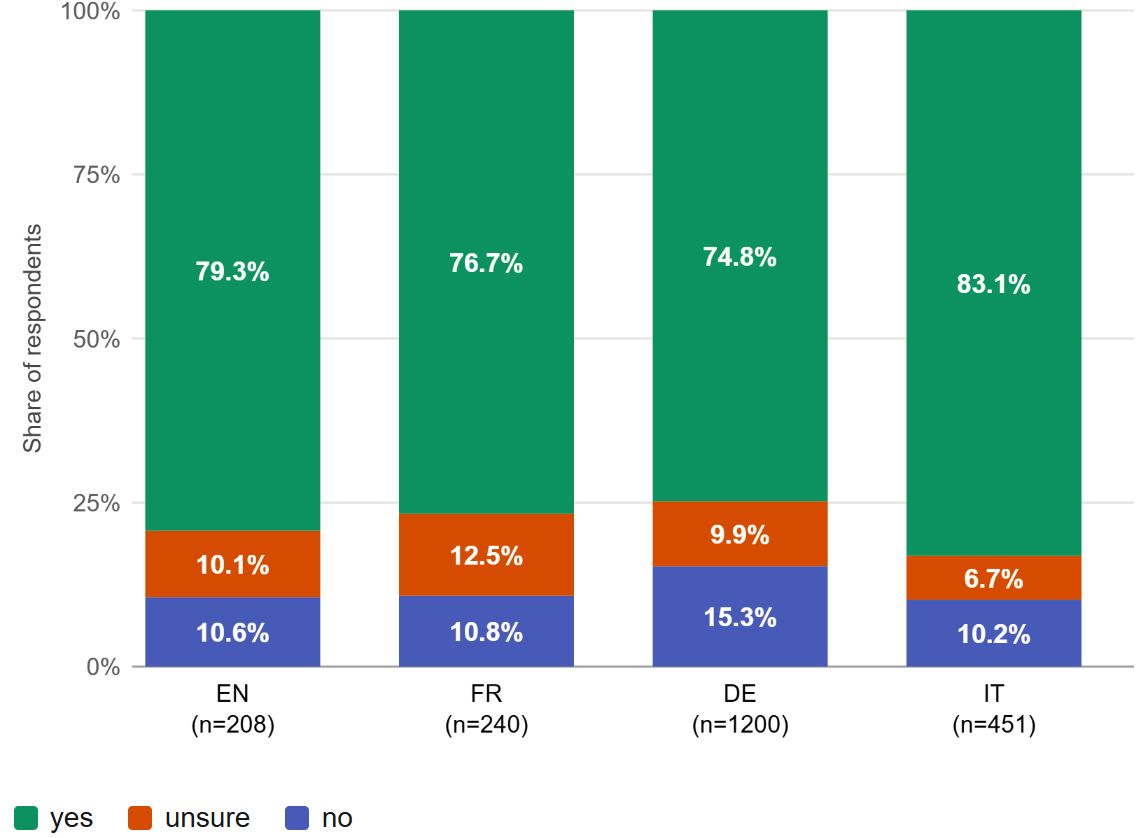
Can small avalanches that usually only carry a person along also be fatal?
For more than three quarters of participants, this message was clearly understood. However, 10% answered “no”, rising to 15% in German-speaking regions. This suggests that more needs to be done to communicate that even small avalanches can have fatal consequences.
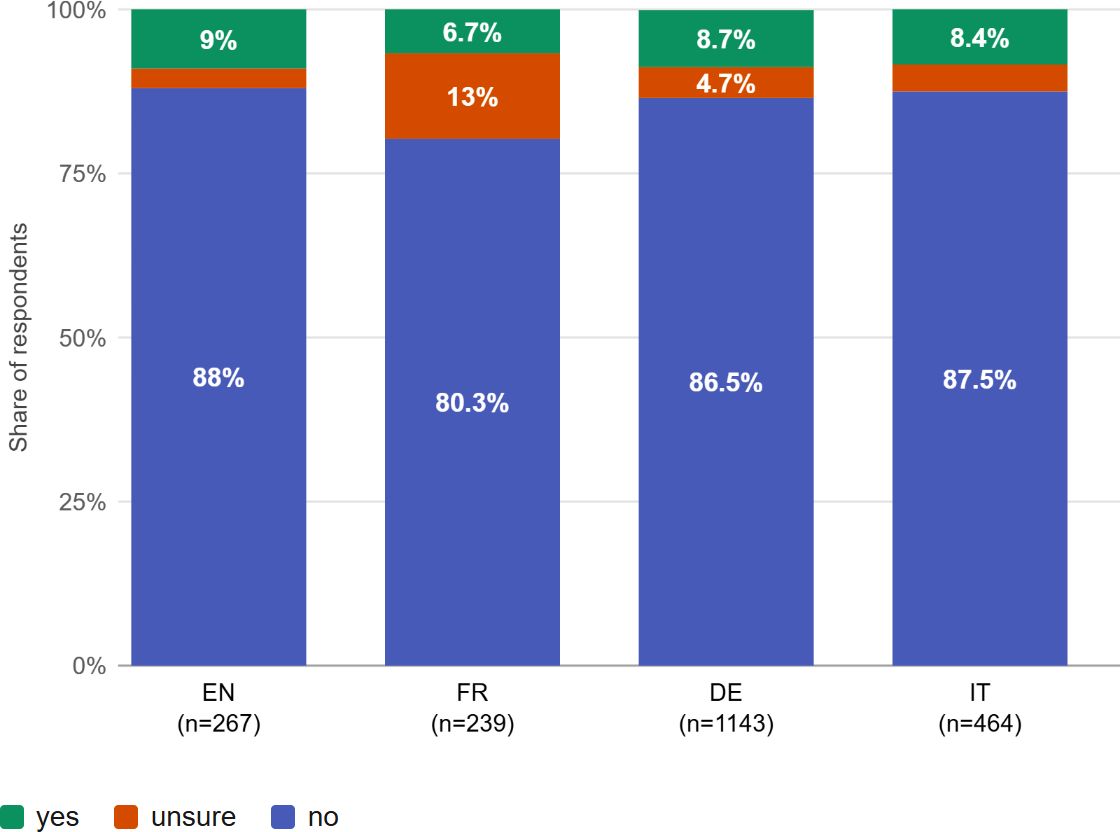
If an avalanche forecaster speaks of a “generally safe avalanche situation”, would you interpret this as meaning there is no chance of triggering an avalanche?
Between one and two out of every ten people interpreted this differently from what we intended. For avalanche forecasters, even in a “generally safe avalanche situation”, avalanches remain possible - although they are considered very unlikely.
Can avalanches also be fatal when it is said that an avalanche can bury a person?
The responses here were very clear: almost all participants understood that the potential for burial in an avalanche also implies a risk of death.
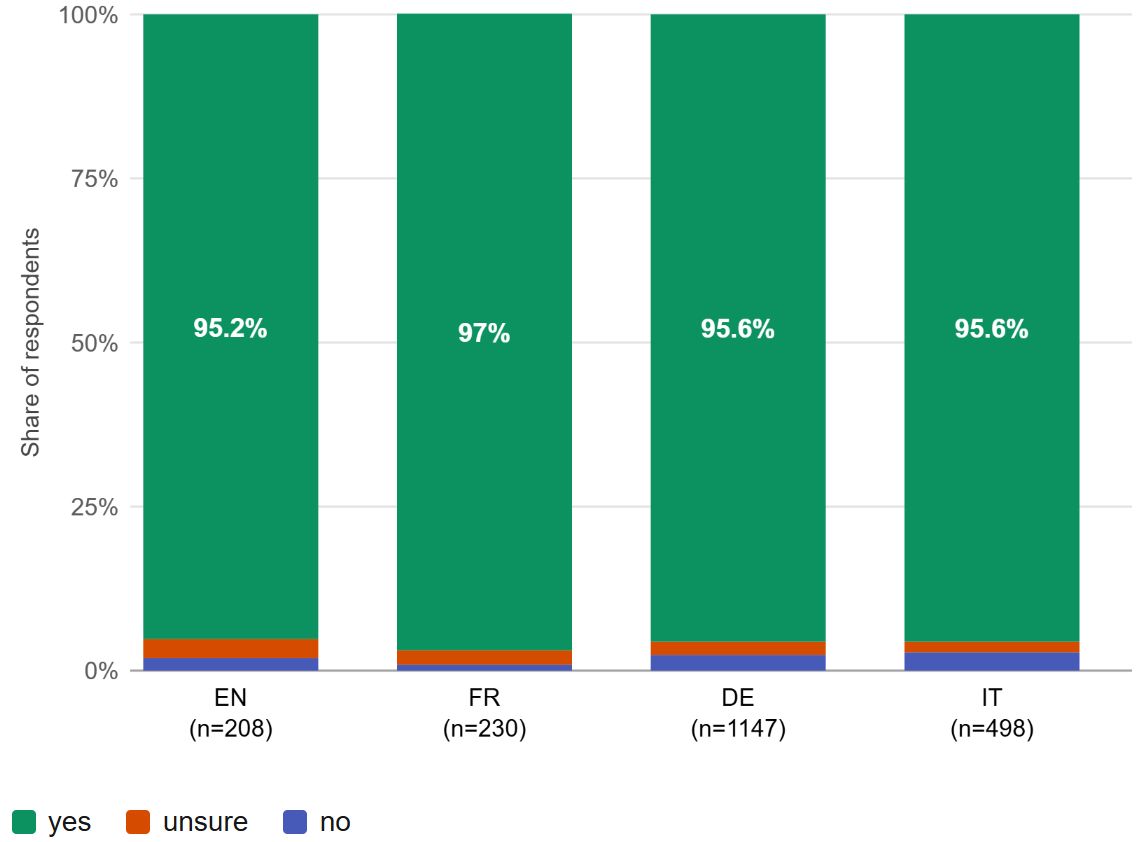
This offers only a small glimpse into the wealth of information provided by the responses on the clarity and understanding of avalanche hazard terminology. We are currently carrying out a more detailed analysis.
Many thanks to everyone who took part!